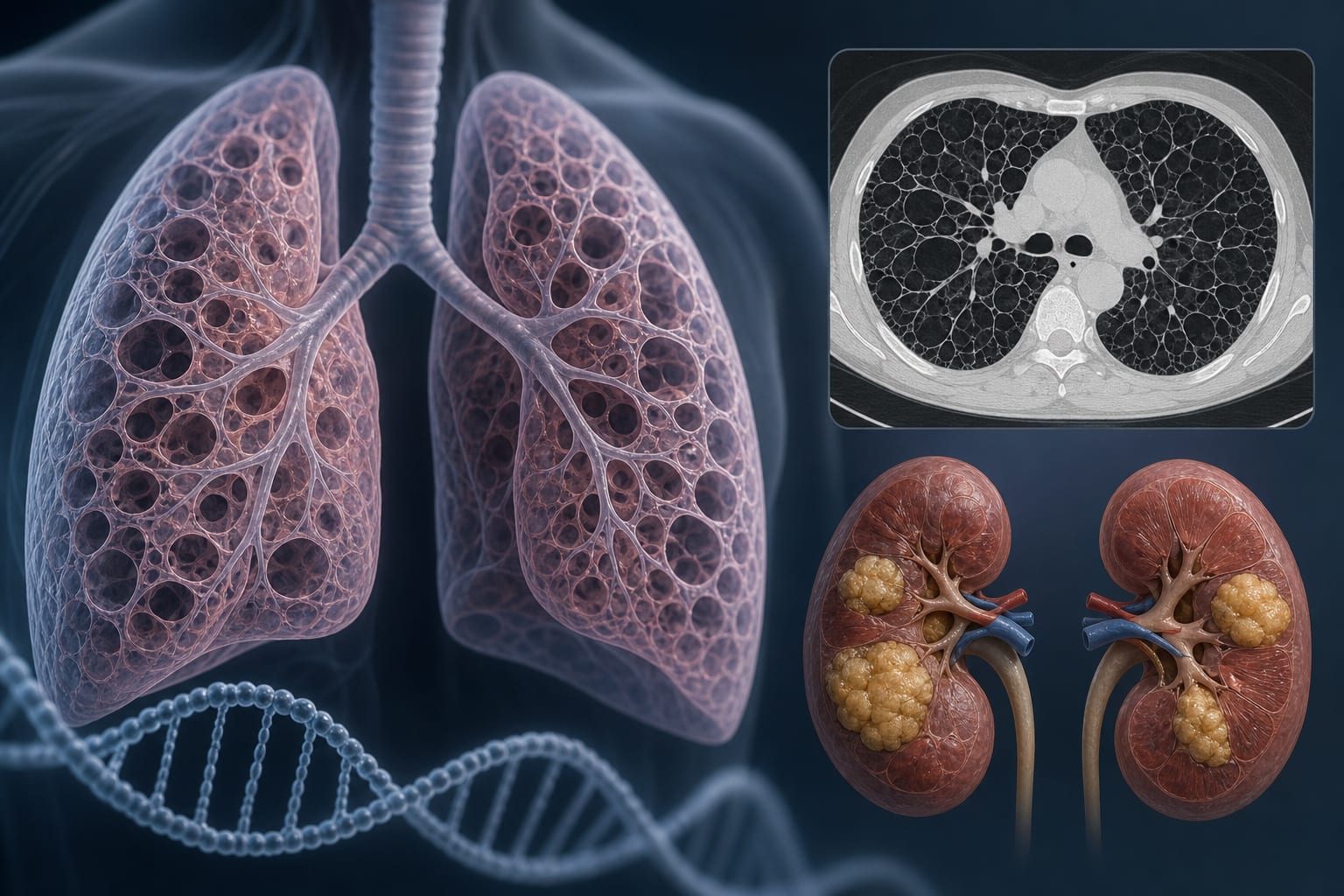
To report a case of TSC-LAM and emphasize the critical role of individualized treatment and systematic family screening in improving patient outcomes.
Key Findings:
The patient remained clinically stable with no significant adverse effects after treatment, highlighting the effectiveness of sirolimus.
Imaging showed no progression of pulmonary cysts and a reduction in renal angiomyolipoma volume, indicating positive treatment response.
Therapeutic drug monitoring was crucial in maintaining sirolimus levels within the target range, ensuring safety and efficacy.
Interpretation:
The case emphasizes the need for early recognition and individualized therapy in managing TSC-LAM.
Limitations:
The study is based on a single case report, which limits generalizability and may introduce biases.
Long-term outcomes beyond the reported follow-up period are not addressed, necessitating further research.
Conclusion:
Individualized treatment with sirolimus and systematic family screening are crucial in managing TSC-LAM, emphasizing the need for early intervention and ongoing monitoring.