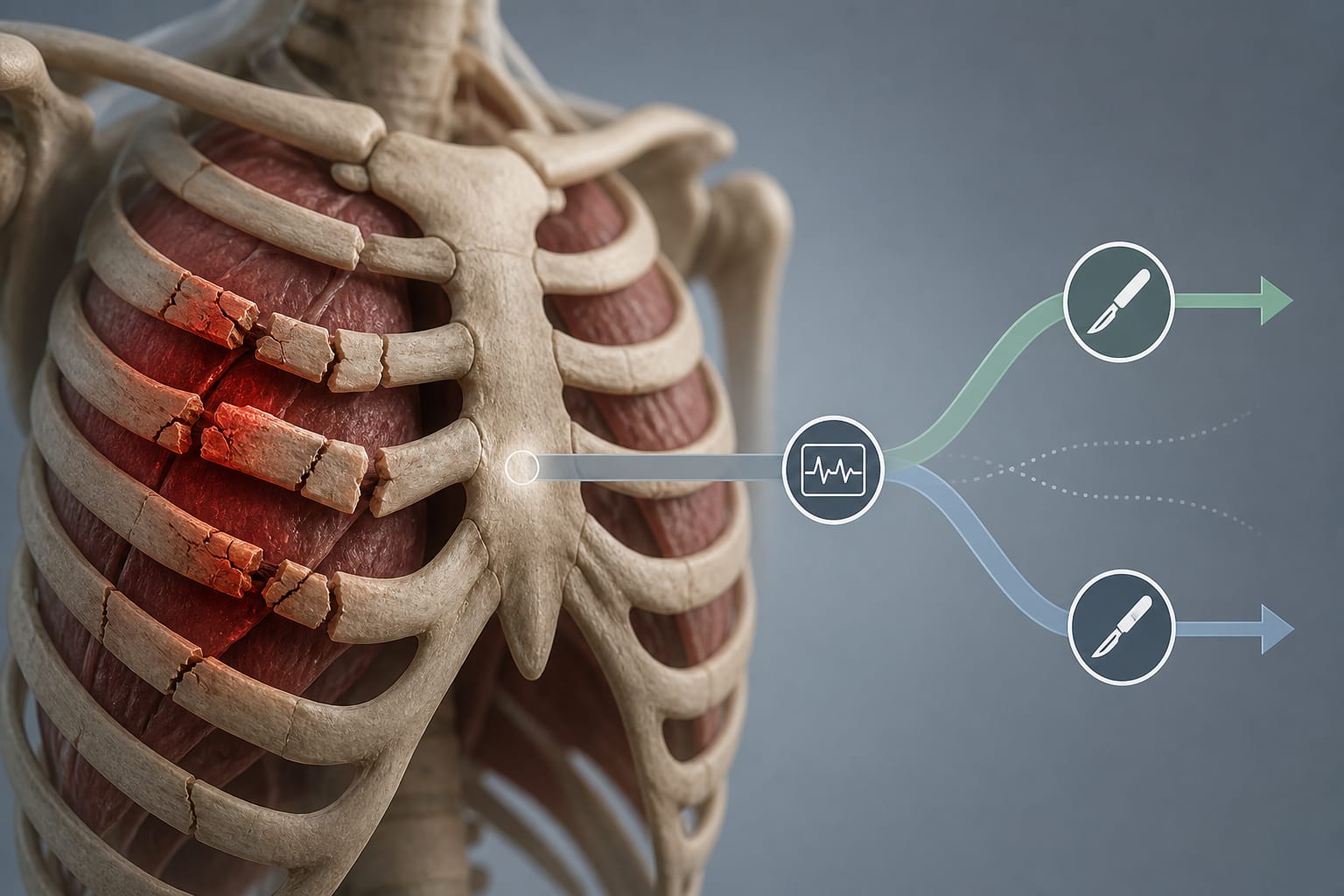
To discuss the findings of Özer and Ekim regarding the impact of age on postoperative outcomes in older adults undergoing surgical stabilization of rib fractures (SSRF).
Approach:
Physiology-based Decision-Making: The article emphasizes a physiology-based approach to surgical decision-making rather than relying solely on chronological age.
Key Findings:
Chronological age did not independently predict postoperative complications or chronic pain in older adults undergoing SSRF.
Complication rates, pain trajectories, and mortality were comparable between geriatric and non-geriatric patients.
Limitations:
The cohort likely represented a highly selected population, excluding individuals with severe frailty or multiple comorbidities.
Absence of a standardized frailty instrument limits the generalizability of the findings.
Functional recovery was assessed using a blunt measure, which may not capture subtle functional deterioration.
Conclusion:
Future studies should incorporate routine frailty screening and detailed functional assessments to enhance patient selection and outcomes in SSRF.