Peri-transplant use of immune checkpoint inhibitors in hepatocellular carcinoma: a transplant oncology perspective on safety, timing, post-transplant management, and future directions - Summary - MDSpire
Advertisement
Peri-transplant use of immune checkpoint inhibitors in hepatocellular carcinoma: a transplant oncology perspective on safety, timing, post-transplant management, and future directions
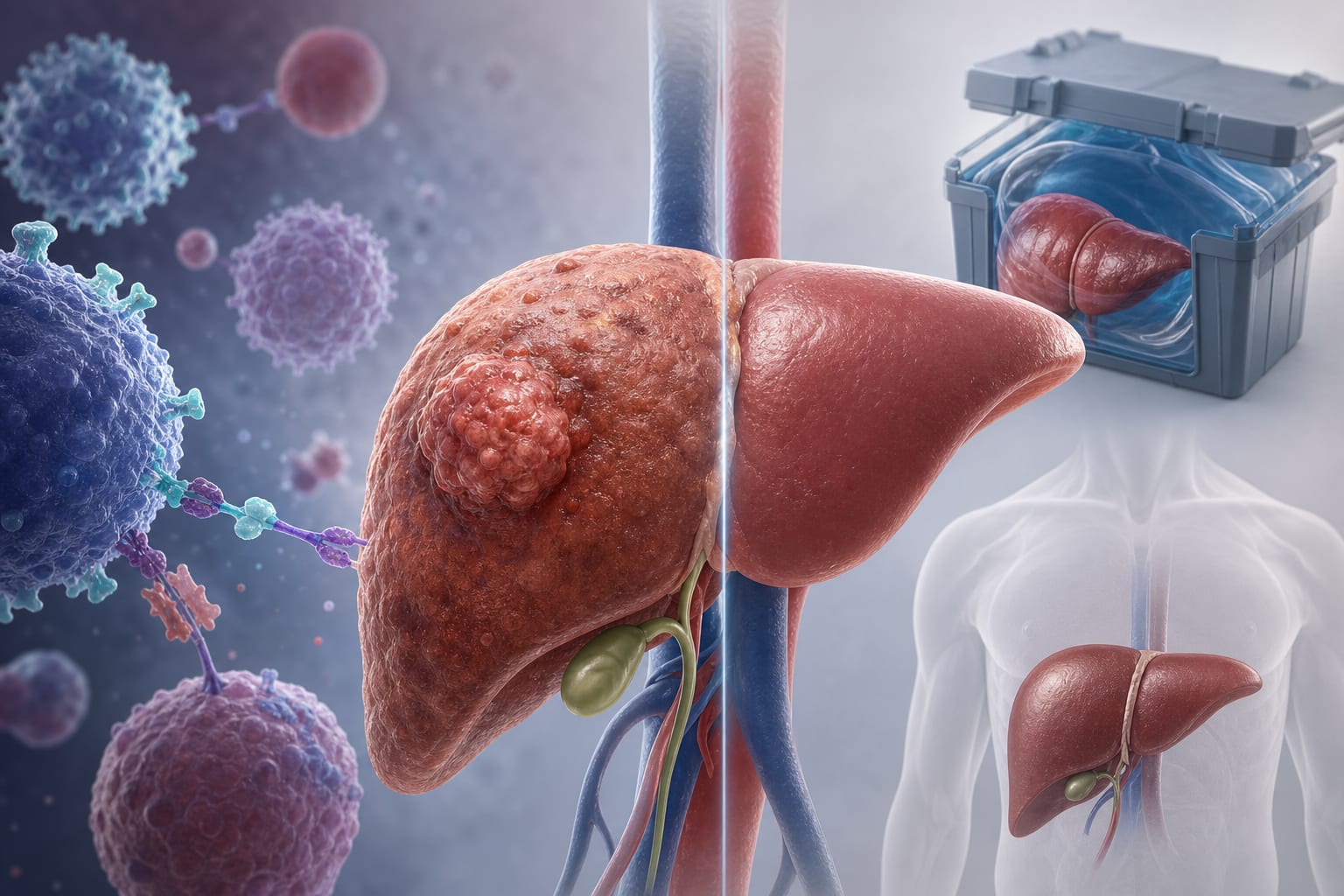
To examine the safety profile, timing considerations, and innovations needed for the incorporation of immune checkpoint inhibitors (ICPIs) into transplant oncology protocols for hepatocellular carcinoma (HCC), particularly focusing on their peri-transplant application.
Key Findings:
Retrospective data indicate rejection rates of 18%-26% pre-LT and 28%-37% post-LT, highlighting the need for careful monitoring.
Optimal washout periods of 50-90 days can mitigate rejection risks, emphasizing the importance of timing.
Living donor LT provides scheduling advantages for ICPIs administration, allowing for more precise treatment planning.
Emerging biomarkers may assist in risk stratification for post-transplant ICPIs use, potentially improving patient outcomes.
Interpretation:
The application of ICPIs around LT for HCC is complex and requires a careful balance between enhancing antitumor immunity and ensuring allograft tolerance, necessitating individualized treatment strategies.
Limitations:
The risk of acute graft rejection remains significant despite mitigation strategies, underscoring the need for ongoing research.
Individualized decision-making is essential due to the high-risk nature of post-transplant ICPIs, which may vary based on patient-specific factors.
Conclusion:
Further research is needed to optimize the timing and safety of ICPIs in the context of liver transplantation for HCC, particularly focusing on identifying effective biomarkers and refining patient selection criteria.