Serum CitH3 and TSLP as predictive biomarkers for impaired wound healing after bascom cleft lift surgery in pilonidal sinus disease: a nomogram-based risk model - Summary - MDSpire
Advertisement
Serum CitH3 and TSLP as predictive biomarkers for impaired wound healing after bascom cleft lift surgery in pilonidal sinus disease: a nomogram-based risk model
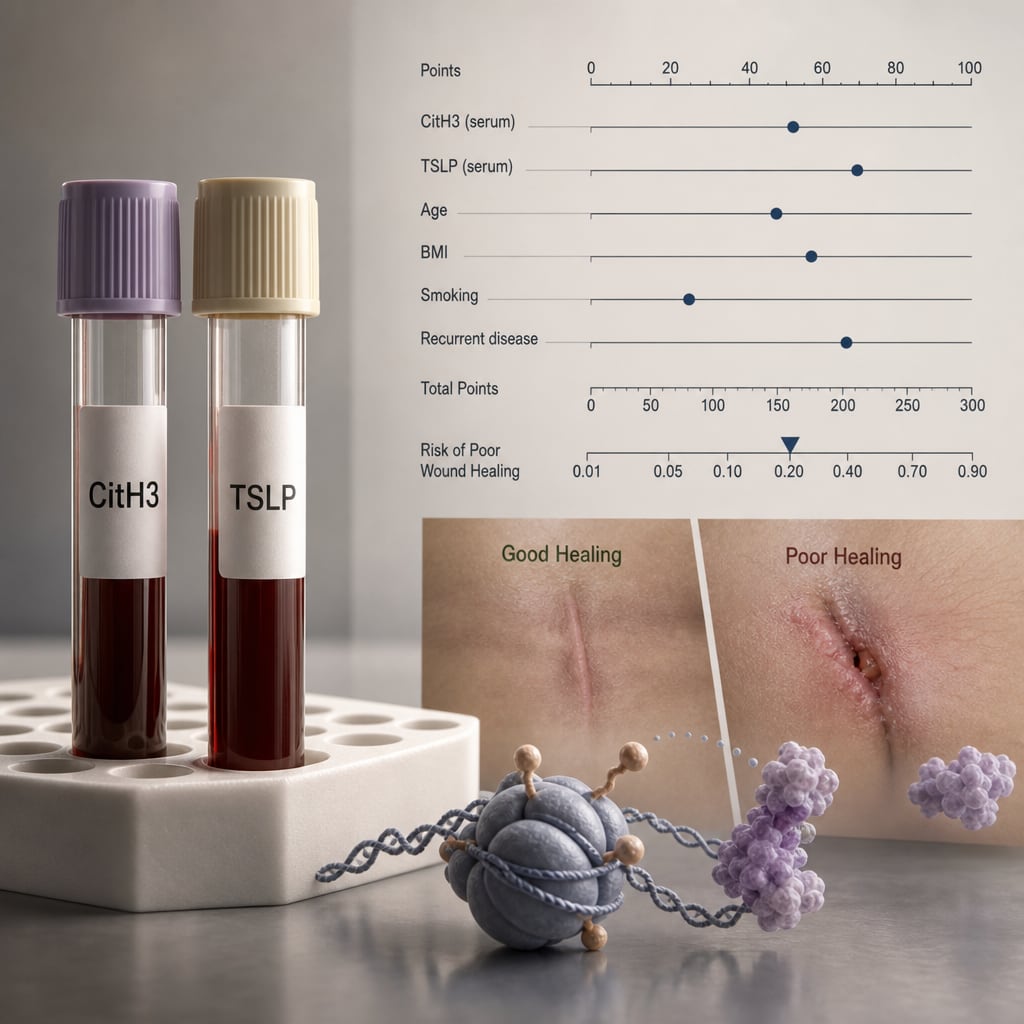
To examine the prognostic significance of serum citrullinated histone H3 (CitH3) and thymic stromal lymphopoietin (TSLP) regarding postoperative wound healing results in individuals with pilonidal sinus (PS), and to develop a nomogram-based risk assessment model for clinical application.
Key Findings:
ROC analysis showed AUC values of 0.804 for CitH3 and 0.780 for TSLP; combined AUC was 0.922, indicating strong predictive capability.
Interpretation:
Increased serum CitH3 and TSLP concentrations are strongly linked to compromised wound healing following Bascom cleft lift for PS, indicating their potential as predictive biomarkers with significant implications for clinical practice.
Limitations:
The study's findings require validation through multicenter, large-scale studies, and potential biases in the study design should be considered.
Conclusion:
The nomogram developed shows promise for personalized risk evaluation and clinical decision-making in postoperative wound healing for PS patients, but further validation studies are essential.