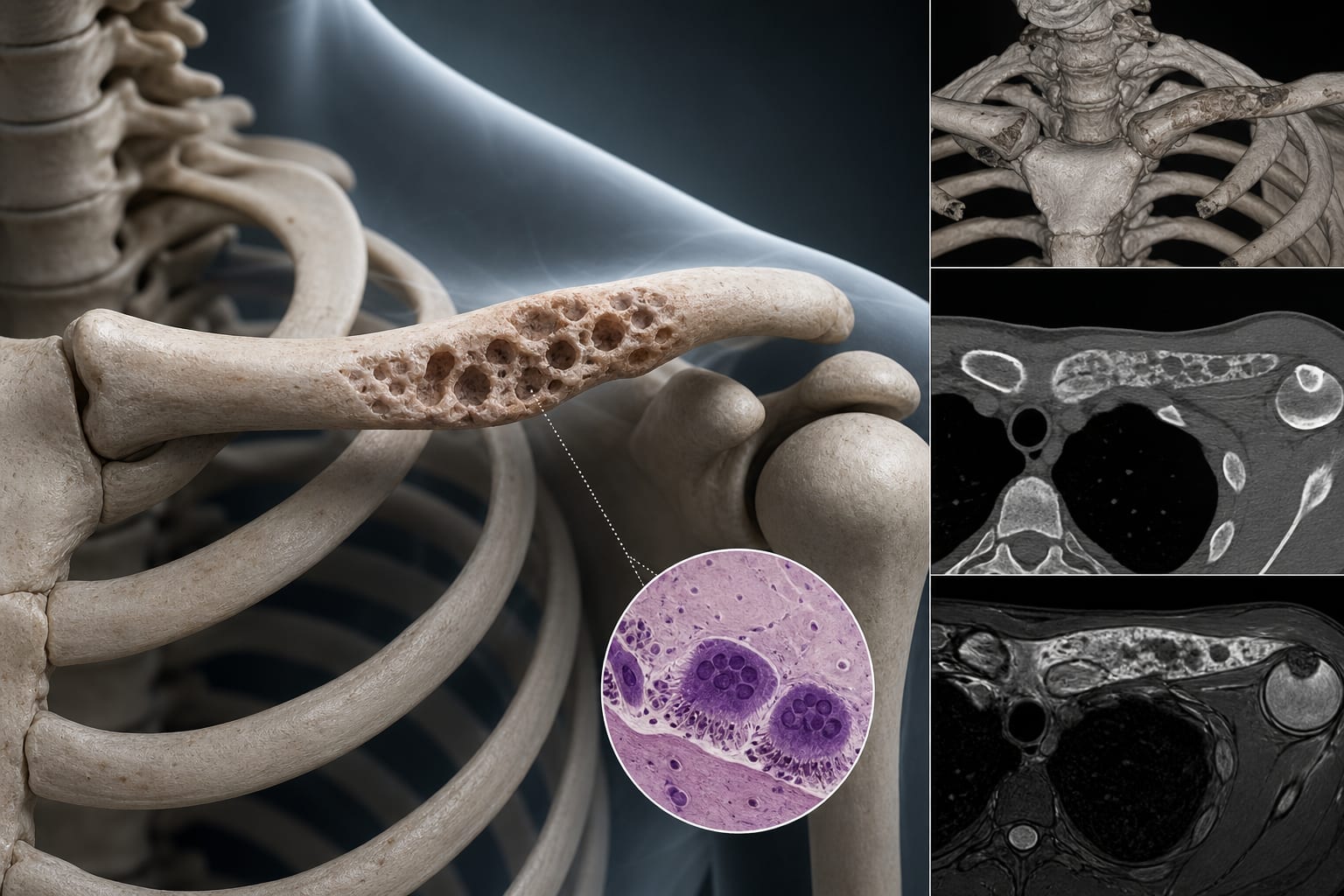
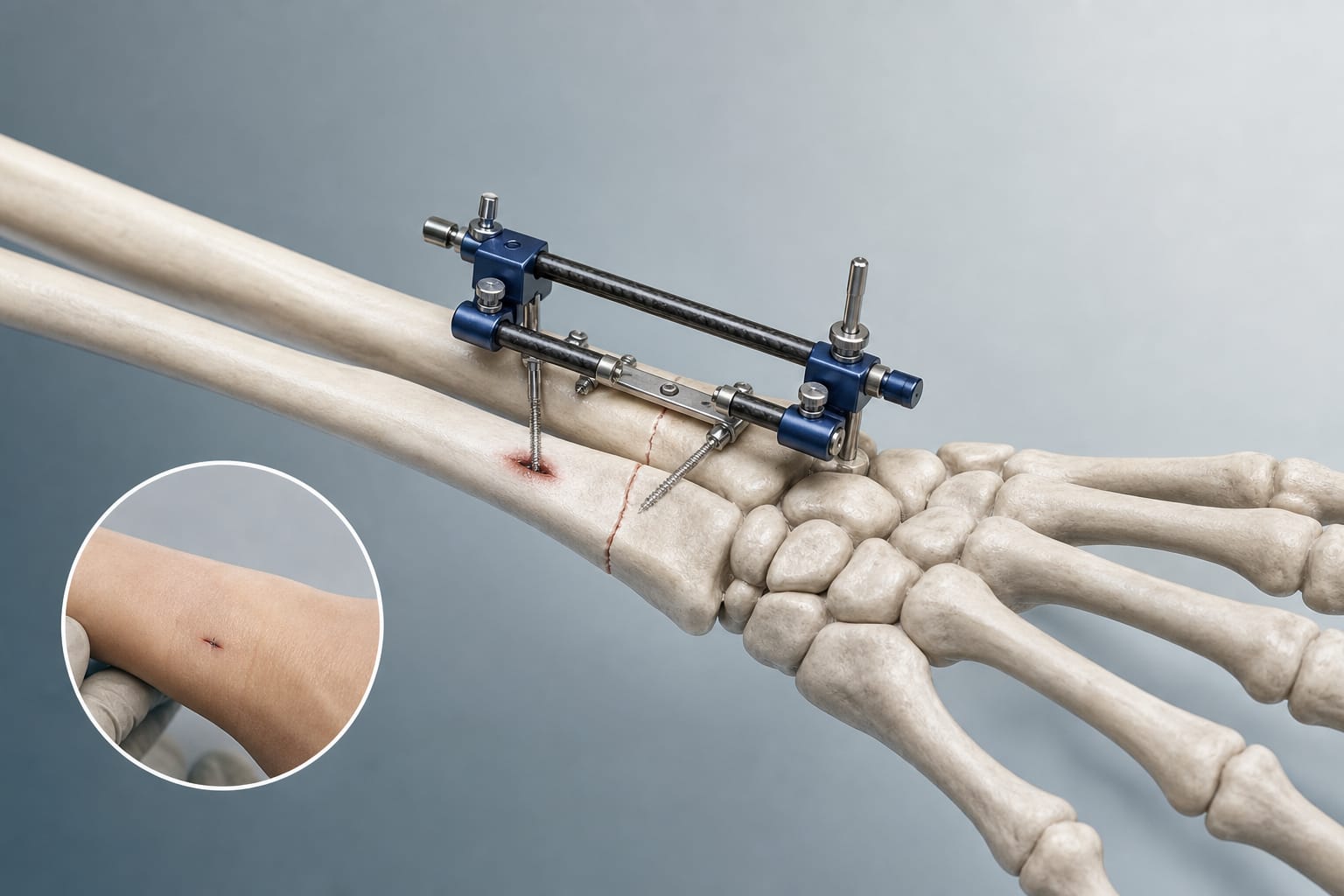
To report a case of Gorham-Stout disease characterized by clavicular bone destruction and resorption, and to discuss its pathogenesis, diagnostic strategies, and treatment options in the context of a case report.
Approach:
Case Report: A 15-year-old male presented with clavicular bone resorption following low-energy trauma, leading to a comprehensive diagnostic evaluation and initial treatment for a clavicular fracture.
Diagnostic Assessment: Routine tests were normal, but bone metabolism indicators showed vitamin D deficiency and elevated markers of bone turnover. Imaging revealed progressive osteolysis of the clavicle, which is extremely rare in Gorham-Stout disease.
Key Findings:
Gorham-Stout disease is characterized by painless, progressive bone resorption.
Clavicular involvement in Gorham-Stout disease is extremely rare.
Monitoring biochemical markers related to bone turnover is essential for diagnosis and disease assessment.
Interpretation:
The case highlights the importance of individualized treatment plans based on lesion site and patient needs, emphasizing the role of early intervention with osteoclast inhibitors and vitamin D supplementation.
Limitations:
The study is based on a single case report, limiting generalizability.
Long-term outcomes and effectiveness of the treatment regimen remain to be evaluated.
Conclusion:
The findings suggest that early diagnosis and tailored treatment strategies are crucial in managing Gorham-Stout disease, particularly in cases with rare presentations like clavicular involvement.