Exploring Androgenetic Alopecia in Transgender and Gender-Diverse Populations: Insights on Characterization and Treatment Approaches - Summary - MDSpire
Advertisement
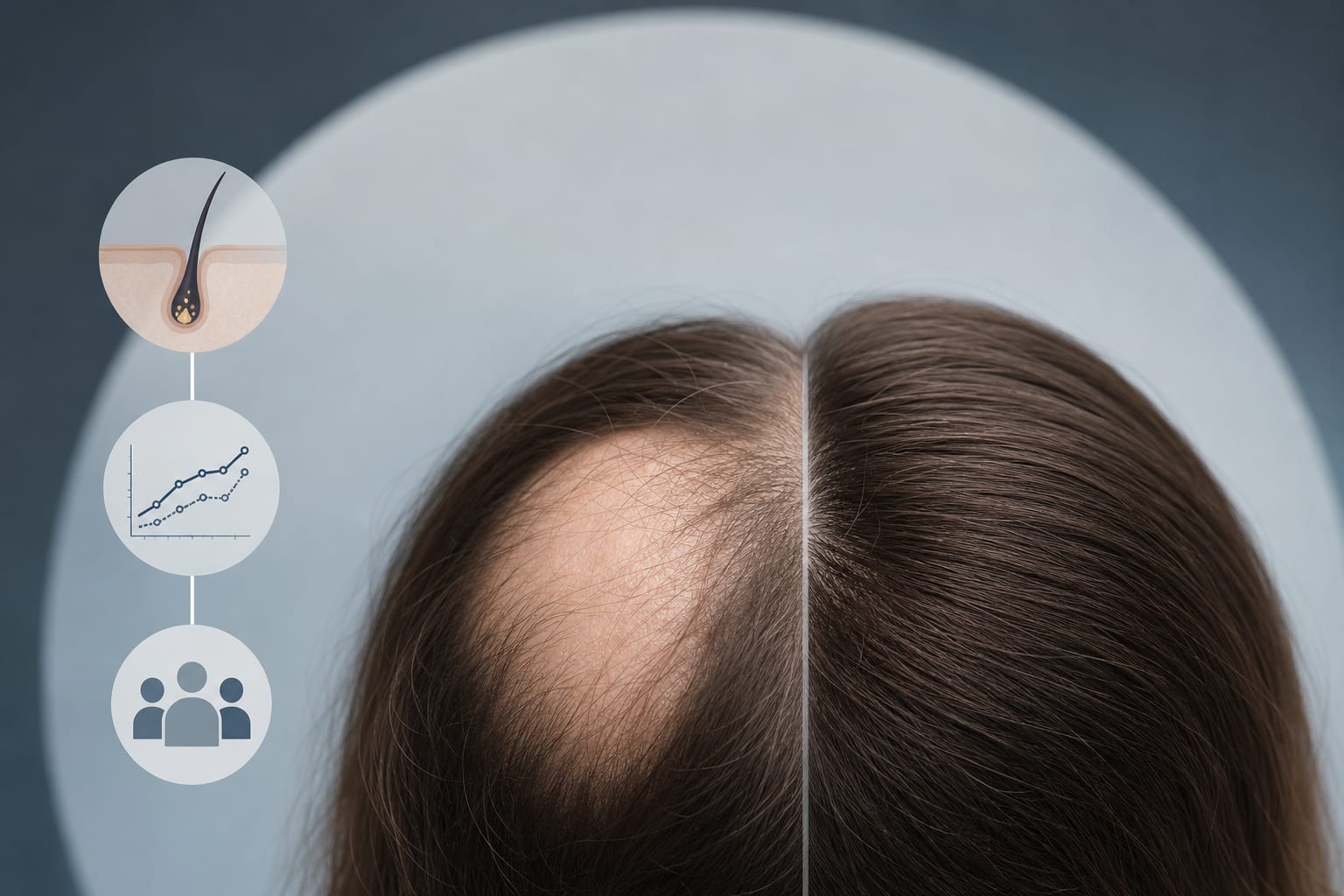
Exploring Androgenetic Alopecia in Transgender and Gender-Diverse Populations: Insights on Characterization and Treatment Approaches
To review the characterization and management of androgenetic alopecia (AGA) in transgender and gender-diverse (TGD) individuals, highlighting its significant impact on quality of life.
Approach:
Key Findings:
AGA can exacerbate gender dysphoria and negatively impact quality of life in TGD individuals, necessitating individualized treatment plans.
Oral minoxidil is recommended for all individuals, with dosing individualized to therapeutic goals.
Higher doses of oral minoxidil may be beneficial for transgender men to promote beard and body hair growth.
Adjunctive treatments like dutasteride or finasteride may be considered for transgender men.
Spironolactone is a first-line antiandrogen for transgender women, with careful evaluation needed for 5-alpha reductase inhibitors.
Interpretation:
AGA is a significant clinical concern for TGD individuals, necessitating tailored management strategies that consider individual gender identity and treatment goals, with implications for clinical practice.
Limitations:
Current scientific evidence on AGA in TGD populations is limited, and recommendations are based on extrapolated data from cisgender studies and expert opinion, which may introduce biases.
Conclusion:
Timely recognition and appropriate management of AGA in TGD individuals are crucial for improving their quality of life and addressing gender dysphoria, highlighting the need for ongoing research.
by Daniel Ramos-Rodriguez, Daniel Sanchez-Baez, Patricia Cabrera-Garcia, Alicia Perez-Bustillo, Angela Hermosa-Gelbard, Sergio Vaño-Galvan, David Saceda-Corralo, Juan Jimenez-Cauhe