Intratumoral and intracranial hemorrhage associated with MAPK-pathway targeted therapy: a systematic review and mechanistic synthesis - Summary - MDSpire
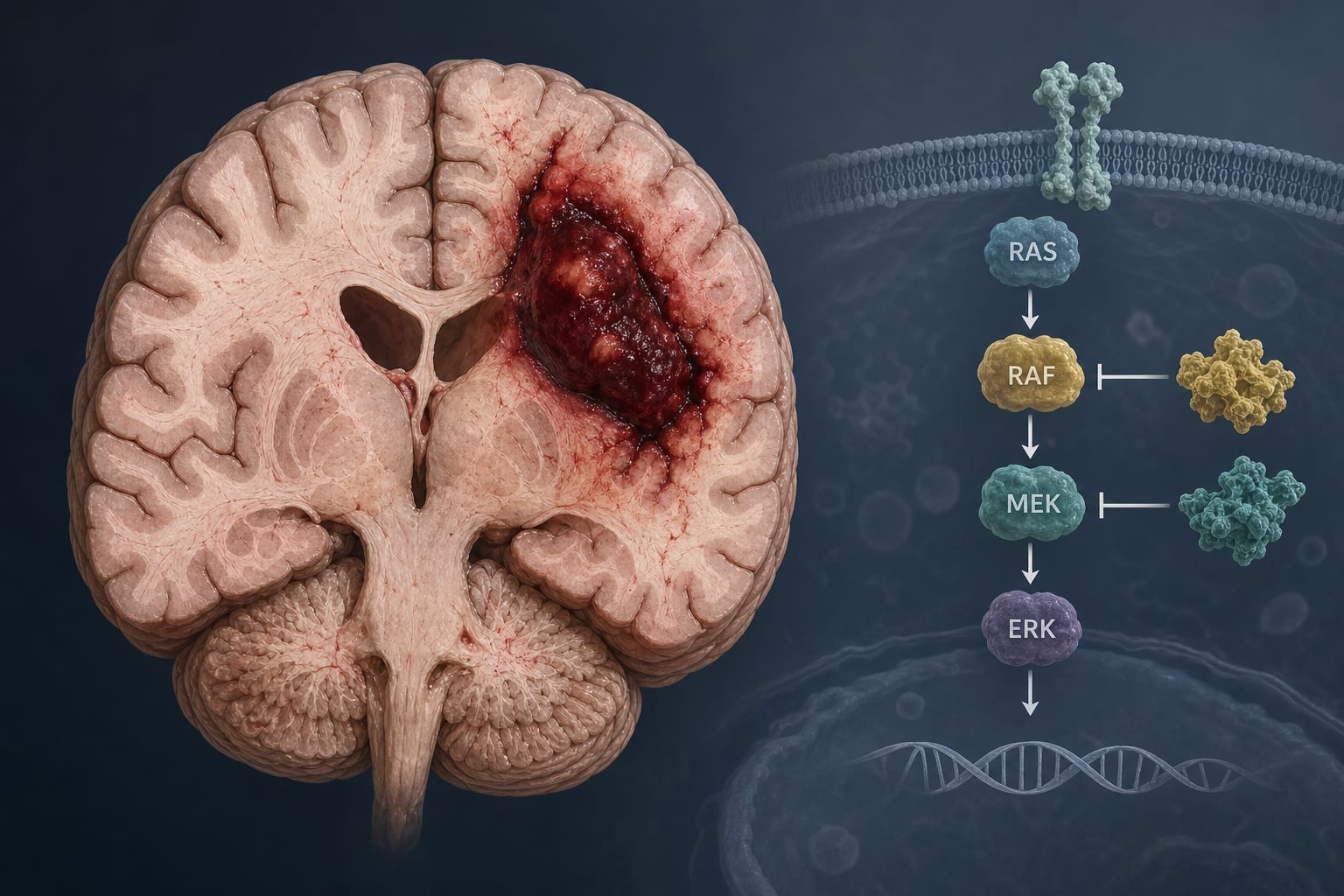
To synthesize published incidence estimates of intratumoral and intracranial hemorrhage associated with MAPK-pathway targeted therapy across tumor types and propose a mechanistic and clinical framework for monitoring.
Approach:
Search Strategy: A systematic search of PubMed/MEDLINE and Embase was conducted from inception through May 29, 2026, using specific hemorrhage descriptors combined with MAPK-pathway agents.
Eligibility Criteria: Included human studies reporting intratumoral or intracranial hemorrhage temporally associated with MAPK-pathway agents, focusing on ITH and ICH.
Data Extraction: Extracted variables included study design, patient demographics, tumor type, targeted agents, timing of hemorrhage, and clinical outcomes. Results were synthesized narratively due to heterogeneity.
Key Findings:
Intratumoral hemorrhage is an established complication of certain brain tumors, particularly melanoma.
Hemorrhage is a labeled warning for selumetinib and tovorafenib, with fatal CNS bleeding reported in dabrafenib-based regimens.
There is a lack of unified incidence estimates and evidence-based monitoring guidance due to inconsistent reporting and phenotyping.
Interpretation:
The review highlights the need for better characterization of hemorrhagic events associated with MAPK-pathway inhibitors as their use expands in neuro-oncology.
Limitations:
Heterogeneity in reporting and definitions of CNS-specific bleeding across studies.
Rarity of events limits quantitative meta-analysis.
Lack of standardized definitions for CNS hemorrhage.
Conclusion:
The findings highlight the need for better characterization of hemorrhagic events associated with MAPK-pathway inhibitors.