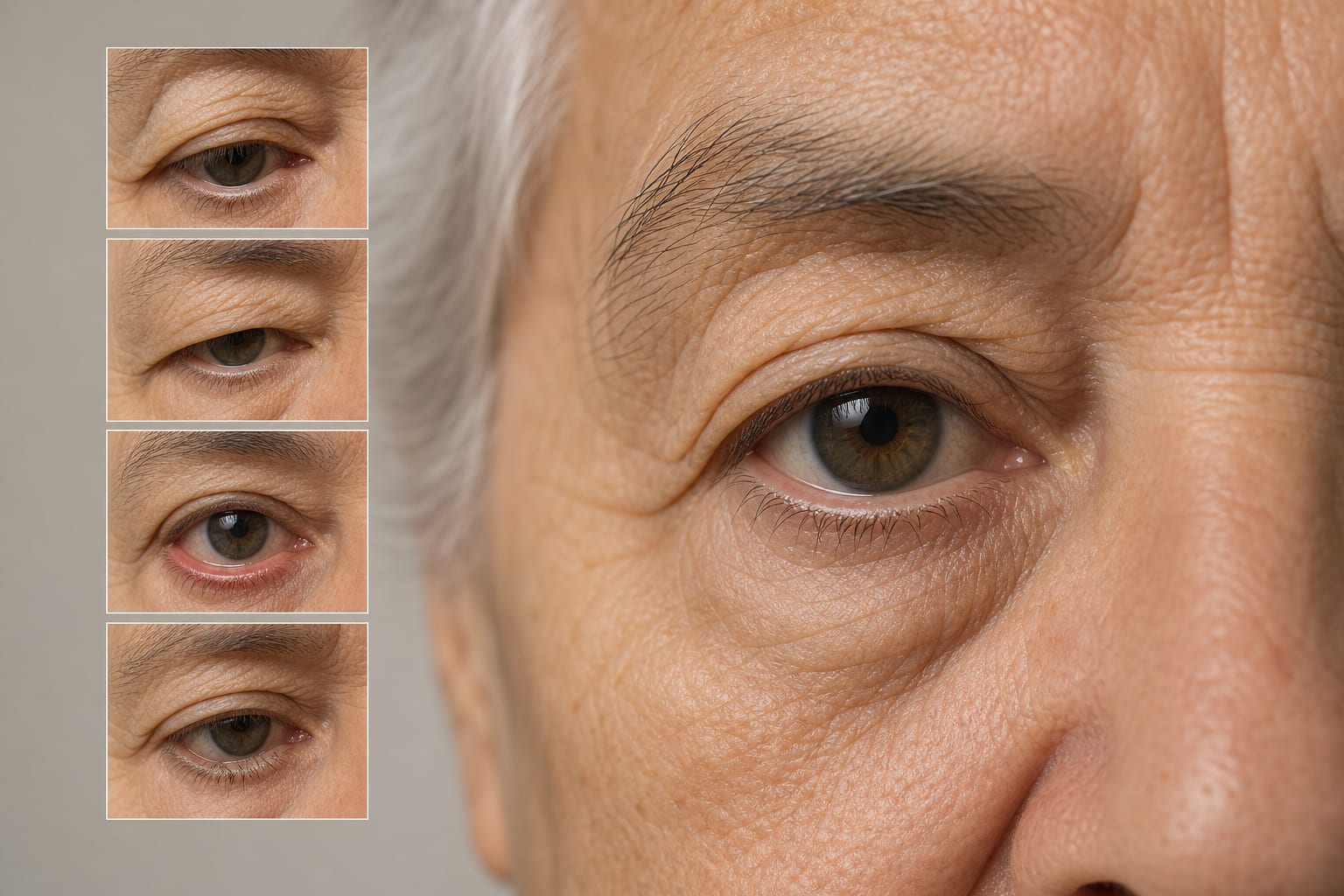
To determine the prevalence and patterns of eyelid disorders among the elderly population in Tehran.
Approach:
Study Design: Cross-sectional analysis using data from the Tehran Geriatric Eye Study (TGES) conducted in 2019.
Participant Recruitment: Participants aged 60 years and over were recruited using a multistage stratified random-cluster sampling method.
Data Collection: Demographic data and medical histories were collected, followed by comprehensive ophthalmic assessments including visual acuity and eyelid evaluations.
Diagnostic Criteria: Eyelid disorders were diagnosed based on predefined clinical criteria and standardized assessment protocols.
Key Findings:
Eyelid disorders affect 41% of individuals over 50 years of age, with prevalence increasing with age, as reported by Lin et al.
Conditions such as dermatochalasis, ptosis, ectropion, and entropion are common among the elderly.
These disorders can lead to significant functional impairments and may necessitate surgical intervention.
Interpretation:
The study highlights the need for increased awareness and research on eyelid disorders in the elderly, particularly in underrepresented regions like the Middle East.
Limitations:
The study may not be generalizable to all elderly populations due to geographical disparities.
Certain eyelid pathologies may have received less attention in the literature.
Conclusion:
Understanding the prevalence of eyelid disorders is essential for guiding public health resource allocation and improving ocular care for the elderly.