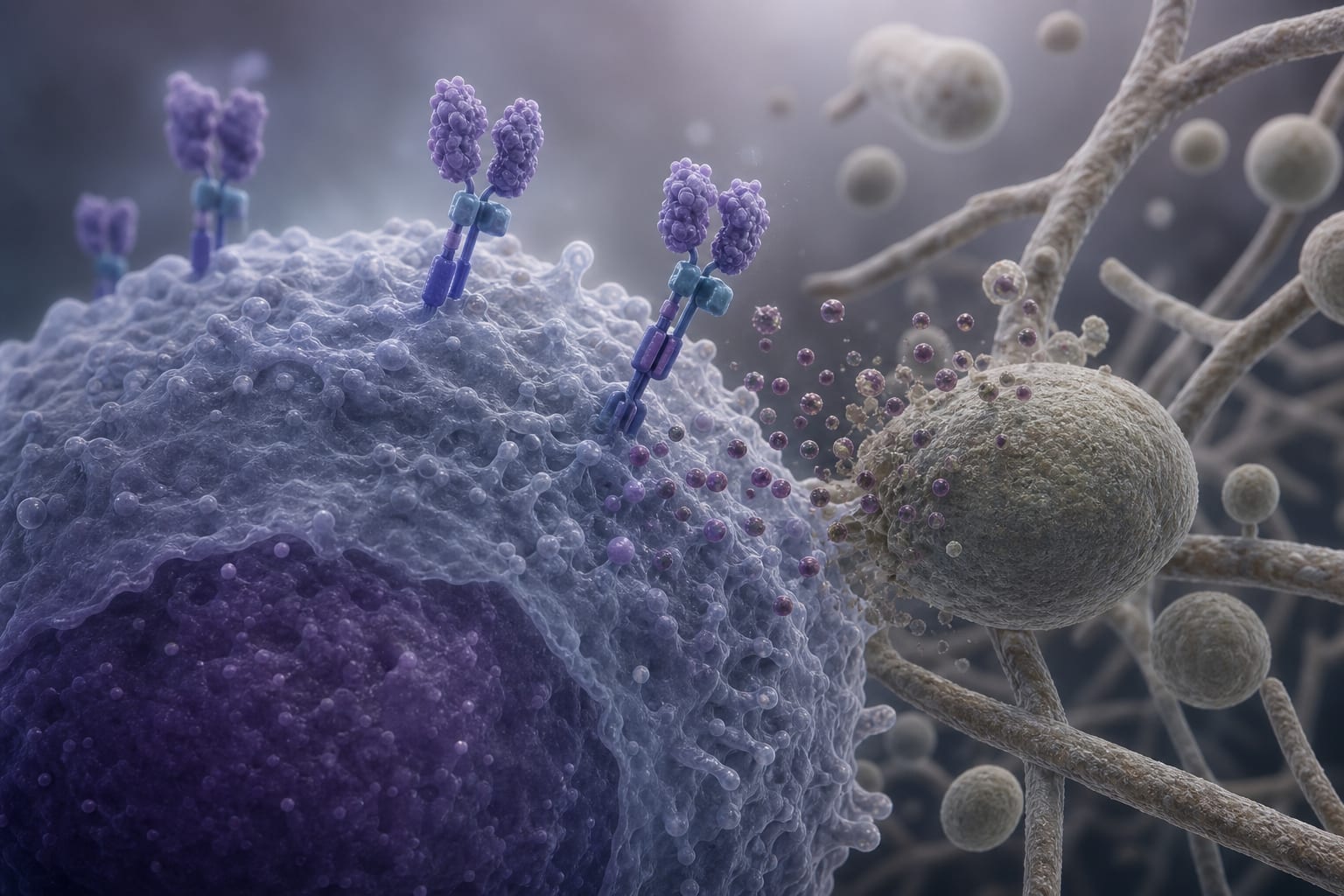
Translational development and first-in-human compassionate infusion of NK-92 cells expressing a CD5-based chimeric antigen receptor (SRCD5CAR-NK-92) in a patient with multidrug-resistant fusariosis - Summary - MDSpire

Translational development and first-in-human compassionate infusion of NK-92 cells expressing a CD5-based chimeric antigen receptor (SRCD5CAR-NK-92) in a patient with multidrug-resistant fusariosis

  • By

  • María Velasco-de-Andrés

  • Pedro Puerta-Alcalde

  • Jiri Eitler

  • Lydia Krutz

  • Mariana Chumbita

  • Marta Español-Rego

  • Cristina Català

  • Laura Carrillo-Serradell

  • Violeta Planells-Romeo

  • Lucía Aragón-Serrano

  • Andrea Vergara

  • Amanda Isabel Pérez-Valencia

  • Patricia Monzó-Gallo

  • Antonio Gallardo-Pizarro

  • María Teresa Cibeira

  • Alexandru Vlagea

  • José Luis Caro

  • Eduard Palou

  • María Suárez-Lledó

  • Alex Soriano

  • Gonzalo Calvo

  • Álvaro Urbano-Ispizua

  • Torsten Tonn

  • Carolina Garcia-Vidal

  • Francisco Lozano

  • May 8, 2026

  • 0 min

Share

Objective:

To explore the potential of SRCD5CAR-NK-92 cells as a therapeutic option for treating multidrug-resistant invasive fungal infections (IFI), which pose significant challenges due to limited treatment options and high mortality rates.

Key Findings:
  • SRCD5CAR-NK-92 cells demonstrated superior antifungal activity compared to untransduced NK-92 cells, with a statistically significant increase in fungal clearance.
  • The patient received the treatment without significant adverse effects, such as cytokine storm or alloreactivity.
  • This case represents the first-in-human application of SRCD5CAR-NK-92 cells in treating severe MDR IFI, highlighting its potential.
Interpretation:

The study indicates that SRCD5CAR-NK-92 cells could be a safe and effective off-the-shelf therapeutic strategy for MDR fungal infections, warranting further research on efficacy, safety, and long-term outcomes.

Limitations:
  • The patient ultimately succumbed to the underlying hematological malignancy, which limited the assessment of treatment efficacy and the potential impact of the therapy.
  • Further studies are needed to evaluate the long-term outcomes and broader applicability of this therapy in diverse patient populations.
Conclusion:

The findings support the potential of SRCD5CAR-NK-92 cells as a novel therapeutic approach for treating multidrug-resistant fungal infections, underscoring the urgent need for additional clinical investigations to validate these results.

Original Source(s)

Related Content