Effects of the active parts of Yangxin Tongmai Formula on myocardial injury and spatial metabolic remodeling in rats with myocardial ischemia-reperfusion injury - Summary - MDSpire
Advertisement
Impact of Yangxin Tongmai Formula's Active Components on Myocardial Damage and Spatial Metabolic Changes in Rats Experiencing Ischemia-Reperfusion Injury
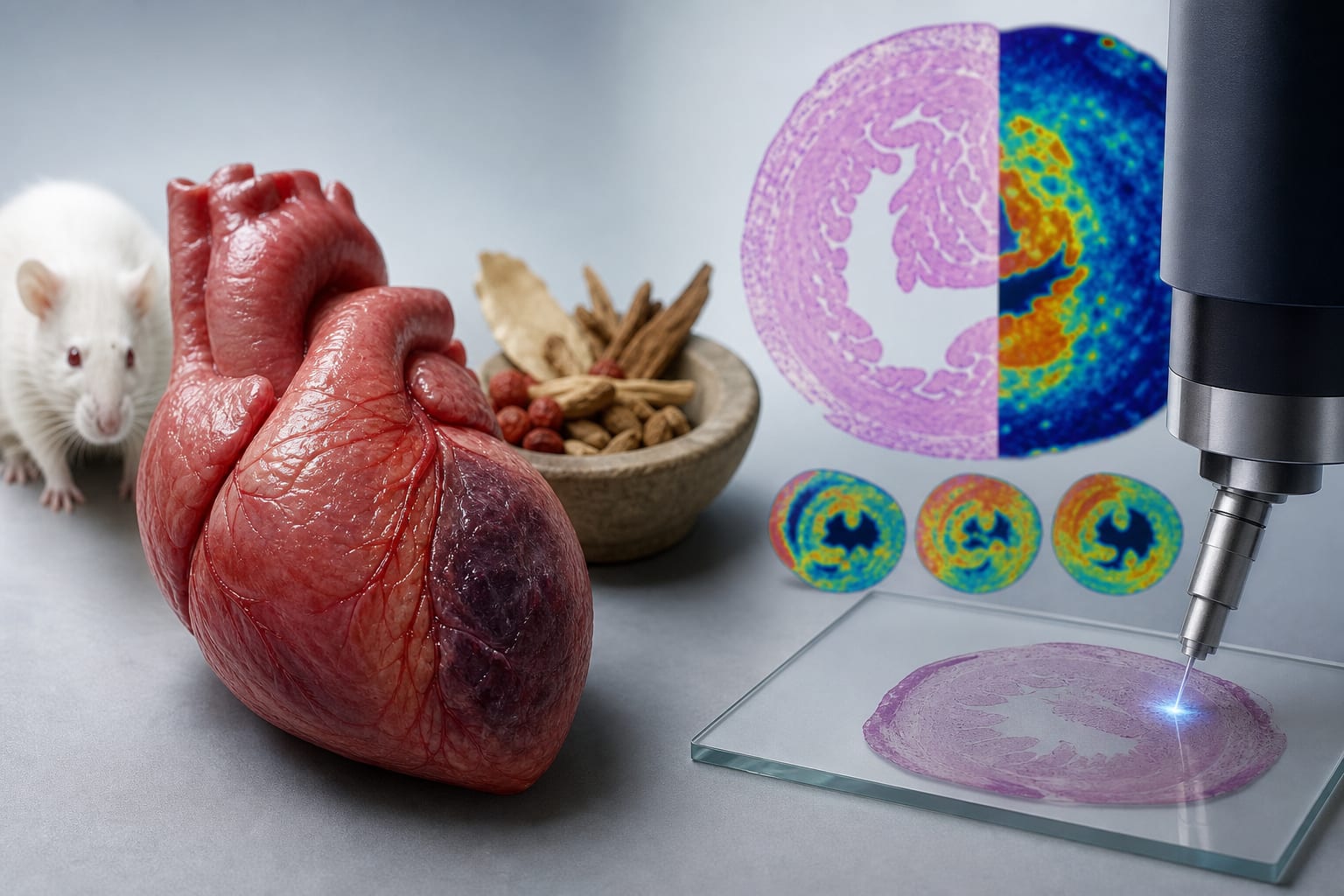
To investigate the protective effects of the active parts of Yangxin Tongmai Formula (apr-YTF) against myocardial ischemia-reperfusion injury (MIRI) in rats from the perspective of spatial metabolic remodeling.
Approach:
Animal Model: A rat model of MIRI with blood stasis syndrome was established. Rats were randomized into Control, Model, Vehicle, and apr-YTF groups.
Intervention: apr-YTF was administered by gavage for 14 days.
Assessment Methods: Cardiac function and myocardial injury were assessed by echocardiography, serum myocardial enzyme assays, TTC staining, and HE staining. MALDI-MSI was used to analyze spatial distribution patterns and metabolic profiles of differential metabolites.
Key Findings:
apr-YTF significantly improved left ventricular ejection fraction (LVEF) and left ventricular fractional shortening (LVFS).
Reduced serum levels of CK, CK-MB, LDH, and LDH1 were observed.
Decreased infarct size and alleviated myocardial fibrosis and inflammatory infiltration were noted.
MALDI-MSI identified 1,282 metabolites, with 702 associated with MIRI.
17 reversed differential metabolic features showed recovery trends after apr-YTF intervention.
Interpretation:
The active parts of Yangxin Tongmai Formula ameliorated myocardial injury and were associated with partial correction of spatial metabolic remodeling in rats with MIRI.
Conclusion:
The study demonstrates the potential cardioprotective effects of apr-YTF in a rat model of MIRI.