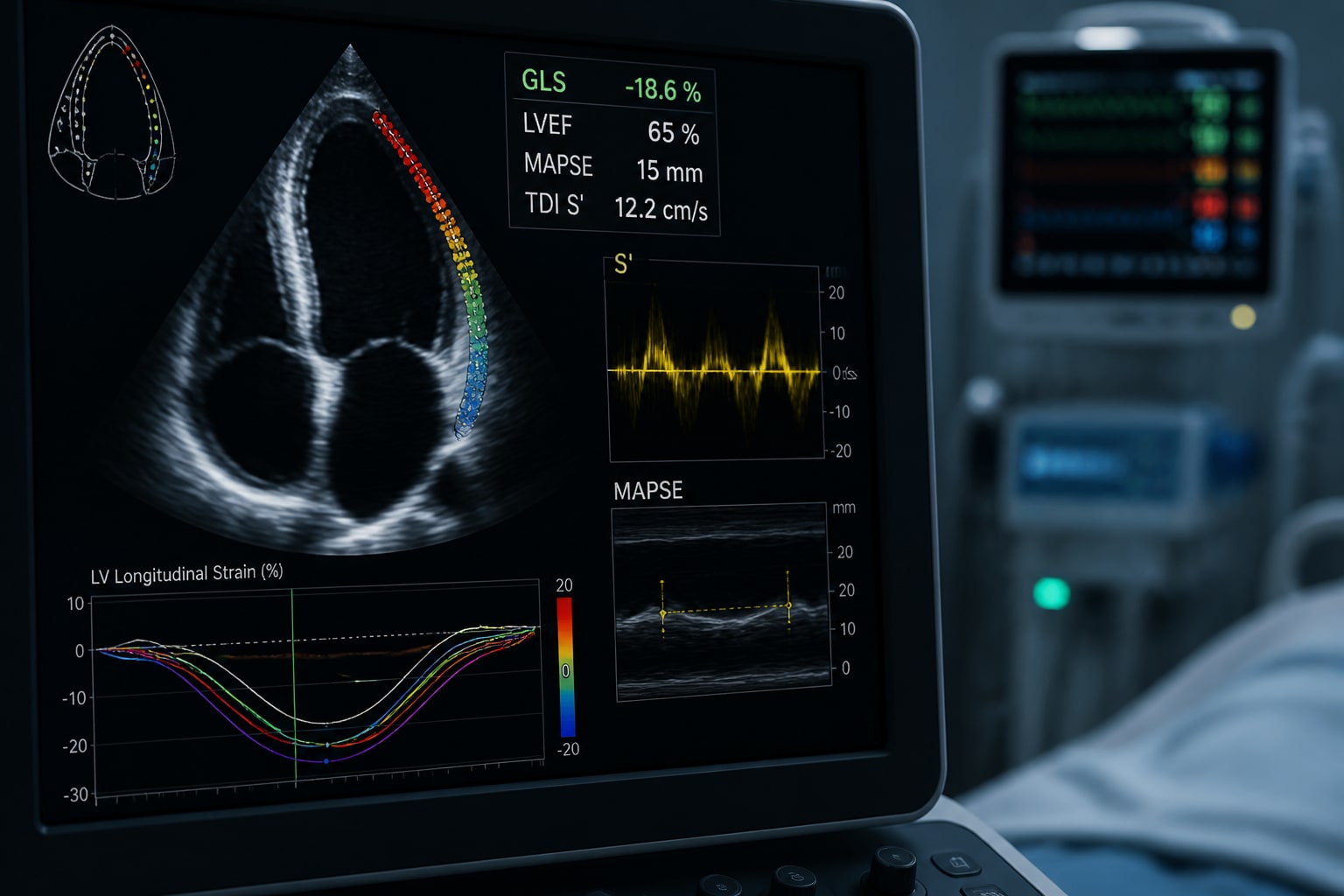
To investigate the prognostic significance and feasibility of assessing left ventricular (LV) longitudinal function among critically ill patients.
Approach:
Method: T
Method: h
Method: e
Method: s
Method: u
Method: d
Method: y
Method: b
Method: C
Method: a
Method: v
Method: f
Method: o
Method: r
Method: l
Method: .
Method: p
Method: m
Method: n
Method: w
Method: i
Method: 2
Method: 4
Method: g
Method: j
Method: x
Key Findings:
LVEF measured by Simpson’s biplane does not correlate with mortality.
LV longitudinal strain may offer superior prognostic information compared to LVEF.
A hyperdynamic LV state (LVEF ≥ 70%) is associated with increased in-hospital mortality.
A U-shaped relationship exists between LVEF and mortality in critical illness.
Longitudinal markers like MAPSE and TDI-S’ could aid in diagnosing LV hyperdynamic profiles.
Interpretation:
The hyperdynamic LV state indicates a maladaptive reaction to severe vasodilatory shock rather than enhanced cardiac performance.
Limitations:
The complexity of measuring LVEF using Simpson’s method in the ICU.
Lack of defined thresholds for MAPSE and TDI-S’ in characterizing LV hyperdynamic profiles.
Conclusion:
Further investigation into the relationship between longitudinal markers and LV hyperdynamic states could enhance understanding of LV function in critically ill patients.
Investigators compared cardiovascular outcomes with tirzepatide and a placebo proxy in patients with type 2 diabetes and established atherosclerotic cardiovascular disease.