Gut microbiota and sepsis-associated acute kidney injury: a narrative review - Takeaways - MDSpire

Gut microbiota and sepsis-associated acute kidney injury: a narrative review

  • By

  • Hui Zhang

  • Bingling Fan

  • Ruze Ma

  • Ruowen Jiang

  • Zan Qin

  • Xueping Qu

  • Junwu Wang

  • Jiawei Xue

  • Caixia Wang

  • Xiaoqin Liu

  • Litao Guo

  • June 2, 2026

Share

  • 1

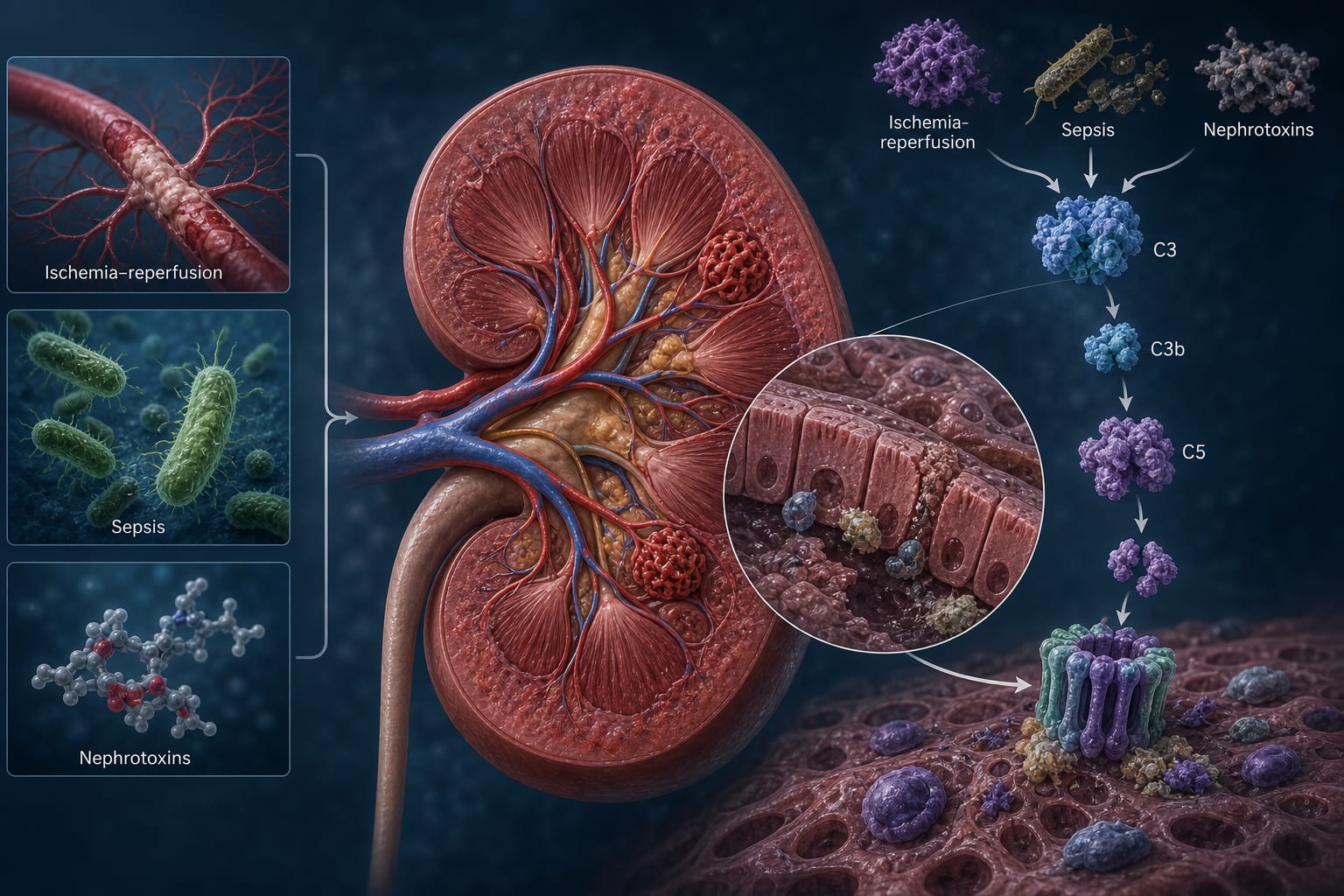
    Sepsis-associated acute kidney injury (SA-AKI) has a high incidence of 40% to 50% and a mortality rate up to 70% in ICU patients.

  • 2

    Gut dysbiosis during sepsis leads to compromised intestinal barrier integrity, allowing bacterial products to enter circulation and activate systemic inflammation.

  • 3

    Specific microbial signatures linked to AKI include increased Clostridium asparagiforme and decreased Roseburia spp., along with elevated uremic toxin-producing bacteria.

  • 4

    Gut-derived metabolites like indoxyl sulfate and trimethylamine N-oxide promote renal inflammation and fibrosis, contributing to kidney injury.

  • 5

    Therapeutic strategies targeting the gut microbiota, such as fecal microbiota transplantation and probiotic supplementation, may offer new treatment avenues for SA-AKI.

Original Source(s)

Related Content