Hippocampal neuronal hypoexcitability contributes to PTSD-like phenotypes in the experimental autoimmune encephalomyelitis model - Takeaways - MDSpire

Hippocampal neuronal hypoexcitability contributes to PTSD-like phenotypes in the experimental autoimmune encephalomyelitis model

  • By

  • Xinghua Zhong

  • Han Zhang

  • Jieying Xie

  • Yang Gao

  • Honghao Wang

  • Yu Peng

  • Feng Yi

  • Jinyu Chen

  • May 20, 2026

  • 0 min

Share

  • 1

    EAE mice exhibit PTSD-like symptoms, including impaired fear extinction and contextual fear generalization, linking MS with PTSD.

  • 2

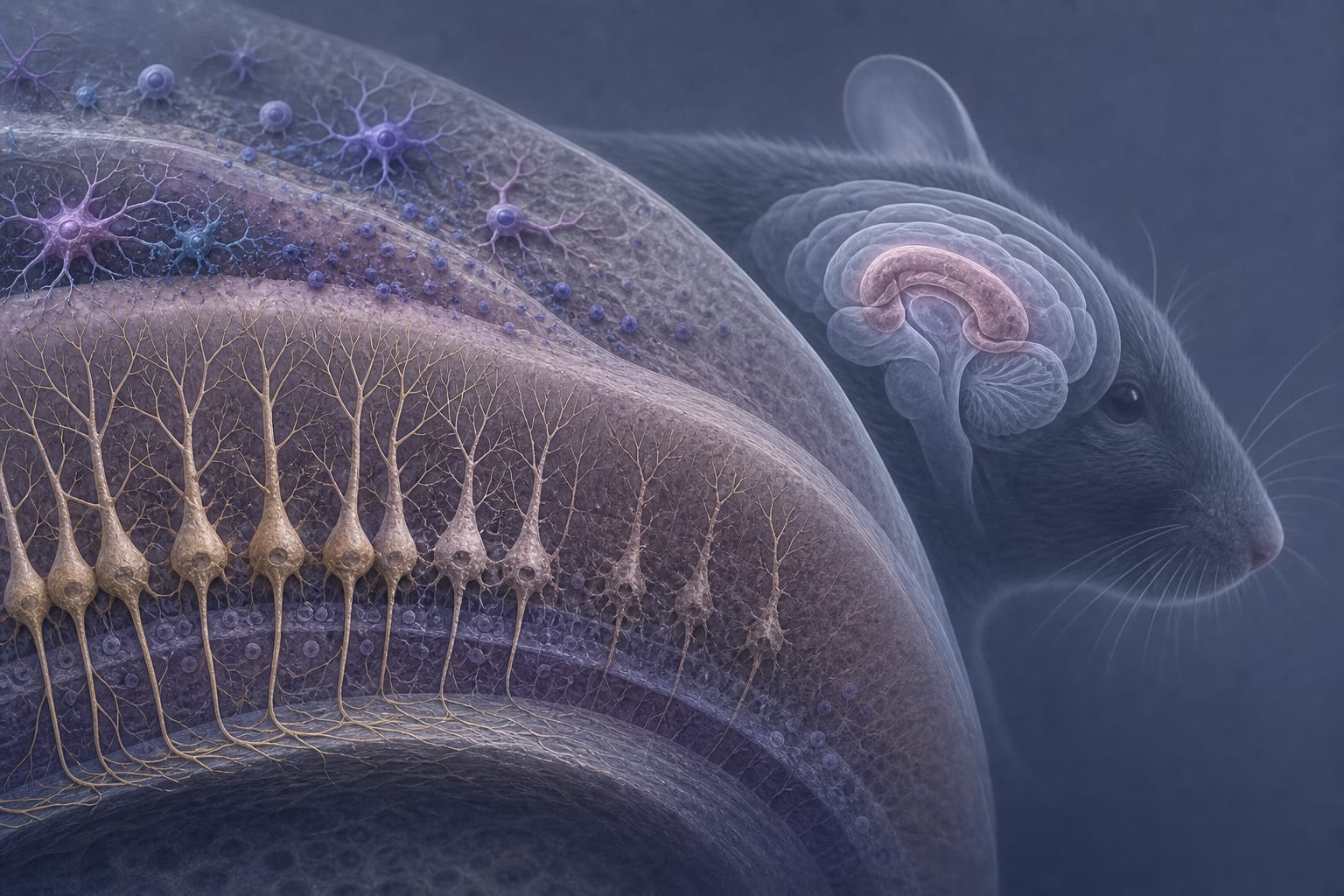
    Hippocampal CA1 pyramidal neurons in EAE mice show somatic atrophy and reduced firing gain, indicating hypoexcitability.

  • 3

    Chemogenetic reactivation of CA1 neurons in EAE mice improves extinction deficits, suggesting a potential therapeutic target.

  • 4

    Single-nucleus RNA sequencing reveals a neuroimmune transcriptional shift in CA1 excitatory neurons associated with EAE.

  • 5

    The study highlights the role of hippocampal dysfunction in MS-PTSD comorbidity and suggests restoring excitability as a treatment avenue.

Original Source(s)

Related Content