Neuroinflammatory mechanisms and pharmacological advances in autism spectrum disorder: from inflammatory pathways to targeted interventions - Takeaways - MDSpire

Neuroinflammatory mechanisms and pharmacological advances in autism spectrum disorder: from inflammatory pathways to targeted interventions

  • By

  • Xinyu Zhang

  • Huiqin Xue

  • Chaoyang Zhu

  • Chen Ji

  • Yin Li

  • Wei Liu

  • May 20, 2026

  • 0 min

Share

  • 1

    Autism spectrum disorder (ASD) is characterized by diverse symptoms and lacks reliable biomarkers for diagnosis and treatment.

  • 2

    Neuroinflammation is linked to ASD risk and symptom development, highlighting the need for targeted therapeutic interventions.

  • 3

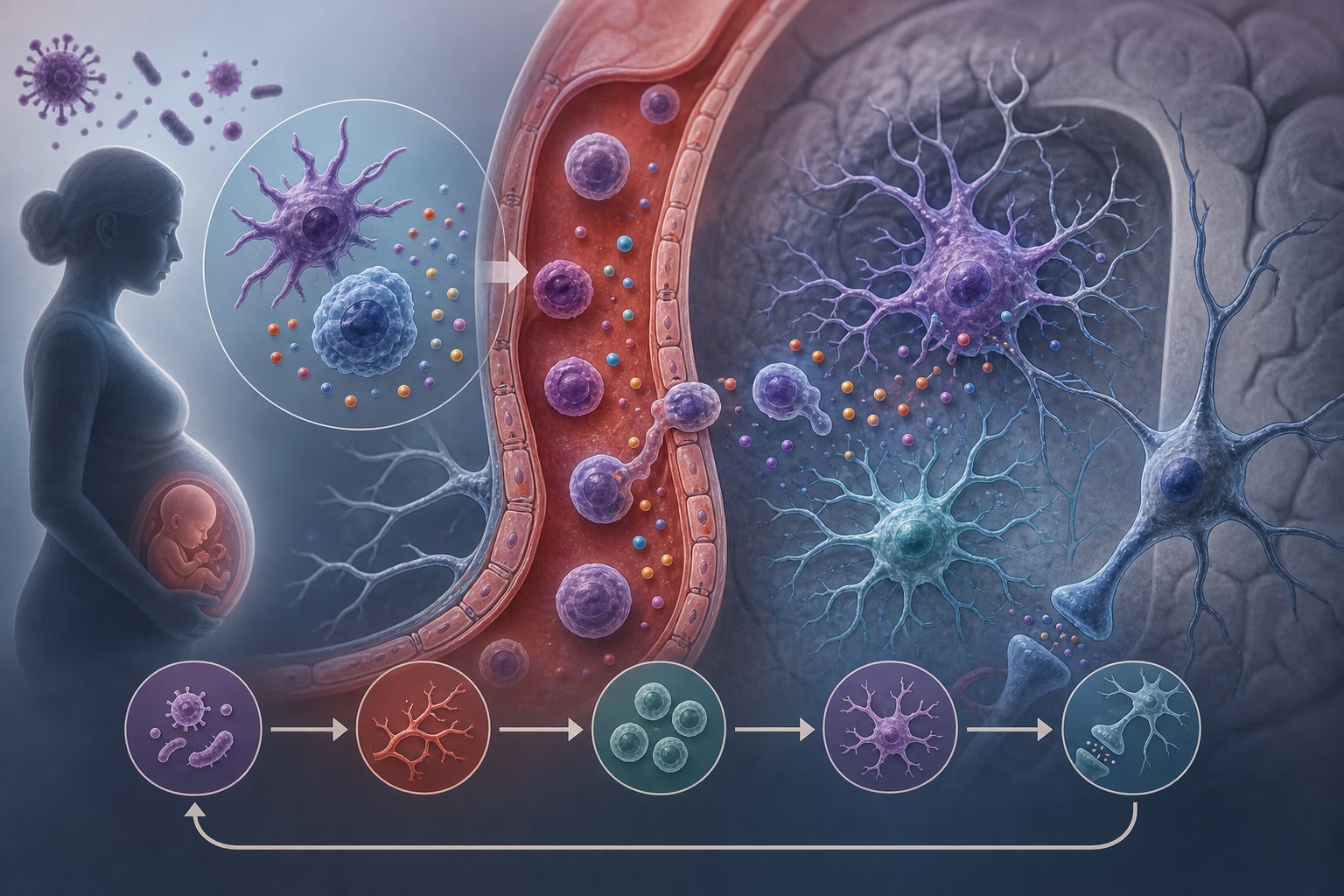
    The Peripheral-to-Central Inflammatory Cascade-Amplification Model (PC-ICAM) outlines actionable nodes for ASD-related neuroinflammation.

  • 4

    Candidate interventions for ASD target various inflammatory pathways, including IL-6/IL-17 signaling and glial modulation.

  • 5

    A multi-node, mechanism-matched approach is essential for precision treatment of ASD, rather than relying on a single anti-inflammatory strategy.

Original Source(s)

Related Content