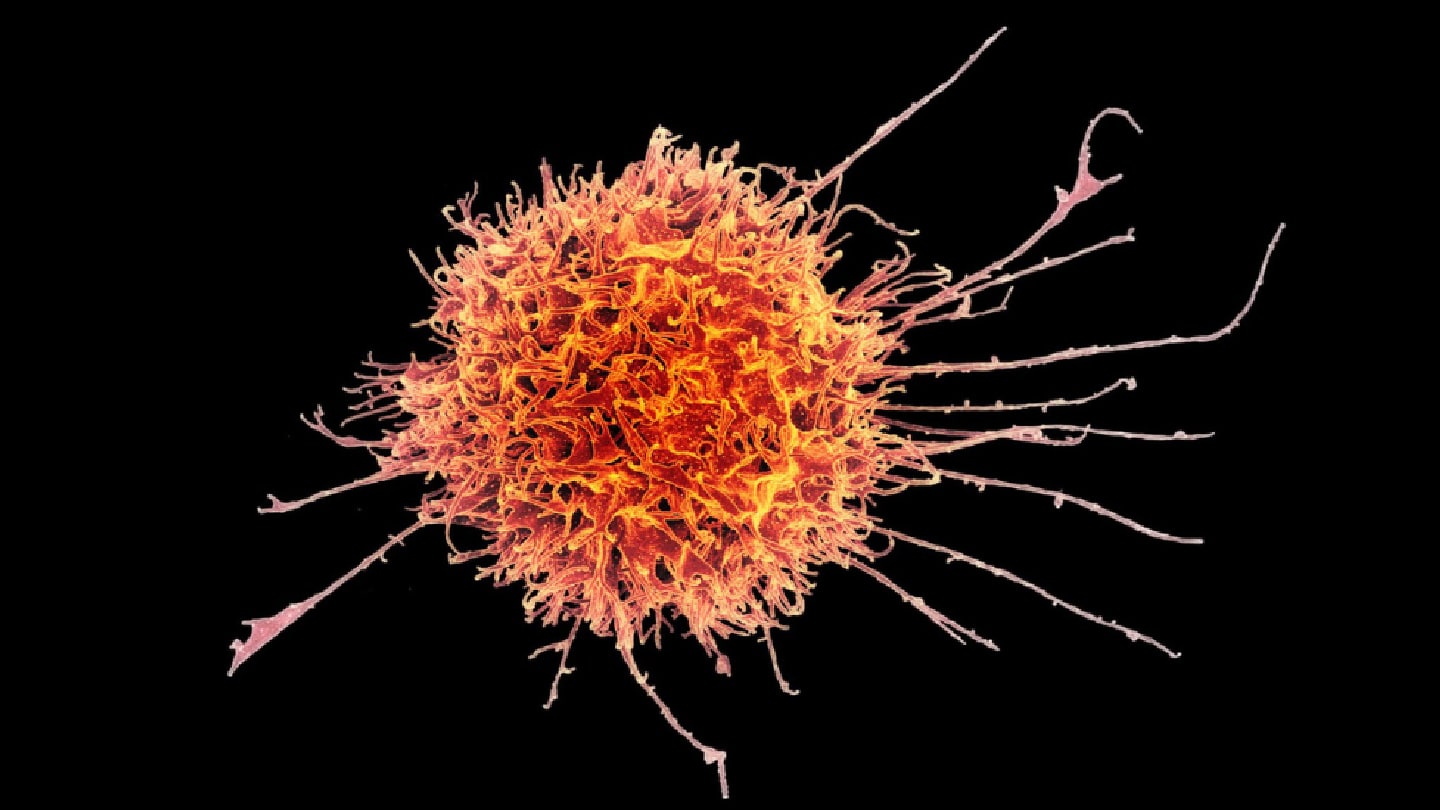
Tissue-resident NK cells from donor blood significantly slowed solid tumor growth in mice, indicating potential for off-the-shelf cell therapy.
2
Researchers differentiated NK cells into a cytotoxic tissue-resident phenotype, enhancing their infiltration into solid tumors compared to conventional NK cells.
3
Adoptive transfer of these NK cells reduced tumor burden in various solid tumor models, including head and neck squamous cell carcinoma and melanoma.
4
Combining tissue-resident NK cells with cetuximab resulted in greater tumor growth suppression than either treatment alone.
5
The approach allows for allogeneic use of NK cells, potentially creating a non-personalized, accessible cell therapy for a broader patient population.