Fecal microbiota transplantation reduces inflammation and modulates gene expression in HIV-infected double humanized-BLT (dHu-BLT) mice on antiretroviral therapy - Takeaways - MDSpire
Coming Soon: Introducing MDSpire News. Learn more
Conexiant’s news site is now MDSpire News. Learn more

Fecal Microbiota Transplantation Alleviates Inflammation and Influences Gene Expression in HIV-Infected Double Humanized-BLT Mice Under Antiretroviral Treatment

  • By

  • Saroj Chandra Lohani

  • Chi Zhang

  • Subhra Mandal

  • Miaoyun Zhao

  • Yilun Cheng

  • Amanda E. Ramer-Tait

  • Qingsheng Li

  • June 3, 2026

Share

  • 1

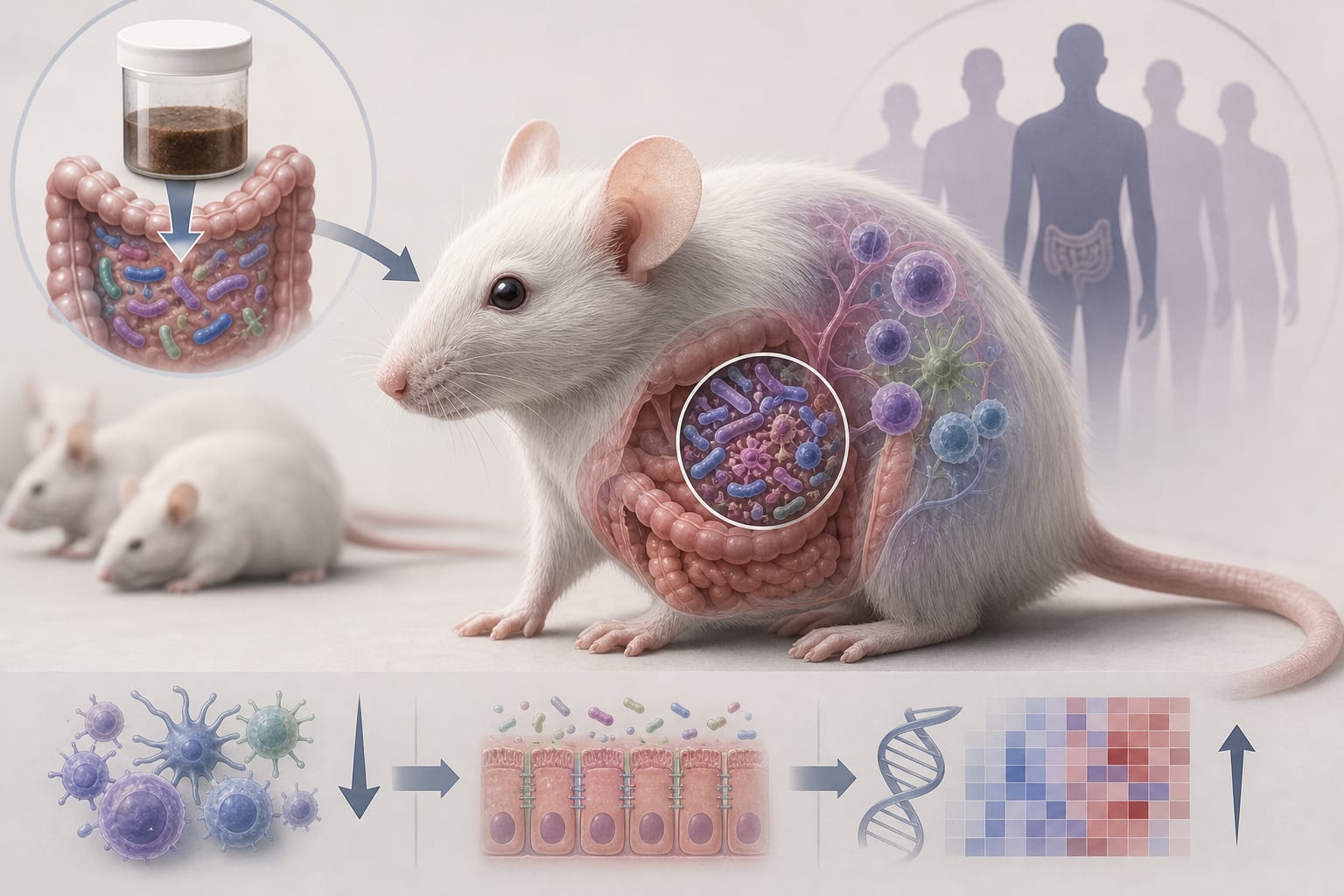
    Fecal microbiota transplantation (FMT) may improve gut health and reduce inflammation in HIV-infected mice on antiretroviral therapy (ART).

  • 2

    FMT supplementation increased beneficial gut bacteria and modulated gene expression related to tissue maintenance in HIV-infected mice receiving ART.

  • 3

    The study found significant reductions in plasma inflammatory markers in mice receiving FMT compared to those on ART alone.

  • 4

    FMT altered the transcriptomic profile of intestinal tissue, downregulating inflammation-associated genes and pathways.

  • 5

    These findings suggest FMT could be a valuable adjunctive therapy for managing comorbidities in people living with HIV on ART.

Original Source(s)

Related Content