Conexiant’s news site is now MDSpire News. Learn more
Advertisement
Approaching Uveitic Retinal Detachments
Uveitis Corner: Careful control of inflammation, thoughtful surgical planning, and vigilant postoperative management can help optimize outcomes in these complex cases.
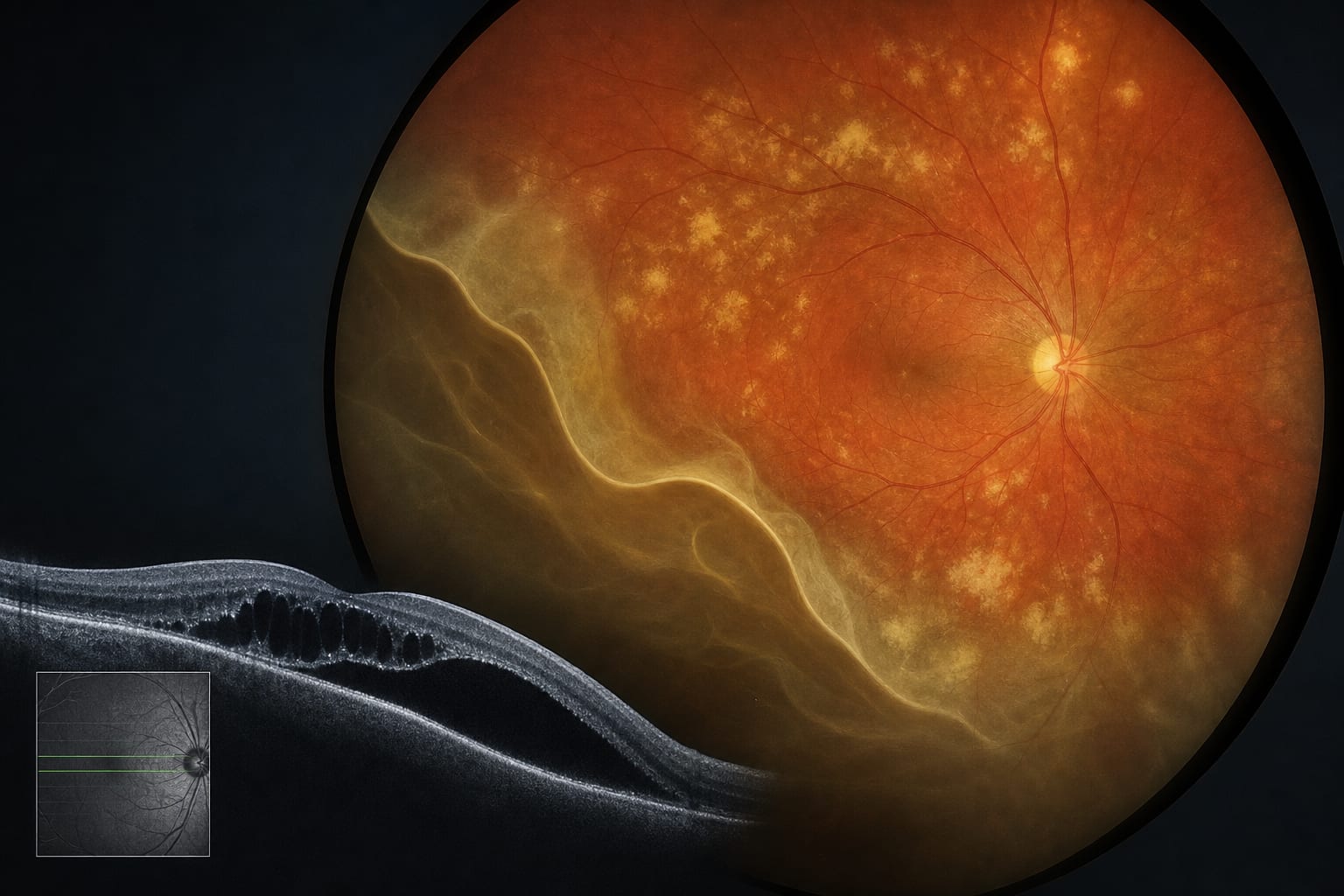
Uveitic retinal detachments occur more frequently and are more complex than those in non-uveitic patients, leading to higher rates of proliferative vitreoretinopathy.
2
Active inflammation is present in 46% of uveitic patients undergoing retinal detachment surgery, complicating surgical outcomes.
3
Preoperative imaging techniques like widefield fundus photography and optical coherence tomography can aid in assessing retinal detachments.
4
Scleral buckle placement is often preferred for managing retinal detachments in uveitic patients, but may require modifications due to scleral thinning.
5
Silicone oil is useful in certain cases of retinal detachment but can interfere with intravitreal injections and contribute to inflammatory membrane formation.