Development and feasibility testing of a dynamic image-derived simulation framework for assessing left atrioventricular valve repair strategies - Takeaways - MDSpire

Development and feasibility testing of a dynamic image-derived simulation framework for assessing left atrioventricular valve repair strategies

  • By

  • Stephen Ching

  • Christopher Zelonis

  • Christian Herz

  • Patricia Sabin

  • Matthew Daemer

  • Muhammad Nuri

  • Yan Wang

  • Devin W. Laurence

  • Jonathan M. Chen

  • Lindsay S. Rogers

  • Michael D. Quartermain

  • John Moore

  • Terry Peters

  • Elvis Chen

  • Matthew A. Jolley

  • June 8, 2026

  • 0 min

Share

  • 1

    Approximately 2100 children are born with an atrioventricular canal (AVC) annually in the USA, with higher prevalence in those with Down Syndrome.

  • 2

    Surgical repair of complete atrioventricular canal aims to create a mitral-equivalent left atrioventricular valve, but 5-20% of repairs may require reintervention.

  • 3

    Left atrioventricular valve regurgitation is the most common cause of reintervention, often due to mechanical issues like leaflet prolapse and annular dilatation.

  • 4

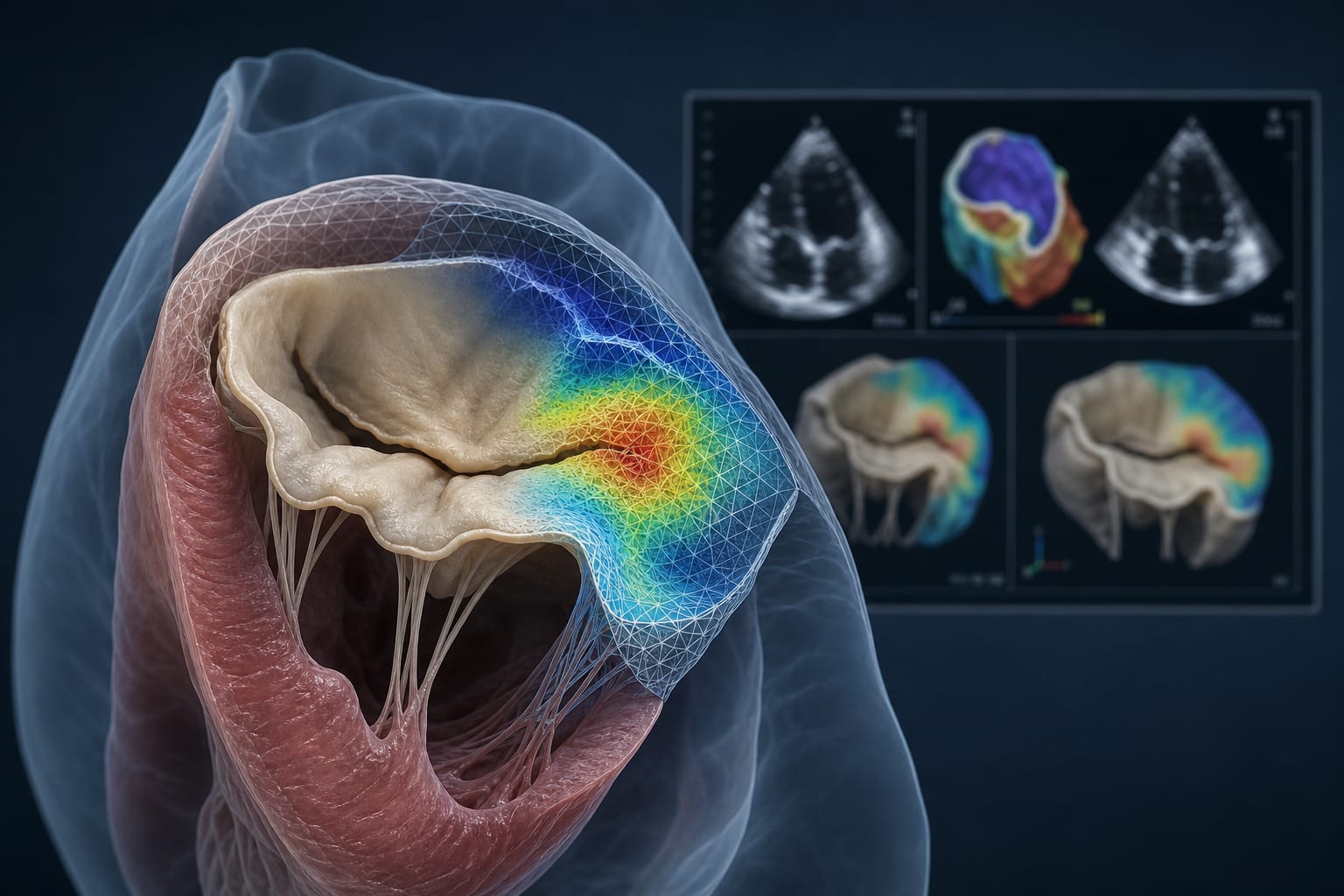
    Advancements in 3D echocardiography allow for detailed analysis of cardiac structures, but existing models often fail to simulate dynamic valve mechanics.

  • 5

    This study presents a dynamic simulation platform tailored for left atrioventricular valve anatomy to improve surgical repair strategies in pediatric patients.

Original Source(s)

Related Content