Serum CA19.9 for Detecting High-Grade Dysplasia and Invasive Carcinoma in Patients With Intraductal Papillary - Takeaways - MDSpire

Serum CA19.9 for Detecting High-Grade Dysplasia and Invasive Carcinoma in Patients With Intraductal Papillary

  • By

  • Charlotte A. Leseman

  • Alessandro M. Bonomi

  • Job Schuitema

  • Stefano Granieri

  • Margaret Sällberg Chen

  • Ajay V. Maker

  • Zeeshan Ateeb

  • Laura D. Wood

  • Rogier P. Voermans

  • Giovanni Marchegiani

  • Marco Del Chiaro

  • Johannes C. F. Ket

  • Anne Marie Lennon

  • Marc G. Besselink

  • Global Evidence-Based Guidelines for the Management of Pancreatic Cystic Neoplasms Group

  • June 26, 2026

  • 0 min

Share

  • 1

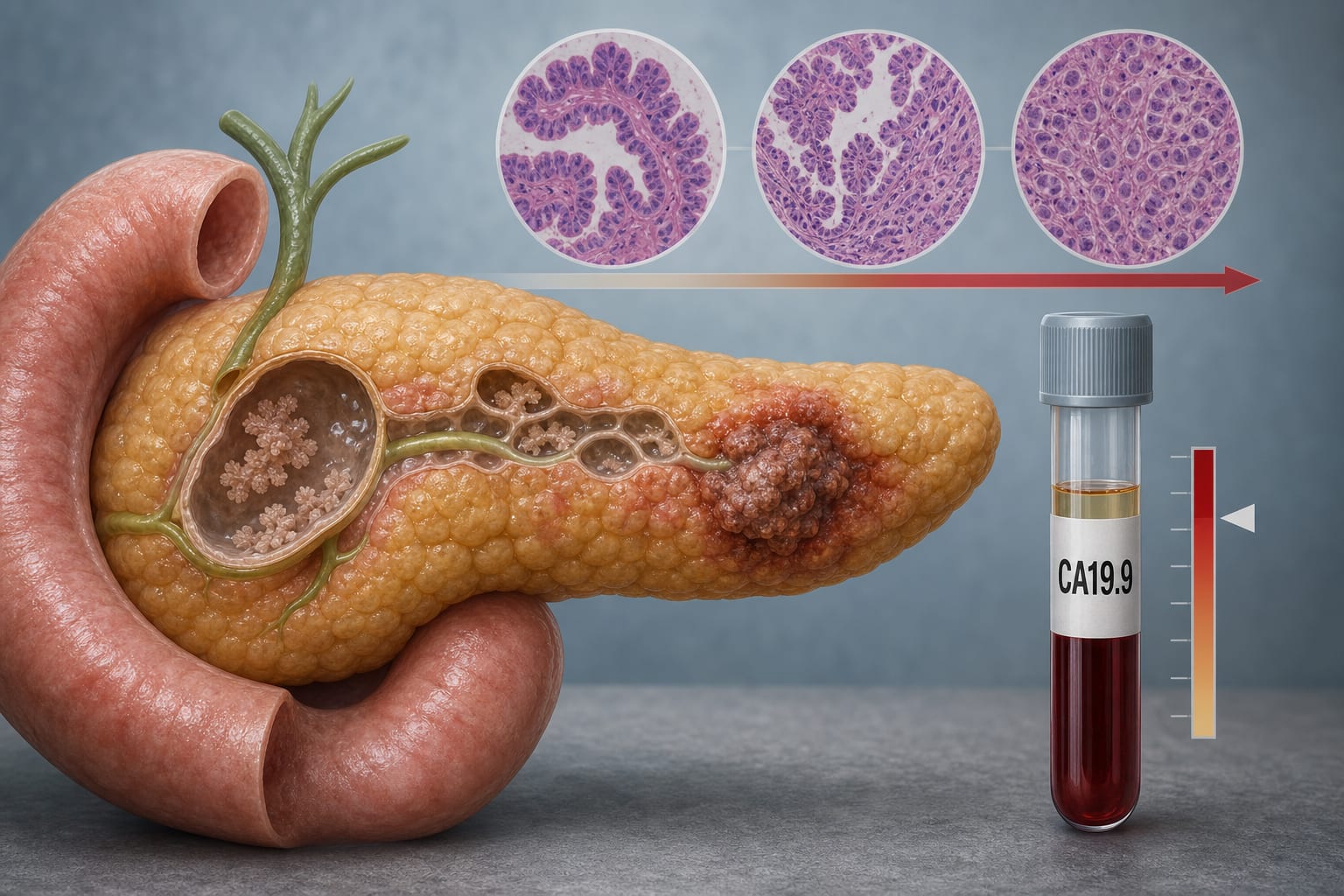
    Intraductal papillary mucinous neoplasm (IPMN) is a precursor to invasive carcinoma and a risk factor for pancreatic ductal adenocarcinoma.

  • 2

    Serum CA19.9 levels are used as a tumor marker in pancreatic cancer and may indicate progression to high-grade dysplasia or invasive carcinoma in IPMN.

  • 3

    Current guidelines consider CA19.9 levels ≥37 U/mL as a relative indication for surgery, but the role of CA19.9 in IPMN remains controversial.

  • 4

    This meta-analysis aims to evaluate the diagnostic accuracy of CA19.9 for identifying high-grade dysplasia and invasive carcinoma in IPMN patients.

  • 5

    The study included 24 retrospective studies with 5281 patients, revealing that 20.8% had elevated CA19.9 levels and 41.7% were diagnosed with high-grade dysplasia or invasive carcinoma.

Original Source(s)

Related Content