The contribution of mechanical ventilation to critical illness-associated diaphragm dysfunction: longitudinal trajectories alone do not establish causal primacy - Takeaways - MDSpire
Coming Soon: Introducing MDSpire News. Learn more
Conexiant’s news site is now MDSpire News. Learn more

Assessing the Role of Mechanical Ventilation in Diaphragm Dysfunction Associated with Critical Illness: Longitudinal Patterns Alone Do Not Confirm Causality

  • By

  • Xibin Feng

  • Miao Yang

  • Wei Xu

  • September 5, 2026

Share

  • 1

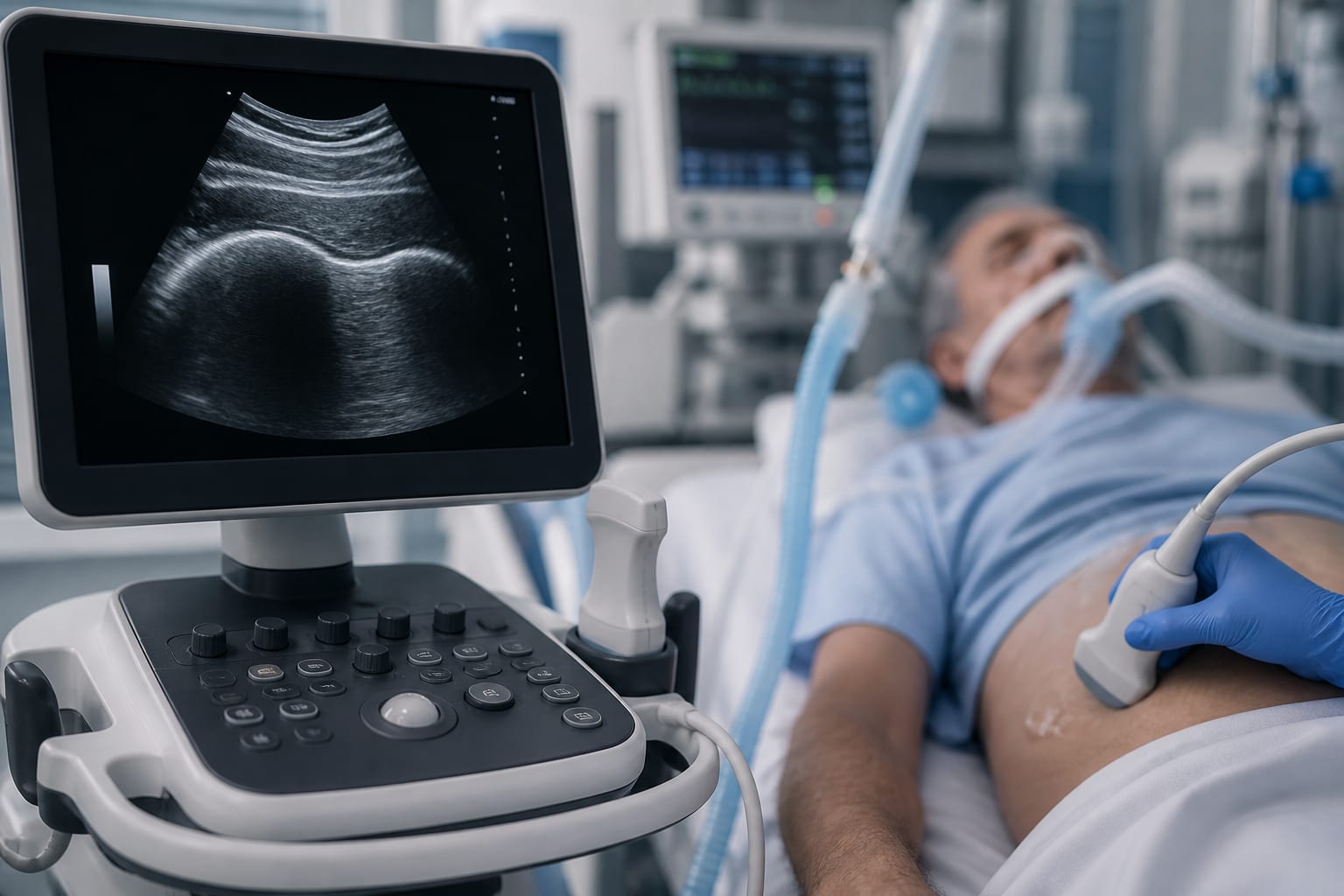
    Mechanical ventilation is not solely responsible for diaphragm weakness in critically ill patients, as critical illness also significantly contributes to dysfunction.

  • 2

    The review suggests diaphragm dysfunction is primarily a manifestation of critical illness rather than a direct consequence of mechanical ventilation.

  • 3

    Weakness detected early in patients does not quantify the impact of subsequent ventilation strategies due to pre-existing conditions.

  • 4

    Improvements in diaphragm function during ventilation do not confirm that ventilatory management is the sole contributing factor.

  • 5

    Future research should focus on defining causal contrasts between ventilatory strategies and their effects on diaphragm function and patient outcomes.

Original Source(s)

Related Content