-
1
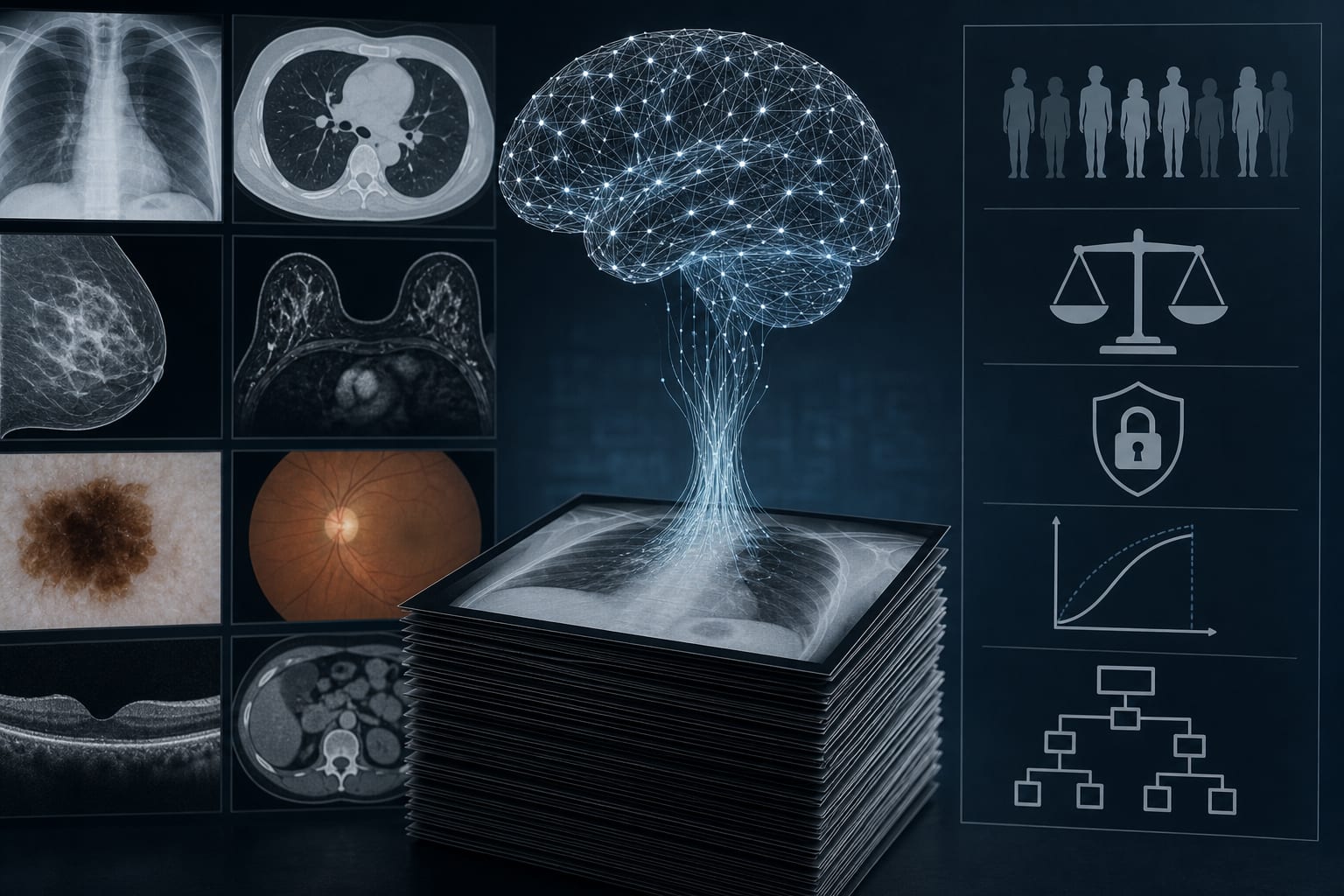
Responsible AI in medical imaging requires high diagnostic accuracy, transparent reasoning, equitable performance, privacy protection, and clinical trustworthiness.
-
2
The systematic review synthesized 24 studies from 2020 to 2025 focusing on AI applications in various imaging modalities for disease detection.
-
3
Explainability methods like Grad-CAM and LIME were prevalent, while fairness and privacy-preserving learning were less frequently represented in the studies.
-
4
Several studies reported accuracy or sensitivity above 90%, but results should be interpreted cautiously due to reliance on internal validation and curated datasets.
-
5
Responsible medical imaging AI evaluation should include external validation, privacy risk analysis, clinician-centered explanation assessment, and post-deployment monitoring.