Distinct prognostic value of aspartate-to-alanine aminotransferase ratio (AAR) in traumatic brain injury versus hemorrhagic stroke: a cohort study of 1,069 patients - Takeaways - MDSpire

Distinct prognostic value of aspartate-to-alanine aminotransferase ratio (AAR) in traumatic brain injury versus hemorrhagic stroke: a cohort study of 1,069 patients

  • By

  • Dilmurat Gheyret

  • Xiaotao Gao

  • Ziwei Zhou

  • Lei Li

  • Jinchao Wang

  • Xu Zhang

  • Haoran Jia

  • Shu Zhang

  • Mirzat Turhon

  • Maimaitili Aisha

  • Cong Wang

  • Yuhan Li

  • Yingsheng Wei

  • Shuo An

  • Jian Sun

  • Jianning Zhang

  • Hengjie Yuan

  • Ye Tian

  • June 4, 2026

  • 0 min

Share

  • 1

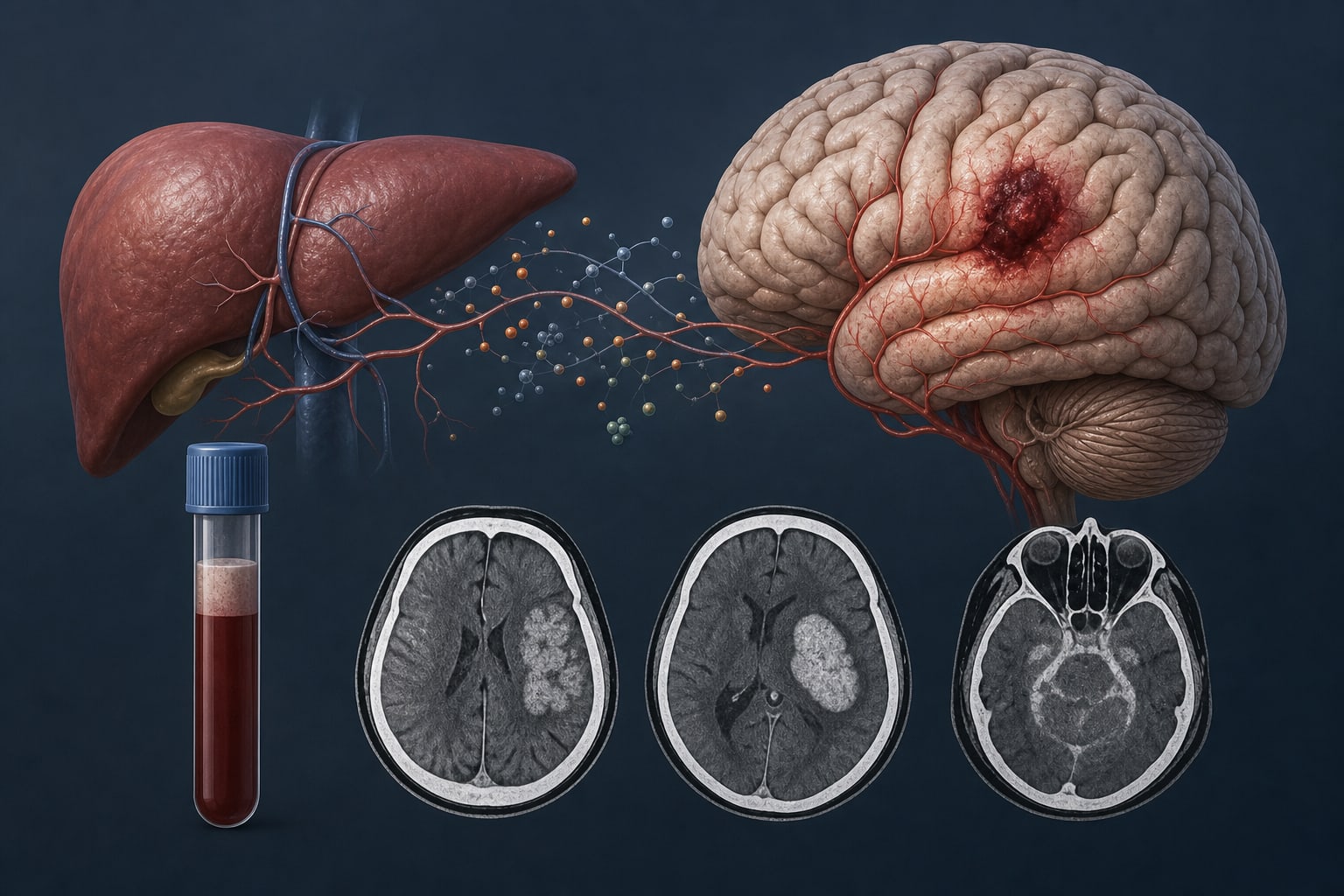
    The study analyzed 1,069 patients with traumatic brain injury (TBI), intracerebral hemorrhage (ICH), and aneurysmal subarachnoid hemorrhage (aSAH).

  • 2

    Higher aspartate aminotransferase-to-alanine aminotransferase ratio (AAR) was linked to poor outcomes, with an adjusted odds ratio of 1.34 in the overall cohort.

  • 3

    In TBI, elevated AAR was a strong independent predictor of unfavorable outcomes, with an adjusted odds ratio of 2.15, increasing to 5.38 for severe cases.

  • 4

    AAR showed no significant prognostic value in ICH or aSAH, indicating distinct pathophysiological mechanisms in these conditions.

  • 5

    The findings suggest that AAR reflects systemic metabolic stress in TBI but is not a universal biomarker for all types of acute brain injury.

Original Source(s)

Related Content