Association between neutrophil percentage-to-albumin ratio and adverse clinical outcomes after successful percutaneous coronary intervention for chronic total occlusion: a cohort study - Takeaways - MDSpire

Association between neutrophil percentage-to-albumin ratio and adverse clinical outcomes after successful percutaneous coronary intervention for chronic total occlusion: a cohort study

  • By

  • Song Wen

  • Xingjie Huang

  • Zehan Huang

  • Yuqing Huang

  • Hua Yang

  • Bin Zhang

  • July 9, 2026

  • 0 min

Share

  • 1

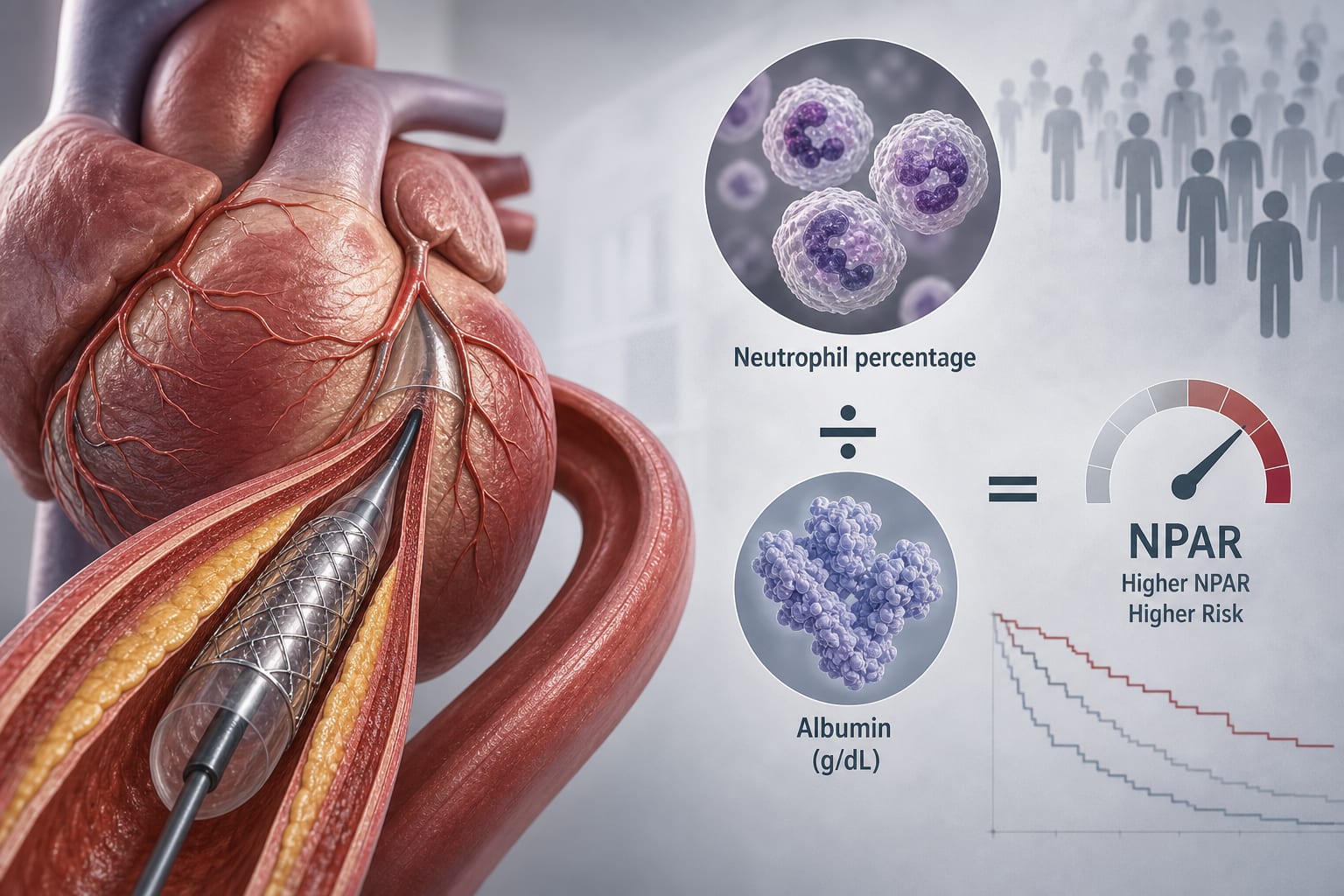
    The study analyzed 1513 patients who underwent successful percutaneous coronary intervention for chronic total occlusion.

  • 2

    Elevated neutrophil percentage-to-albumin ratio is independently associated with increased long-term mortality and cardiovascular events.

  • 3

    Each 1-standard deviation increase in NPAR correlates with a 50% higher risk of all-cause mortality and a 59% higher risk of cardiovascular mortality.

  • 4

    Time-dependent ROC analyses showed that NPAR improves discrimination for predicting all-cause mortality over 1, 2, and 3 years.

  • 5

    The study suggests that NPAR may serve as a simple biomarker for post-intervention risk stratification in CTO PCI patients.

Original Source(s)

Related Content