Fractionated stereotactic radiotherapy (fSRT) for symptomatic WHO grade 1 cavernous sinus meningiomas: long-term local control, clinical response, and toxicity outcomes - Takeaways - MDSpire

Fractionated stereotactic radiotherapy (fSRT) for symptomatic WHO grade 1 cavernous sinus meningiomas: long-term local control, clinical response, and toxicity outcomes

  • By

  • Ryan Shah

  • Shray Jain

  • Nilanjan Haldar

  • Lauren A. Holt

  • Robert L. Walker

  • Christopher J. Farrell

  • Debanjan Haldar

  • James J. Evans

  • Gregory S. Alexander

  • Wenyin Shi

  • June 30, 2026

  • 0 min

Share

  • 1

    Meningiomas are the most common primary intracranial neoplasm in adults, with a higher incidence in patients over 65 years old.

  • 2

    Over 80% of meningiomas are benign, low-grade tumors that can cause significant morbidity through compression of critical brain structures.

  • 3

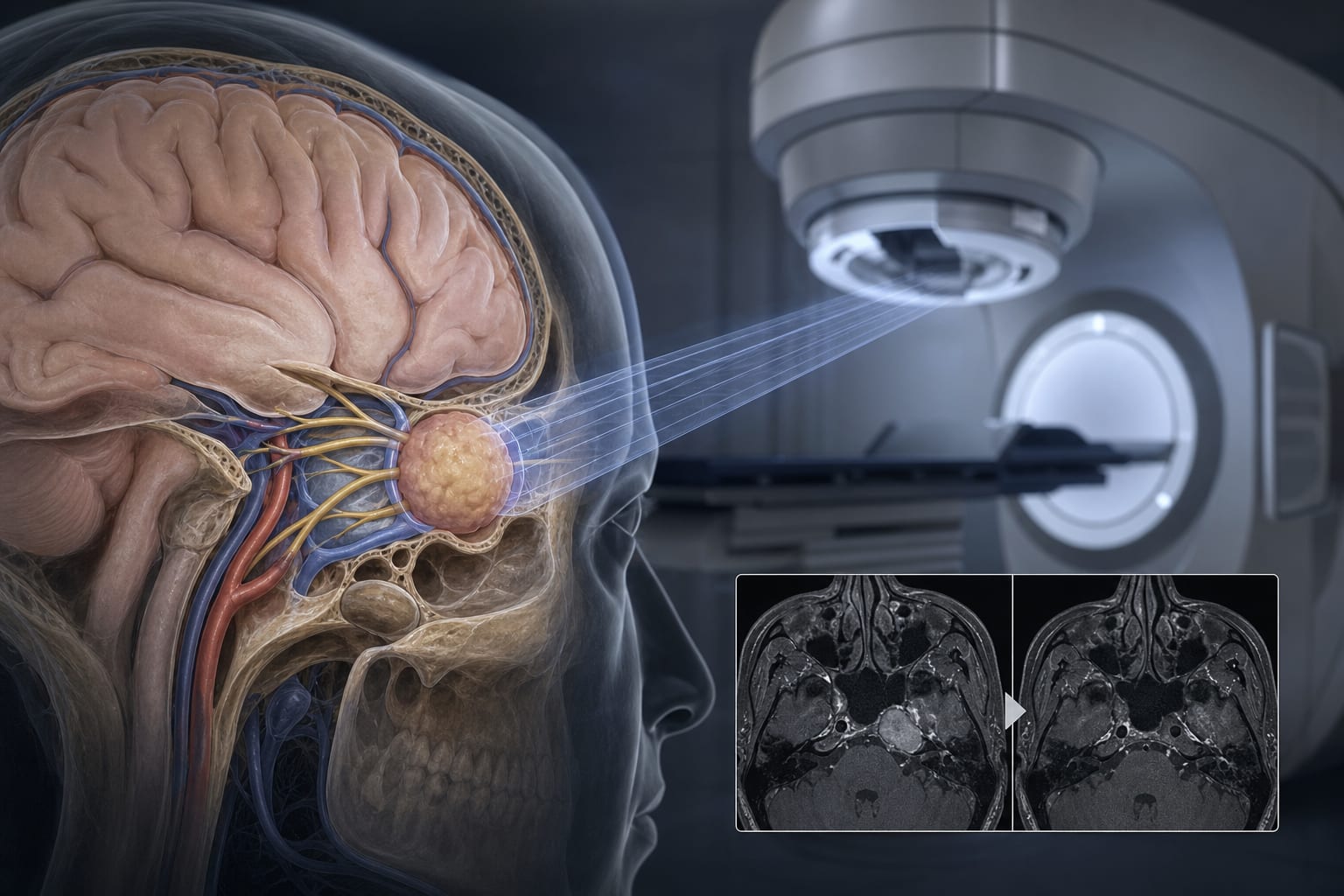
    Fractionated stereotactic radiotherapy (fSRT) delivers 50–54 Gy over 25–30 fractions and offers reduced risks compared to stereotactic radiosurgery (SRS).

  • 4

    Long-term local control rates with fSRT for cavernous sinus meningiomas exceed 85% at 5 and 10 years, with a superior complication profile compared to SRS.

  • 5

    The study aims to report long-term outcomes, including local control, symptom response, and treatment-related toxicity for patients treated with fSRT.

Original Source(s)

Related Content