Red Blood Cell Transfusion Characteristics and Morbidity or Mortality in Very-Low-Birth-Weight Infants - Takeaways - MDSpire

Red Blood Cell Transfusion Characteristics and Morbidity or Mortality in Very-Low-Birth-Weight Infants

  • By

  • Jeanne E. Hendrickson

  • Rebecca J. Birch

  • Elizabeth A. K. Rowley

  • Martha Sola-Visner

  • Brian R. Branchford

  • Xuxin Chen

  • Brian Custer

  • Robert A. DeSimone

  • Daniel W. Bougie

  • Erika M. Edwards

  • Ruchika Goel

  • Jerome Gottschall

  • Eldad A. Hod

  • Morvarid Moayeri

  • Nareg H. Roubinian

  • Oliver Karam

  • Jeffrey J. VanWormer

  • Elizabeth F. Stone

  • Naomi L. C. Luban

  • Cassandra D. Josephson

  • Ravi M. Patel

  • NHLBI Recipient Epidemiology Donor Evaluation Study–IV–Pediatric (REDS-IV-P)

  • Alan E. Mast

  • Lisa Baumann Kreuziger

  • Elliott P. Vichinsky

  • Bryan R. Spencer

  • Bruce S. Sachais

  • Kathy Chapman

  • Philip J. Norris

  • Mars Stone

  • Paul M. Ness

  • Steve H. Kleinman

  • June 24, 2026

  • 0 min

Share

  • 1

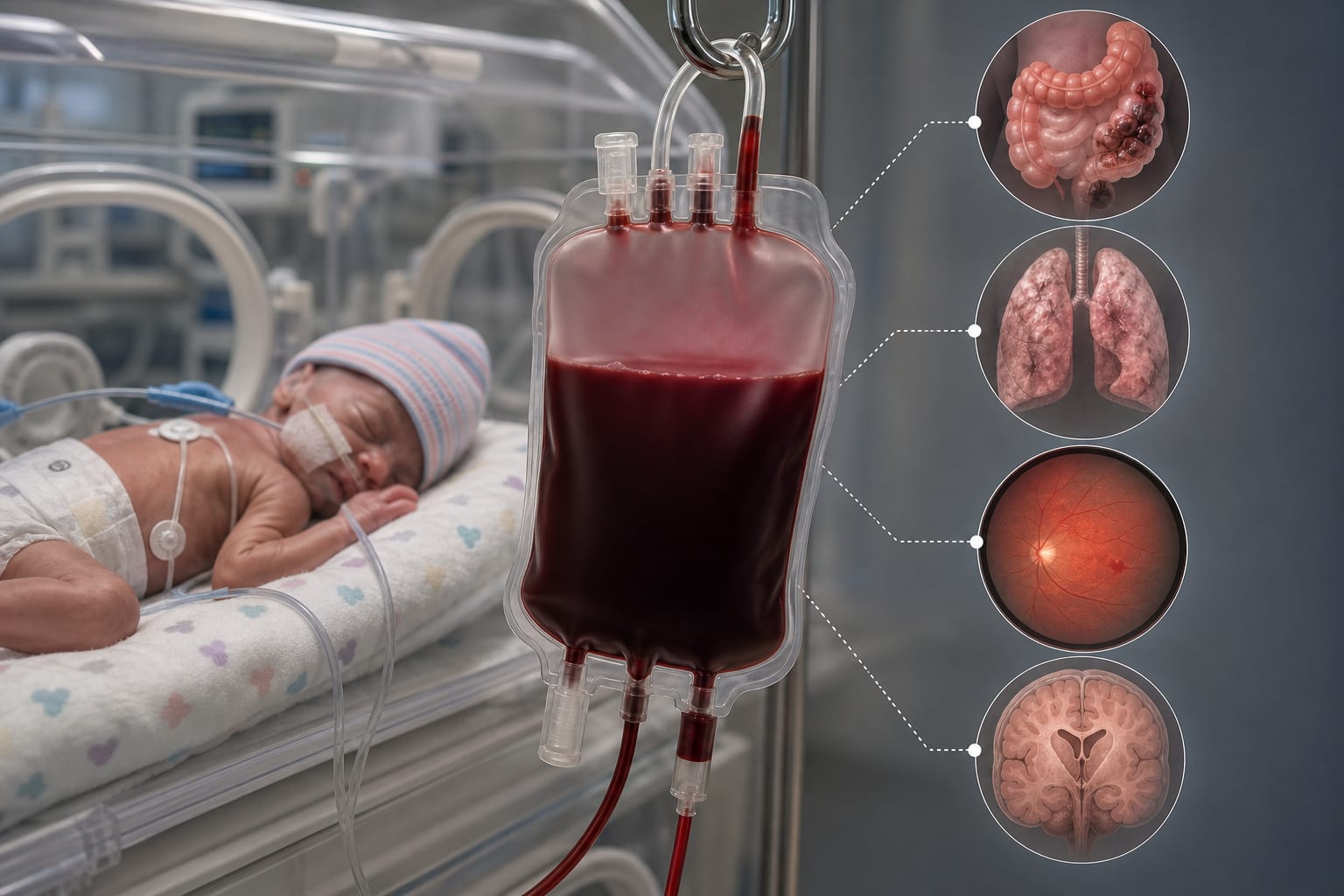
    More than half of very-low-birth-weight infants receive red blood cell transfusions, which can lead to complications like necrotizing enterocolitis and bronchopulmonary dysplasia.

  • 2

    A systematic review indicated no significant difference in outcomes between higher and lower red blood cell transfusion thresholds at discharge or neurodevelopmental follow-up.

  • 3

    The TIPI study aimed to identify transfusion characteristics linked to morbidity and mortality in VLBW infants using a comprehensive linked database.

  • 4

    The primary outcome of the study included severe complications such as grade 3 intraventricular hemorrhage, necrotizing enterocolitis, and death.

  • 5

    Statistical analyses were conducted using generalized estimating equations and Cox proportional hazard modeling to assess the impact of transfusion characteristics.

Original Source(s)

Related Content