Immunotherapeutic potential of PD-1 blockade in chronic Leishmania mexicana infection through the enhancement of progenitor-like CXCR5+ and intermediate CXCR5+TIM-3+ exhausted T cells - Takeaways - MDSpire

Immunotherapeutic potential of PD-1 blockade in chronic Leishmania mexicana infection through the enhancement of progenitor-like CXCR5+ and intermediate CXCR5+TIM-3+ exhausted T cells

  • By

  • Mariana Diupotex

  • Julián A. Gajón

  • Laura C. Bonifaz

  • Jaime Zamora-Chimal

  • Ingeborg Becker

  • June 29, 2026

  • 0 min

Share

  • 1

    Diffuse cutaneous leishmaniasis (DCL) caused by Leishmania mexicana is characterized by treatment resistance and high parasite load.

  • 2

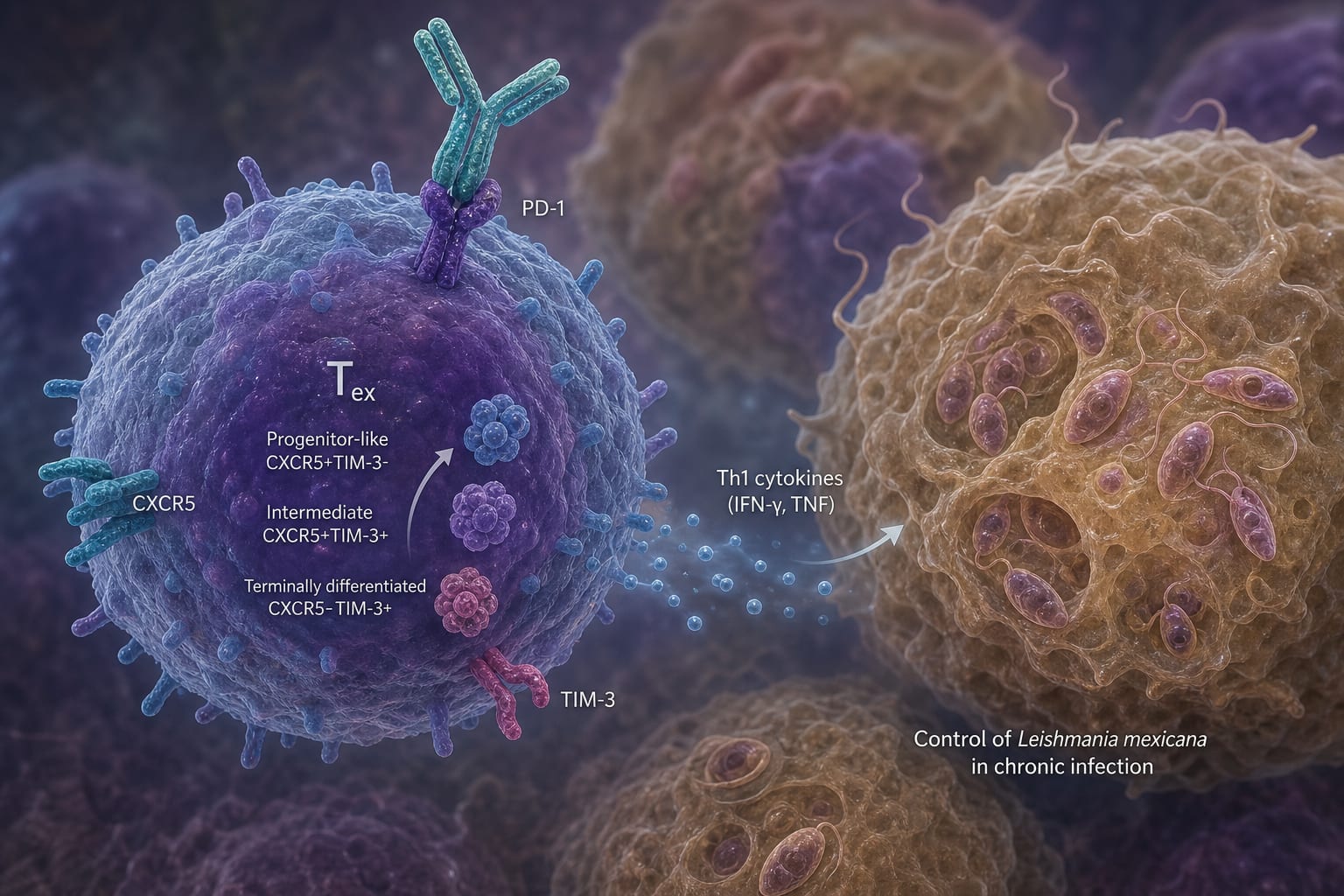
    Anti-PD-1 immunotherapy limited lesion progression and reduced parasite burden in chronically infected mice.

  • 3

    Treatment enhanced antigen-specific Th1 immune response and reinvigorated CD8+ and CD4+ T cells in draining lymph nodes.

  • 4

    PD-1 blockade increased progenitor-like and intermediate exhausted T cell populations within lesion sites.

  • 5

    The study suggests PD-1/PD-L1 checkpoint blockade may be a potential immunotherapeutic strategy for DCL.

Original Source(s)

Related Content