Aging-driven metabolic abnormalities remodel intercellular communication through the gut–liver–heart axis and may promote coronary artery disease: the key role of bile acid metabolism - Takeaways - MDSpire
Coming Soon: Introducing MDSpire News. Learn more
Conexiant’s news site is now MDSpire News. Learn more

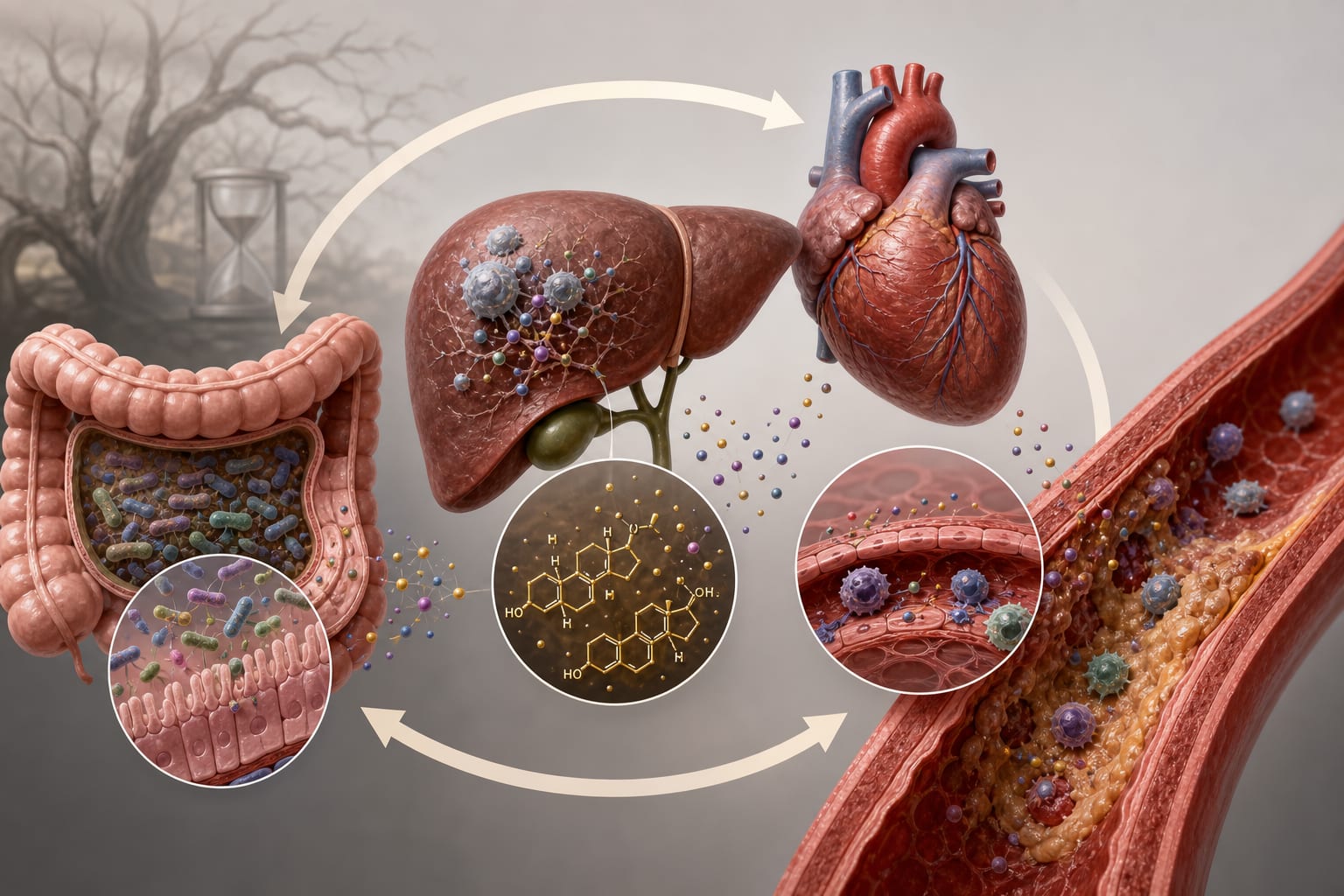
Metabolic Changes Associated with Aging Alter Intercellular Interactions via the Gut–Liver–Heart Axis and May Contribute to Coronary Artery Disease: The Critical Function of Bile Acid Metabolism

  • By

  • Wei Chen

  • Yue Sun

  • Chu-fan Meng

  • Si-tong Wu

  • Xin-yi Jiang

  • Xian-meng Meng

  • Qing-feng Wang

  • July 6, 2026

Share

  • 1

    Coronary artery disease (CAD) is the leading cause of cardiovascular mortality, with prevalence increasing significantly in older adults.

  • 2

    Aging contributes to CAD through mechanisms like cellular senescence and the senescence-associated secretory phenotype (SASP), promoting chronic inflammation.

  • 3

    Endothelial dysfunction and large-artery stiffness are key vascular phenotypes of aging, independently predicting future cardiovascular events.

  • 4

    Gut microbiota dysbiosis and altered bile acid metabolism are linked to CAD, affecting systemic inflammation and cardiovascular health.

  • 5

    The gut, liver, and heart form a communication network that influences cardiovascular outcomes, highlighting the importance of multi-organ interactions.

Original Source(s)

Related Content