Identifying clinical features associated with electroconvulsive therapy response in adolescents with major depressive disorder using machine learning - Takeaways - MDSpire

Identifying clinical features associated with electroconvulsive therapy response in adolescents with major depressive disorder using machine learning

  • By

  • Bingyang Zha

  • Linjie Li

  • Jinglan He

  • Jun Cao

  • Su Hong

  • Li Kuang

  • May 7, 2026

  • 0 min

Share

  • 1

    Electroconvulsive therapy (ECT) is effective for adolescent major depressive disorder (MDD), but response rates vary significantly among individuals.

  • 2

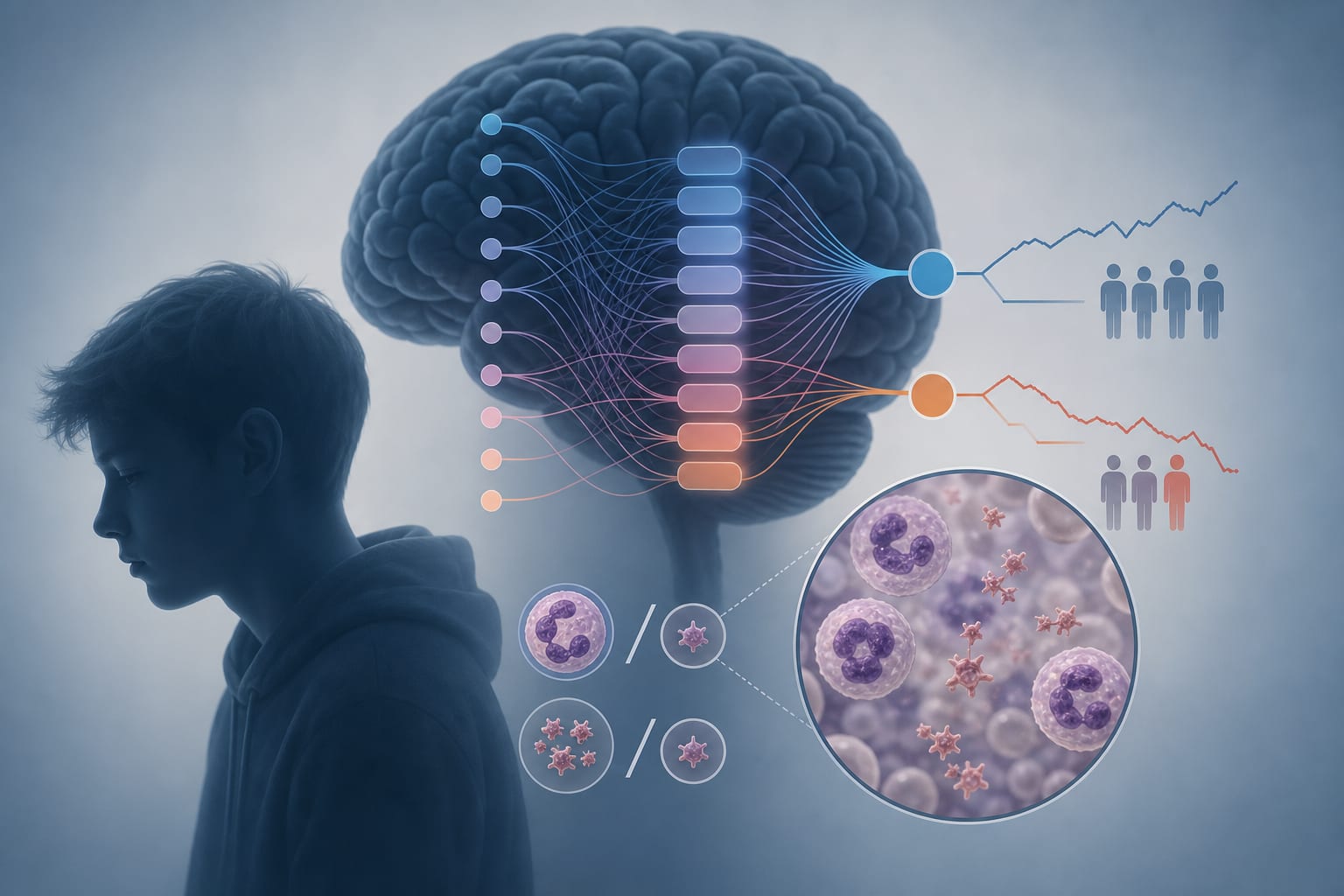
    A study of 503 adolescent MDD patients identified the neutrophil-to-platelet ratio and pre-treatment HAMD score as key predictors of poor ECT response.

  • 3

    The machine learning model achieved an AUC of 0.731, indicating its effectiveness in predicting ECT outcomes based on baseline clinical data.

  • 4

    Patients with poor ECT response completed significantly fewer treatment sessions compared to those with a good response.

  • 5

    Identifying high-risk patients early allows for targeted management, enhancing the likelihood of completing adequate ECT courses.

Original Source(s)

Related Content