On-treatment change in bone turnover markers predicts 2-year bone mineral density after sequential therapy following romosozumab: a real-world cohort study - Takeaways - MDSpire

On-treatment change in bone turnover markers predicts 2-year bone mineral density after sequential therapy following romosozumab: a real-world cohort study

  • By

  • Ryo Nakano

  • Ayumi Ichisawa

  • Kenya Saruta

  • Masakazu Kogawa

  • Akira Fukuda

  • June 17, 2026

  • 0 min

Share

  • 1

    Romosozumab significantly increases bone mineral density (BMD), but predicting long-term BMD gains after therapy is challenging.

  • 2

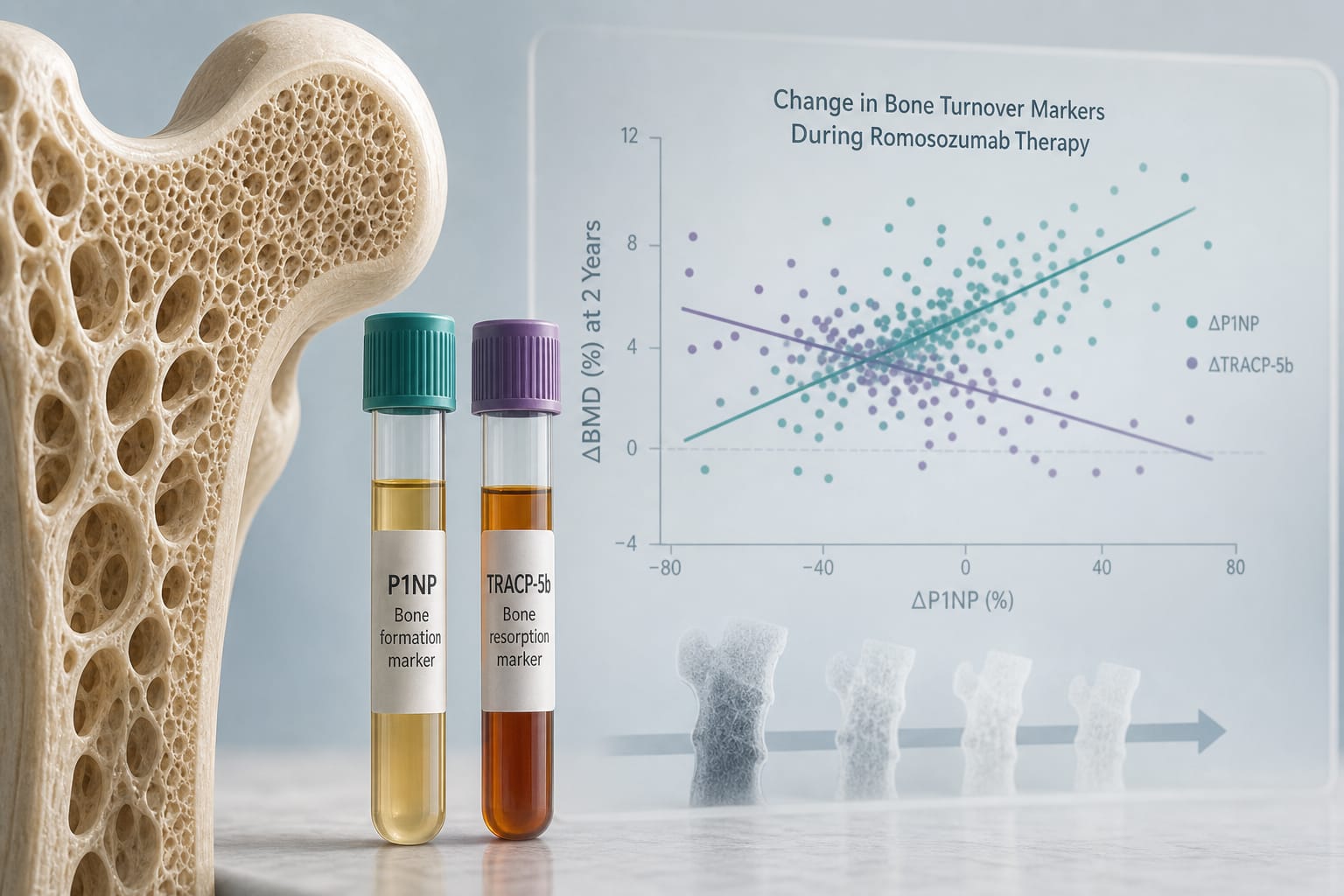
    On-treatment changes in procollagen type I N-terminal propeptide (ΔP1NP) and tartrate-resistant acid phosphatase 5b (ΔTRACP-5b) were analyzed.

  • 3

    A greater decline in ΔP1NP during romosozumab treatment predicted greater cumulative BMD gain at 24 months.

  • 4

    The optimal ΔP1NP cutoff for predicting a good response was identified as -40.3 μg/L, with stronger predictive value in treatment-naïve patients.

  • 5

    The study highlights the clinical utility of monitoring bone turnover markers during romosozumab treatment, necessitating further validation.

Original Source(s)

Related Content