Skin Impacts and Tradeoffs of GLP-1 Therapy: Improved Patient-Reported Outcomes of Inflammatory Skin Disease in the Era of “Ozempic Face” - Takeaways - MDSpire
Coming Soon: Introducing MDSpire News. Learn more
Conexiant’s news site is now MDSpire News. Learn more

Dermatological Effects and Considerations of GLP-1 Receptor Agonist Therapy: Enhanced Patient-Reported Outcomes for Inflammatory Skin Conditions Amidst the "Ozempic Face" Phenomenon

  • By

  • Saroja Rao

  • Isabella Midura

  • Kathyana P. Santiago Mangual

  • Leon I. Igel

  • Katherine H. Saunders

  • Jocelyn Carter

  • Jenny E. Murase

  • Arianne Shadi Kourosh

  • August 11, 2026

Share

  • 1

    The use of GLP-1 receptor agonists for weight management has significantly increased, with a notable rise in prescriptions among individuals without diabetes.

  • 2

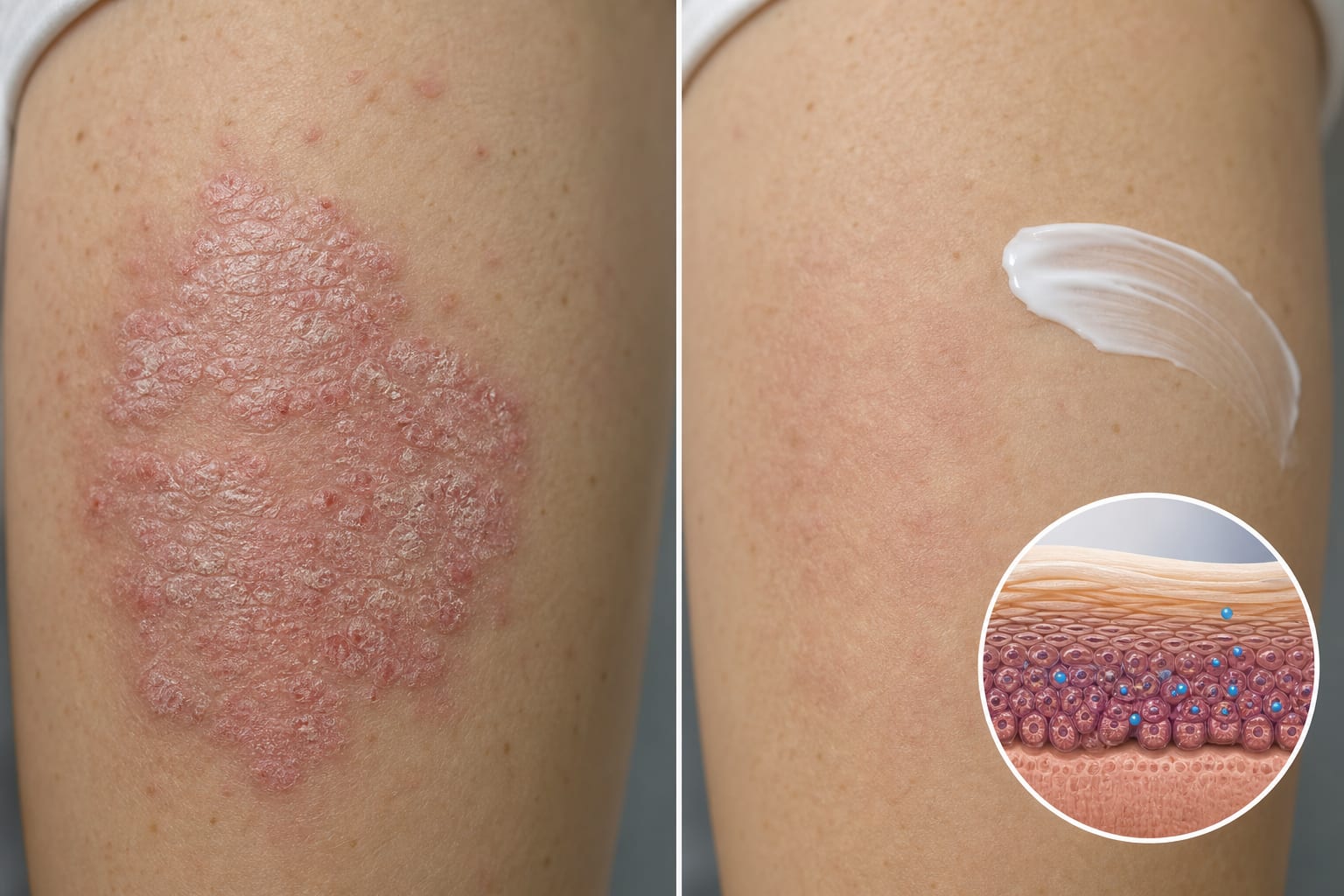
    Patients reported improvements in inflammatory skin conditions like psoriasis and hidradenitis suppurativa while undergoing GLP-1RA treatment.

  • 3

    Higher percentages of weight loss correlated with increased reports of negative dermatologic effects, including skin sagging and hair loss.

  • 4

    Among patients losing over 20% of body weight, 72% reported skin sagging, and 52% noted hair loss as significant adverse outcomes.

  • 5

    The study highlights the need for further research on patient-reported dermatologic effects associated with GLP-1RA weight management therapies.

Original Source(s)

Related Content