Clinical outcomes of plastic versus self-expanding metal stents in malignant hilar biliary obstruction - Takeaways - MDSpire

Clinical outcomes of plastic versus self-expanding metal stents in malignant hilar biliary obstruction

  • By

  • Pastor Joaquín Ortiz Mendieta

  • Bruno da Costa Martins

  • Deborah Marques Centeno

  • Julia Mayumi Gregorio

  • Rafael Utimura Sueta

  • Adriana Vaz Safatle Ribeiro

  • Caterina Maria Pia Simoni Pennacchi

  • Carla Cristina Gusmon

  • Gustavo Andrade de Paulo

  • Luciano Henrique Lenz Tolentino

  • Marcelo Simas de Lima

  • Renata Nobre Moura

  • Sebastian Naschold Geiger

  • Fauze Maluf-Filho

  • July 8, 2026

  • 0 min

Share

  • 1

    Malignant hilar biliary obstruction has a poor prognosis, with a 5-year survival rate of less than 10%.

  • 2

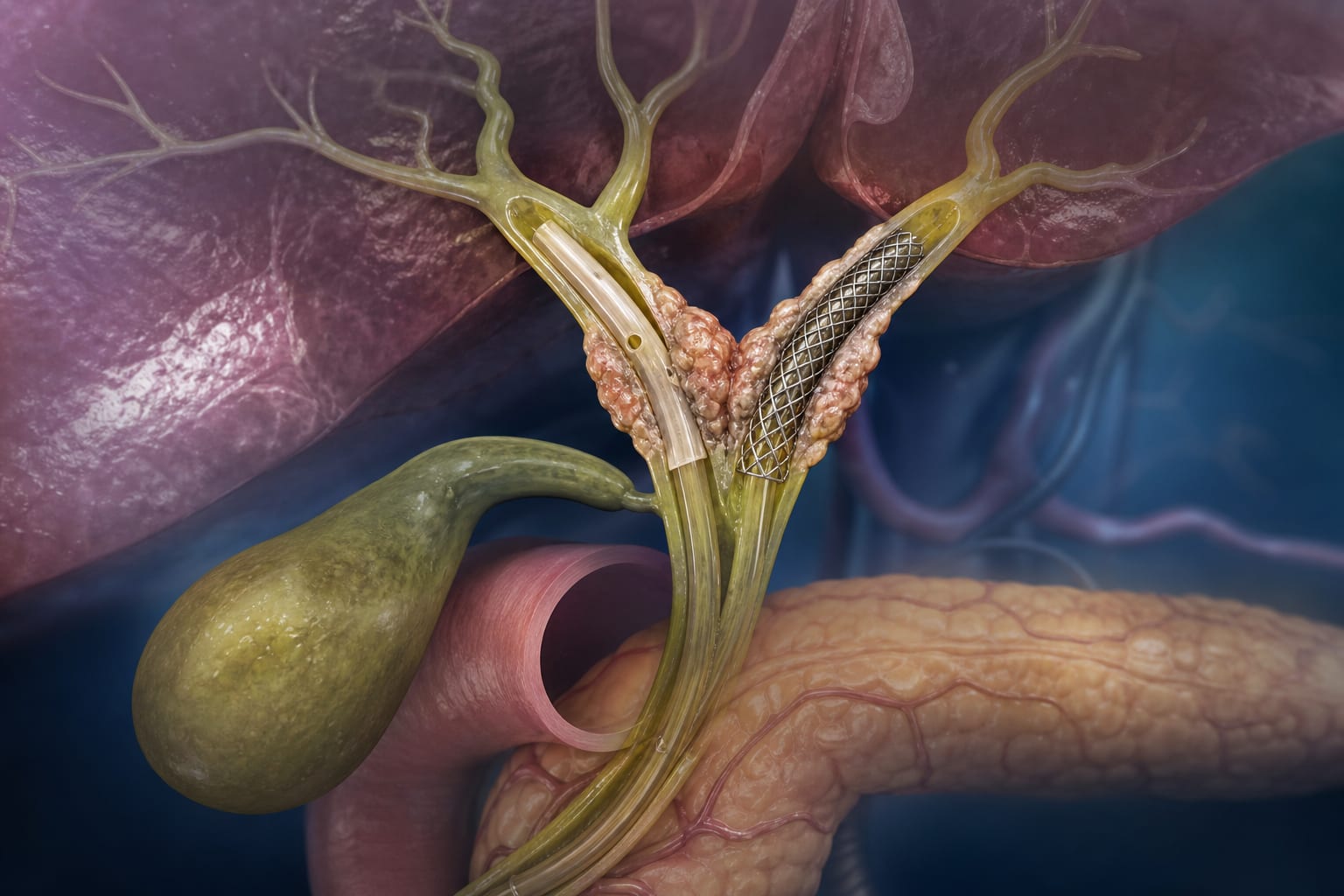
    Endoscopic drainage using stent placement is the preferred palliative approach for managing malignant hilar biliary obstruction.

  • 3

    Plastic stents and uncovered self-expanding metallic stents are commonly used for endoscopic drainage, but their effectiveness varies.

  • 4

    SEMS generally show lower dysfunction rates and longer patency compared to plastic stents, though survival benefits remain debated.

  • 5

    Reintervention may be necessary for recurrent biliary obstruction, especially in patients undergoing systemic treatments.

Original Source(s)

Related Content