Clinical and radiographic factors associated with surgical approach selection in total hip arthroplasty: a preliminary machine learning analysis - Takeaways - MDSpire

Factors Influencing Surgical Approach Choice in Total Hip Arthroplasty: An Initial Analysis Using Machine Learning Techniques

  • By

  • Meng Li

  • Yuanye Ge

  • Dalin Wang

  • Peng Li

  • Haoyan Sun

  • Xiang Zhang

  • Zhe Wang

  • July 21, 2026

Share

  • 1

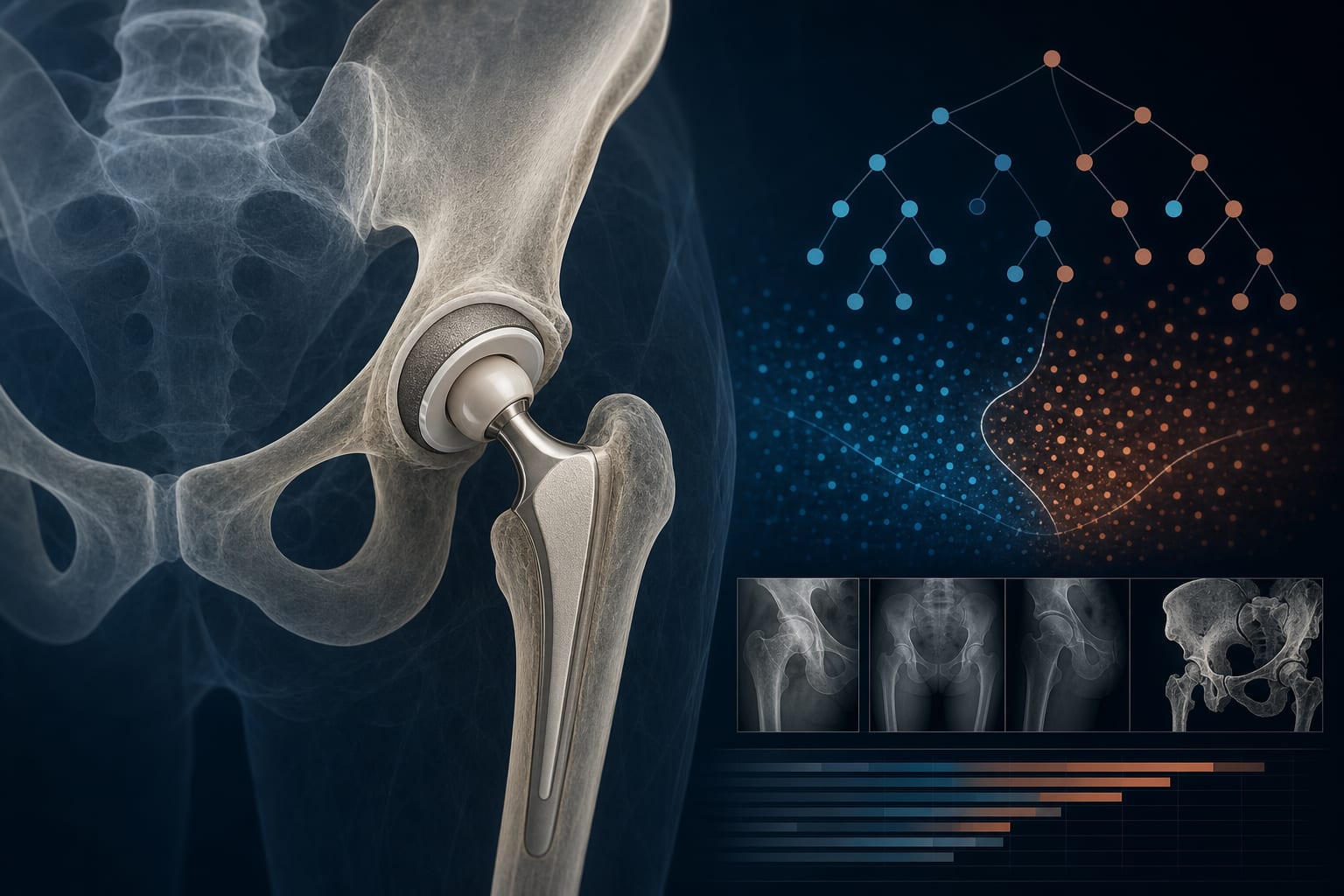
    The study analyzed 98 patients undergoing total hip arthroplasty, comparing the direct anterior approach (DAA) and the posterolateral approach (PLA).

  • 2

    Significant differences in age, soft tissue thickness, neck-shaft angle, and femoral offset were found between DAA and PLA groups.

  • 3

    Univariate logistic regression identified age, neck-shaft angle, and femoral offset as factors significantly associated with DAA selection.

  • 4

    The machine learning model achieved an area under the curve of 0.938, indicating strong predictive performance for surgical approach selection.

  • 5

    Key contributors to the model's predictions included osteoporosis, Dorr classification, age, and neck-shaft angle, as determined by SHAP analysis.

Original Source(s)

Related Content