Developmental exposure to a human-relevant PCB mixture: impacts on PCB congeners, metabolites, and drug-metabolizing enzymes in the bladder of post-weaning mice - Takeaways - MDSpire

Developmental exposure to a human-relevant PCB mixture: impacts on PCB congeners, metabolites, and drug-metabolizing enzymes in the bladder of post-weaning mice

  • By

  • Hui Wang

  • Alex Goskowicz

  • Audrey Spiegelhoff

  • Conner L. Kennedy

  • Monica M. Ridlon

  • Rachel F. Marek

  • Hans-Joachim Lehmler

  • Kimberly P. Keil Stietz

  • July 4, 2026

  • 0 min

Share

  • 1

    Approximately 63% of adults globally experience lower urinary tract symptoms (LUTS), with 31% reporting moderate to severe symptoms.

  • 2

    LUTS prevalence has increased from 27% in the 1990s to 36% in the 2010s, indicating a growing public health concern.

  • 3

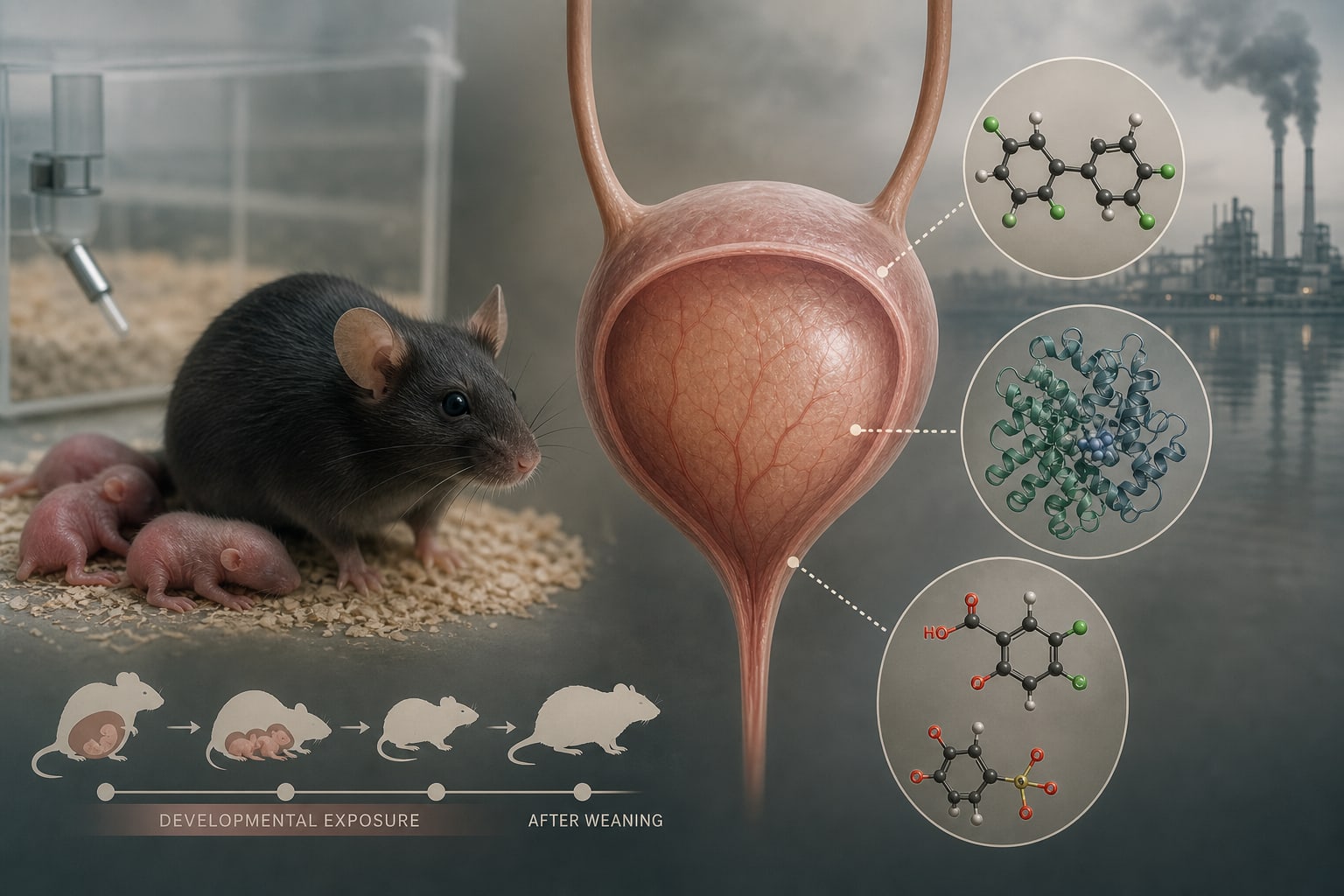
    Polychlorinated biphenyls (PCBs) persist in the environment and can bioaccumulate, affecting maternal physiology and bladder function.

  • 4

    Developmental exposure to a PCB mixture in mice resulted in PCB accumulation in bladder tissue and increased CYP enzyme levels.

  • 5

    The study aims to investigate the effects of PCB exposure on maternal metabolism and bladder-specific responses in post-weaning female mice.

Original Source(s)

Related Content