Identification of integrated stress response-related prognostic genes in high-grade serous ovarian cancer using Mendelian randomization, single-cell RNA sequencing, and bulk RNA sequencing - Takeaways - MDSpire

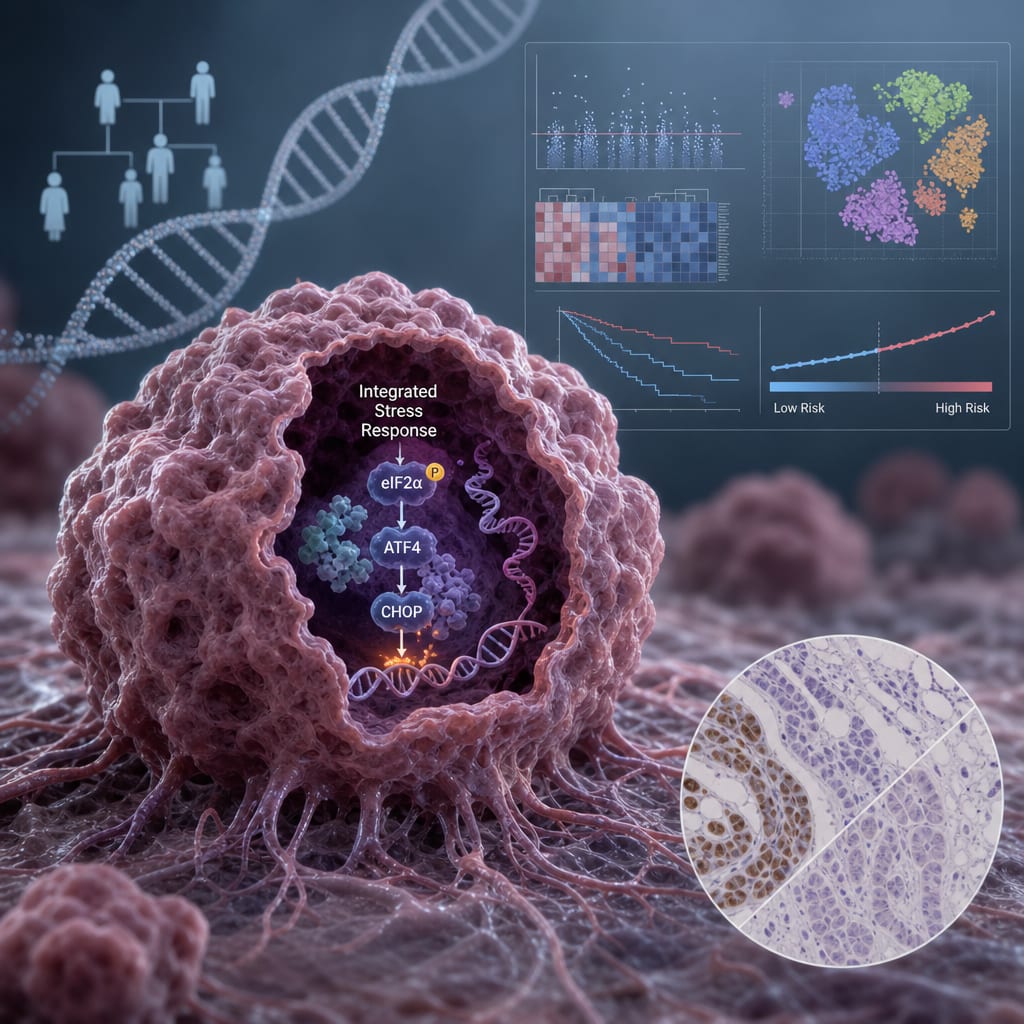
Identification of integrated stress response-related prognostic genes in high-grade serous ovarian cancer using Mendelian randomization, single-cell RNA sequencing, and bulk RNA sequencing

  • By

  • Qian Li

  • Fanqiang Kong

  • Penghua Cui

  • Xiujuan Gao

  • Xinrong Zhuang

  • Zhongkai Zhang

  • Tian Tian

  • Guixiang Zhang

  • May 5, 2026

  • 0 min

Share

  • 1

    Four prognostic genes (NUP35, CASP3, BAG5, and DNAJB1) were identified as significant for predicting outcomes in high-grade serous ovarian cancer.

  • 2

    The study developed a risk model that accurately classified patients into high- and low-risk groups based on their prognostic gene expression.

  • 3

    The PPAR signaling pathway was significantly enriched in both high- and low-risk groups, indicating its potential role in HGSOC.

  • 4

    Drug sensitivity analyses revealed a positive correlation between DNAJB1 expression and the half-maximum inhibition concentration of NPK76-II-72–1.

  • 5

    The findings suggest that targeting ISR-related genes may improve prognostic predictions and treatment strategies for patients with HGSOC.

Original Source(s)

Related Content