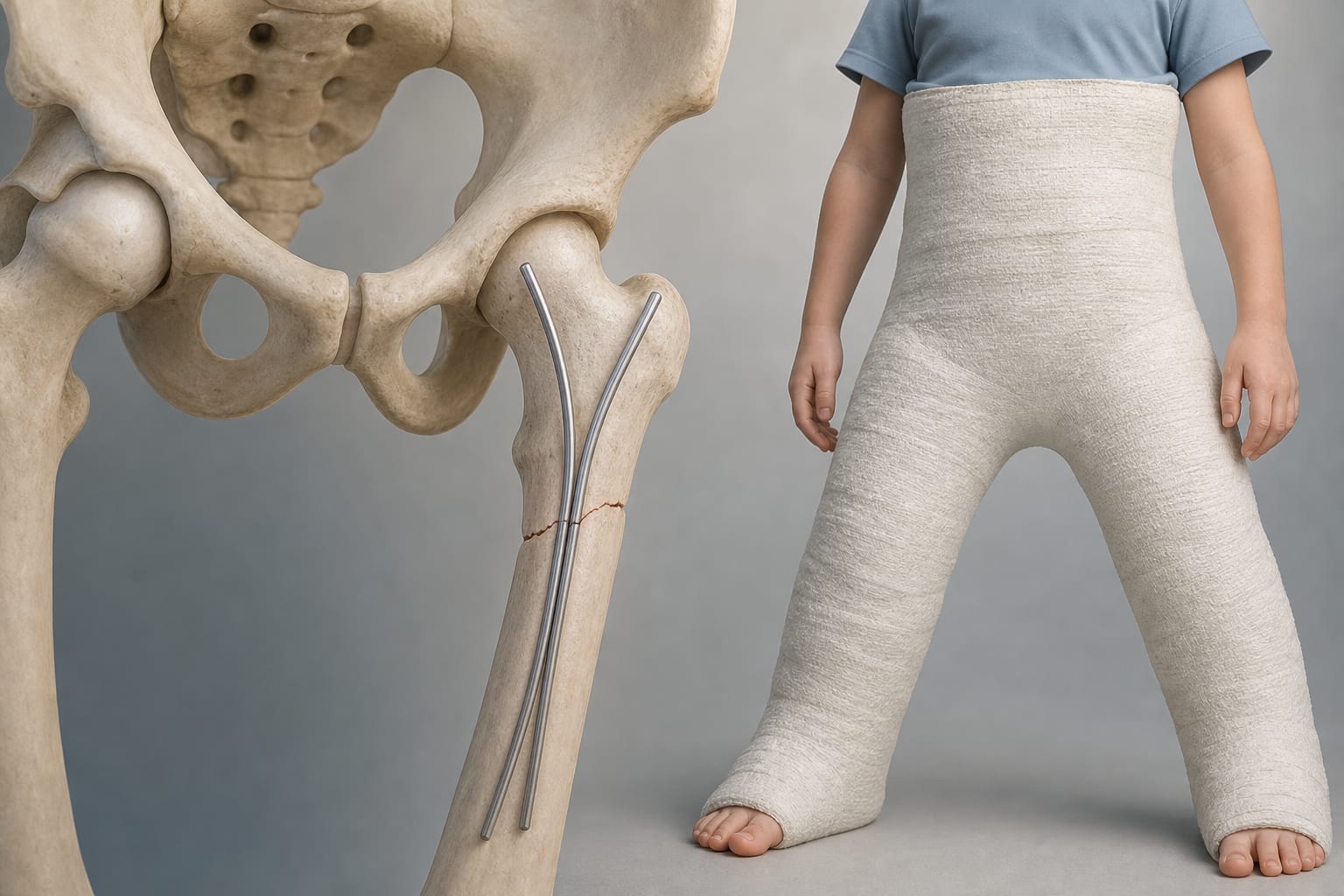
Elastic stable intramedullary nailing vs. hip spica casting management for postoperative femoral fractures in children with developmental dysplasia of the hip - Takeaways - MDSpire
Coming Soon: Introducing MDSpire News. Learn more
Conexiant’s news site is now MDSpire News. Learn more

Comparison of Elastic Stable Intramedullary Nailing and Hip Spica Casting for Managing Postoperative Femoral Fractures in Pediatric Patients with Developmental Dysplasia of the Hip

  • By

  • Yongfu Wang

  • Li Yang

  • Qiang Shi

  • June 22, 2026

Share

  • 1

    The study compared elastic stable intramedullary nailing (ESIN) and hip spica casting for postoperative femoral fractures in children with developmental dysplasia of the hip.

  • 2

    Eighteen patients with postoperative femur fractures were included, with ten in the ESIN group and eight in the hip spica casting group.

  • 3

    The average hospitalization was longer for the hip spica casting group (9.5 days) compared to the ESIN group (6.4 days, P < 0.001).

  • 4

    Surgical time was shorter in the hip spica casting group (24.8 minutes) than in the ESIN group (34.7 minutes, P < 0.05).

  • 5

    The study suggested hip spica casting for undisplaced fractures in children aged 2–5 years and ESIN for displaced fractures in those aged 5–8 years.

Original Source(s)

Related Content