Emergency access to the subclavian vessels by non-thoracic surgeons: a cadaver-based learning model for orthopedic trauma surgery - Takeaways - MDSpire
Coming Soon: Introducing MDSpire News. Learn more
Conexiant’s news site is now MDSpire News. Learn more

Non-thoracic Surgeons' Emergency Access to Subclavian Vessels: A Cadaveric Training Model for Orthopedic Trauma Procedures

  • By

  • Peter Grechenig

  • Axel Gänsslen

  • Jan Dauwe

  • Ulrike Wittig

  • Maximilian Sagmeister

  • Amir Koutp

  • Paul Puchwein

  • Patrick Sadoghi

  • Gloria Hohenberger

  • June 3, 2026

Share

  • 1

    Subclavian artery injuries are rare but associated with high mortality, often requiring rapid surgical intervention for hemorrhage control.

  • 2

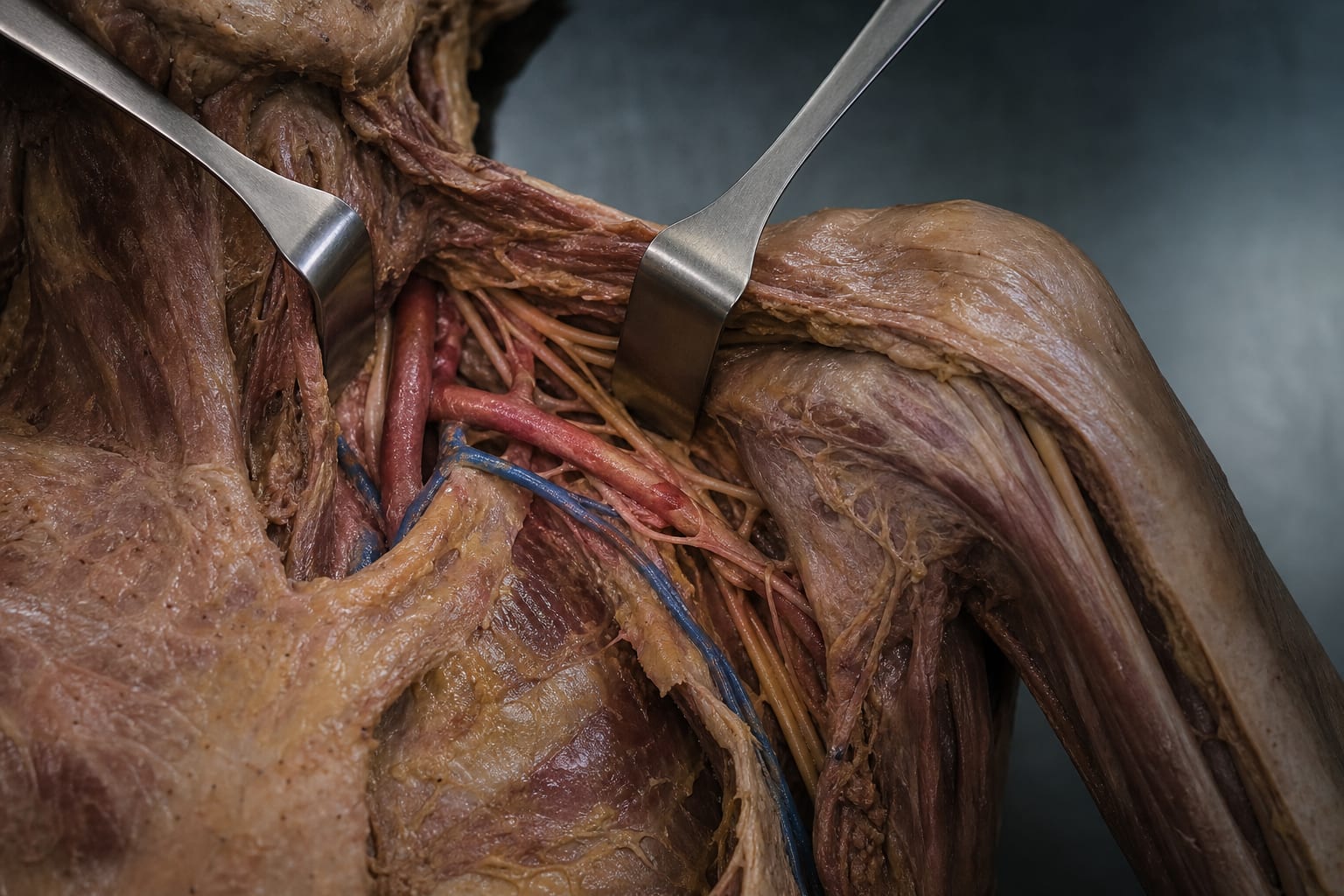
    A cadaveric training model was used to evaluate non-thoracic surgeons' ability to access subclavian vessels in emergency situations.

  • 3

    The study assessed procedural safety, accuracy of vessel identification, and the impact of surgical experience on performance.

  • 4

    Participants improved their skills in identifying and accessing subclavian vessels after repeated training sessions.

  • 5

    Statistical analysis showed significant differences in procedural accuracy based on the clinical seniority of the participants.

Original Source(s)

Related Content