Burden of novel and ultra-rare missense variants in the NF-κB pathway genes associated to Ménière’s disease - Takeaways - MDSpire

Burden of novel and ultra-rare missense variants in the NF-κB pathway genes associated to Ménière’s disease

  • By

  • Pablo Cruz-Granados

  • Victoria Rivero de Jesus

  • Andres Soto-Varela

  • Rocio Gonzalez-Aguado

  • Jose A. Lopez-Escamez

  • May 15, 2026

  • 0 min

Share

  • 1

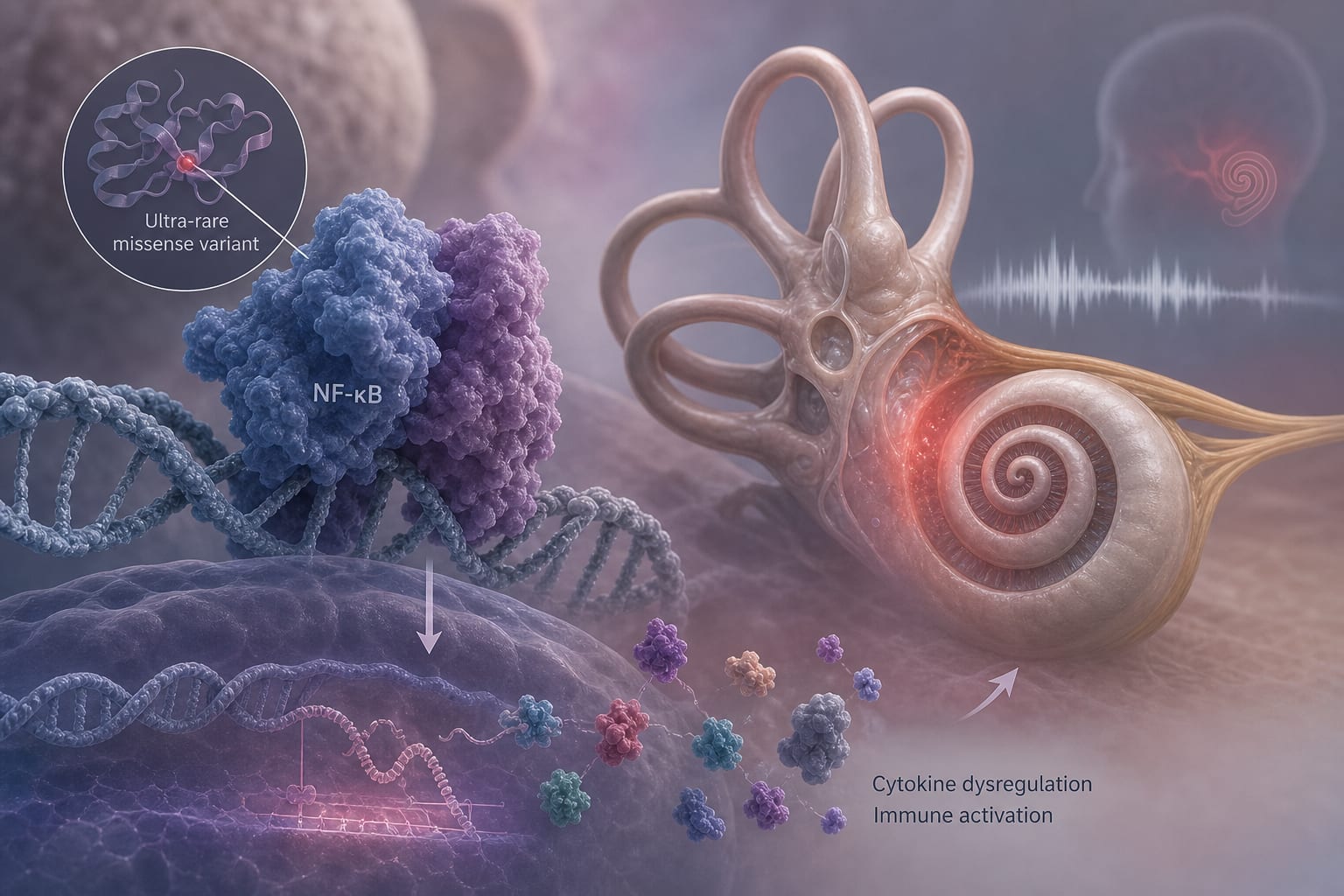
    Ménière's disease (MD) is characterized by tinnitus, sensorineural hearing impairment, and vertigo, with 60% of patients showing immune dysregulation.

  • 2

    Three immune phenotypes in MD are identified: autoinflammatory, Th2-driven, and those linked to autoimmune disorders, each with distinct cytokine profiles.

  • 3

    Ultrarare heterozygous variants in TLR9, TNFRSF1B, and FAS were discovered in MD patients, potentially influencing immune responses.

  • 4

    Protein modeling revealed destabilizing effects of the identified variants, affecting protein interactions and binding efficacy.

  • 5

    The study suggests that rare variants in NF-κB pathway genes may contribute to the immune dysregulation associated with Ménière's disease.

Original Source(s)

Related Content