Donor–recipient HLA molecular mismatch and T follicular helper-related genetic variants are associated with dnDSA development after kidney transplantation - Takeaways - MDSpire

Donor–recipient HLA molecular mismatch and T follicular helper-related genetic variants are associated with dnDSA development after kidney transplantation

  • By

  • Hidetoshi Shidahara

  • Kentaro Ide

  • Aiko Yamaoka

  • Yuki Imaoka

  • Seiichi Shimizu

  • Hiroyuki Tahara

  • Masahiro Ohira

  • Yuka Tanaka

  • Hideki Ohdan

  • July 6, 2026

  • 0 min

Share

  • 1

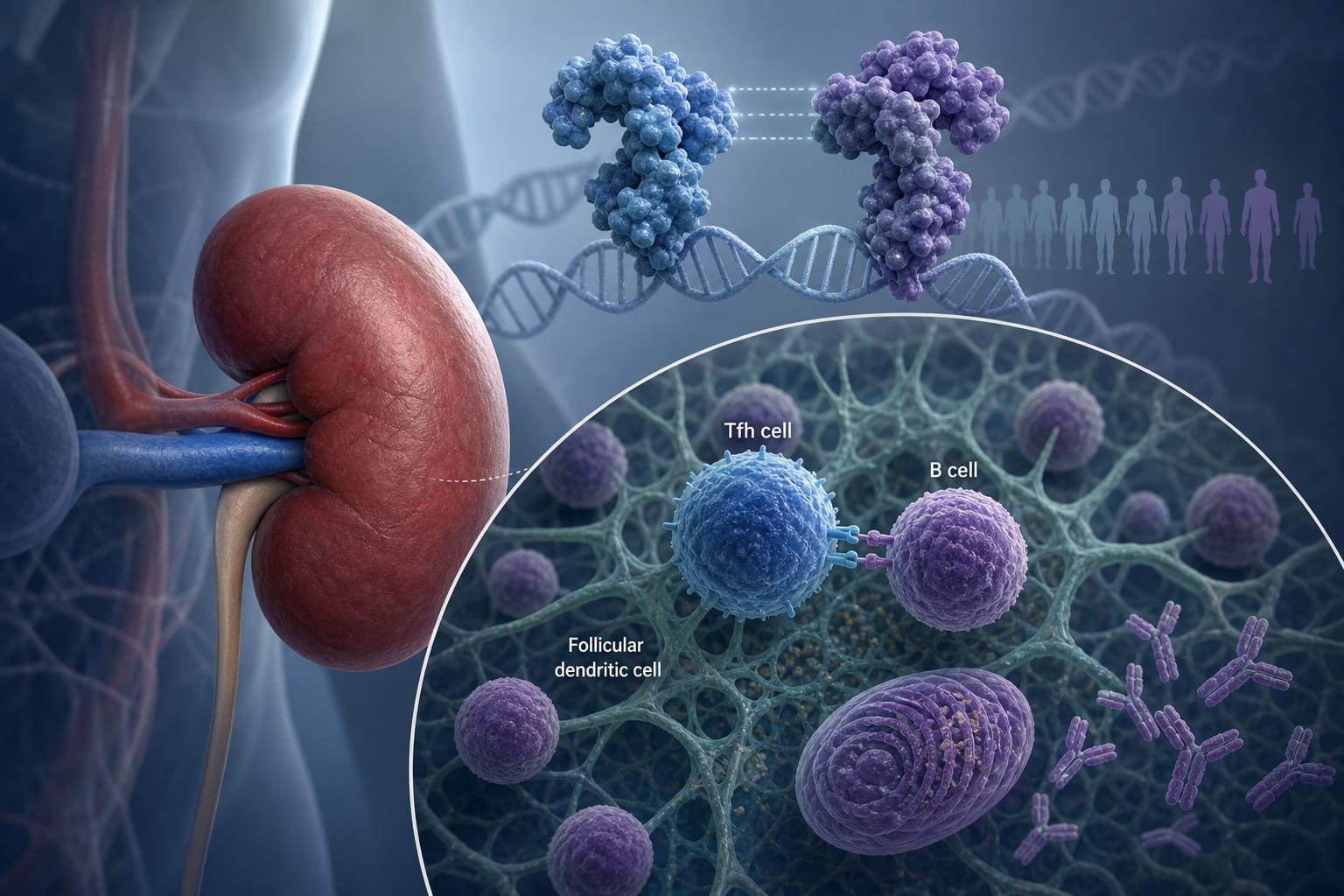
    De novo donor-specific HLA antibodies (dnDSAs) after kidney transplantation arise from T-cell–dependent B-cell activation and germinal center reactions.

  • 2

    A study of 210 kidney transplant recipients found that higher class II molecular mismatch loads were significantly associated with dnDSA development.

  • 3

    The HLA Epitope Mismatch Algorithm (HLA-EMMA) showed the strongest association with dnDSA development among the evaluated molecular mismatch metrics.

  • 4

    High HLA-EMMA class II load and T follicular helper (Tfh) cell-related genetic variation were independently associated with dnDSA development.

  • 5

    Recipients with both high HLA-EMMA class II load and Tfh-related polymorphisms exhibited the highest cumulative incidence of dnDSA development.

Original Source(s)

Related Content