Evolution of advanced revascularization strategies for high-risk pulmonary embolism: a physiology-guided single-center experience - Takeaways - MDSpire

Evolution of advanced revascularization strategies for high-risk pulmonary embolism: a physiology-guided single-center experience

  • By

  • L. W. Greenspon

  • S. Whealon

  • J. Bonn

  • M. Caroline

  • E. Gnall

  • June 10, 2026

  • 0 min

Share

  • 1

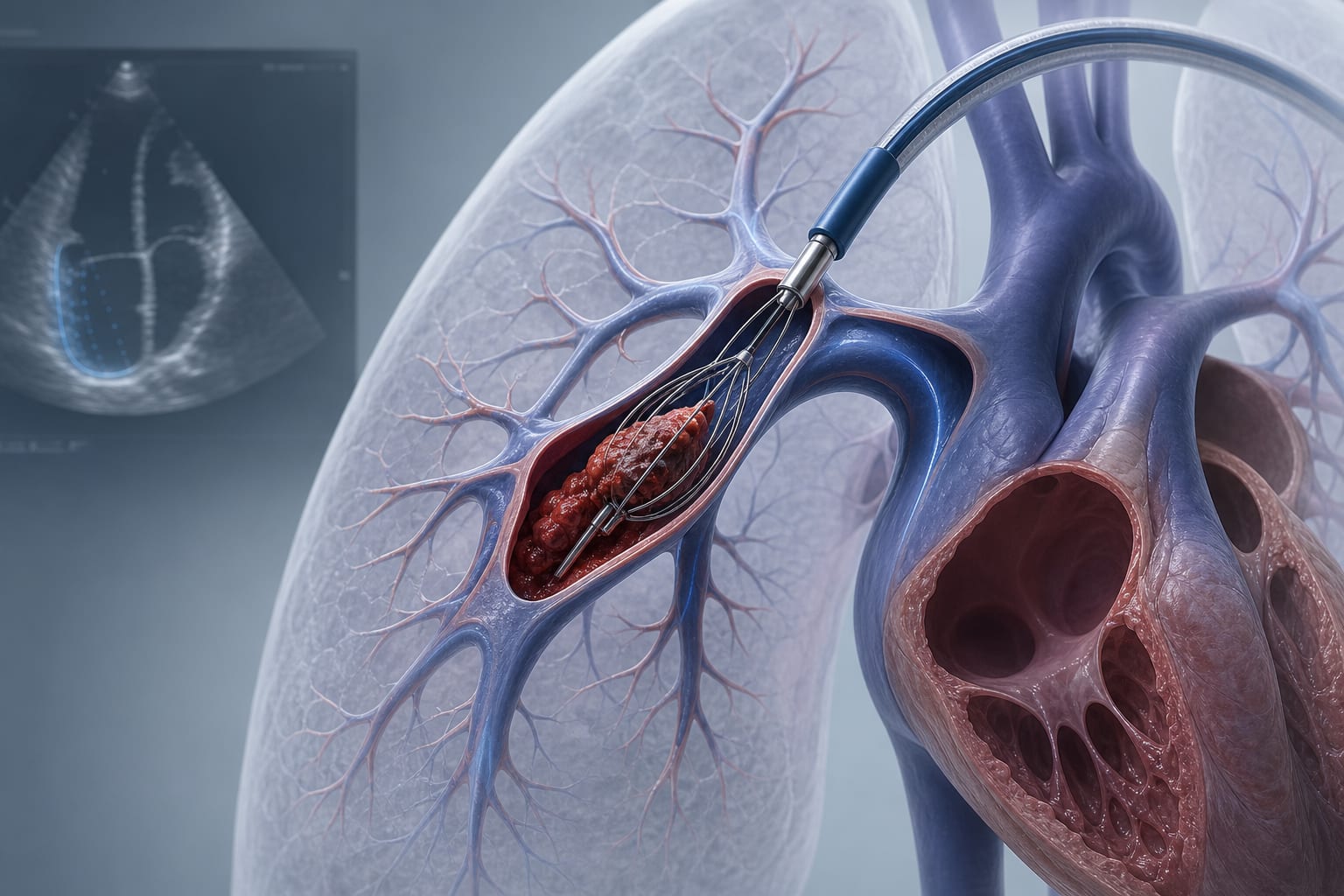
    The management of pulmonary embolism has evolved from systemic thrombolysis to catheter-directed therapies and mechanical thrombectomy over four decades.

  • 2

    Physiologic assessment of right ventricular function and pulmonary artery pressures is critical in managing high-risk pulmonary embolism patients.

  • 3

    The development of a pulmonary embolism response team and AI detection systems has improved early recognition and coordination of care for high-risk cases.

  • 4

    Recurrent embolization significantly contributes to early mortality, highlighting the importance of interventions like IVC filter placement in high-risk patients.

  • 5

    Clinical practice for pulmonary embolism management has evolved incrementally, emphasizing the need for careful patient selection and understanding of device-specific risks.

Original Source(s)

Related Content