-
1
Long COVID may be considered when new or worsened symptoms after confirmed or suspected SARS-CoV-2 infection persist beyond 3 months.
-
2
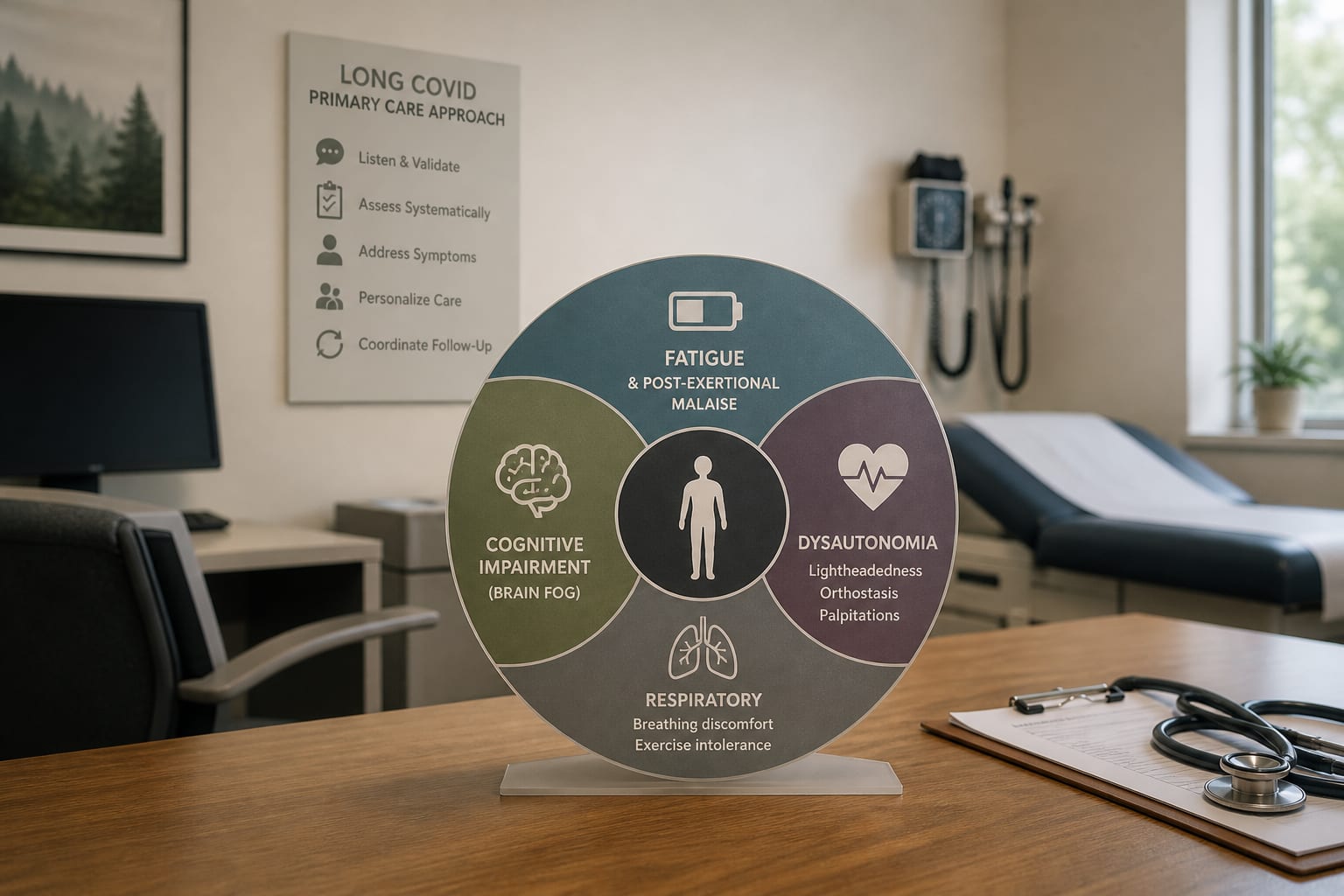
Fatigue, post-exertional malaise, cognitive impairment, and lightheadedness or orthostasis are among the most commonly reported Long COVID symptoms.
-
3
Long COVID can present in symptom clusters that include fatigue and post-exertional malaise, dysautonomia, and cognitive impairment.
-
4
Suspected mechanisms include persistent viral reservoirs, immune dysregulation, gut dysbiosis, mitochondrial dysfunction, and microvascular clotting.
-
5
The review presents a primary care framework for recognizing Long COVID, conducting focused evaluation, counseling patients, initiating symptom-based management, and considering specialty referral.