The boundary between microbial detection and implant-related infection: a structured narrative review of analytical credibility, biological persistence, host response, and clinical causality - Takeaways - MDSpire
Coming Soon: Introducing MDSpire News. Learn more
Conexiant’s news site is now MDSpire News. Learn more

Distinguishing Microbial Detection from Implant-Related Infection: A Structured Narrative Review of Analytical Validity, Biological Persistence, Host Response, and Clinical Causality

  • By

  • Liao Chang-sheng

  • Lan feng-jun

  • Liu huan-sheng

  • Huang qiang

  • Zhou zong-ke

  • October 12, 2026

Share

  • 1

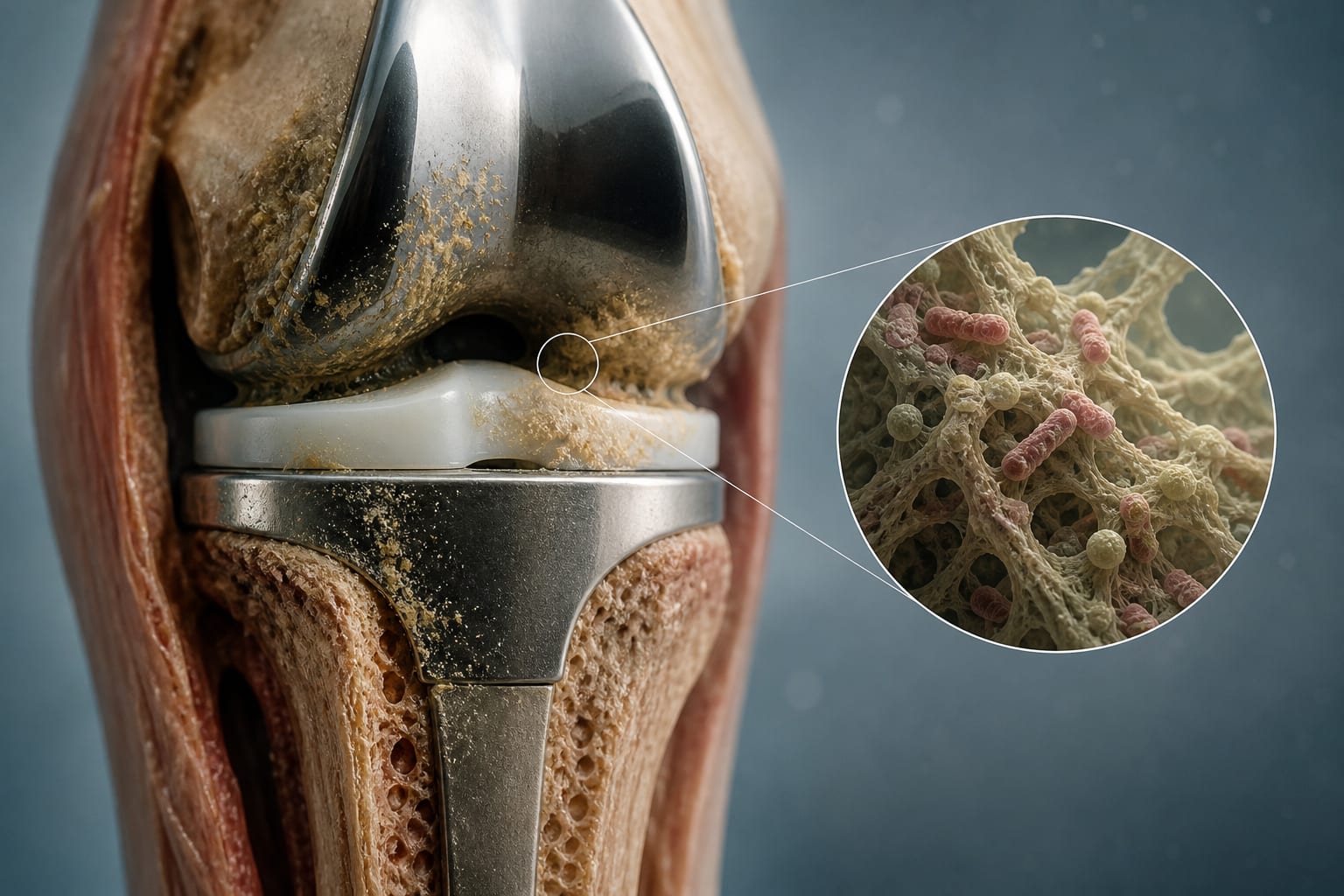
    A positive culture, molecular assay, or biofilm-associated signal does not by itself establish implant-related infection.

  • 2

    The review defines an interpretive gray zone as a microbial signal without a coherent evidence chain meeting the applicable diagnostic framework.

  • 3

    A presumed-aseptic designation reflects the investigations performed and does not establish that infection is absent.

  • 4

    The review assesses whether detected signals are analytically credible, biologically persistent, and causally linked to host response, tissue injury, implant failure, or clinical outcomes.

  • 5

    The structured narrative review searched PubMed, Embase, and Web of Science through June 27, 2026, and did not conduct a meta-analysis because the evidence was heterogeneous.

Original Source(s)

Related Content