EUS-guided hepaticogastrostomy versus EUS-guided hepaticogastrostomy with antegrade stent placement in patients with unresectable malignant distal biliary obstruction: a meta-analysis of individual patient data - Takeaways - MDSpire

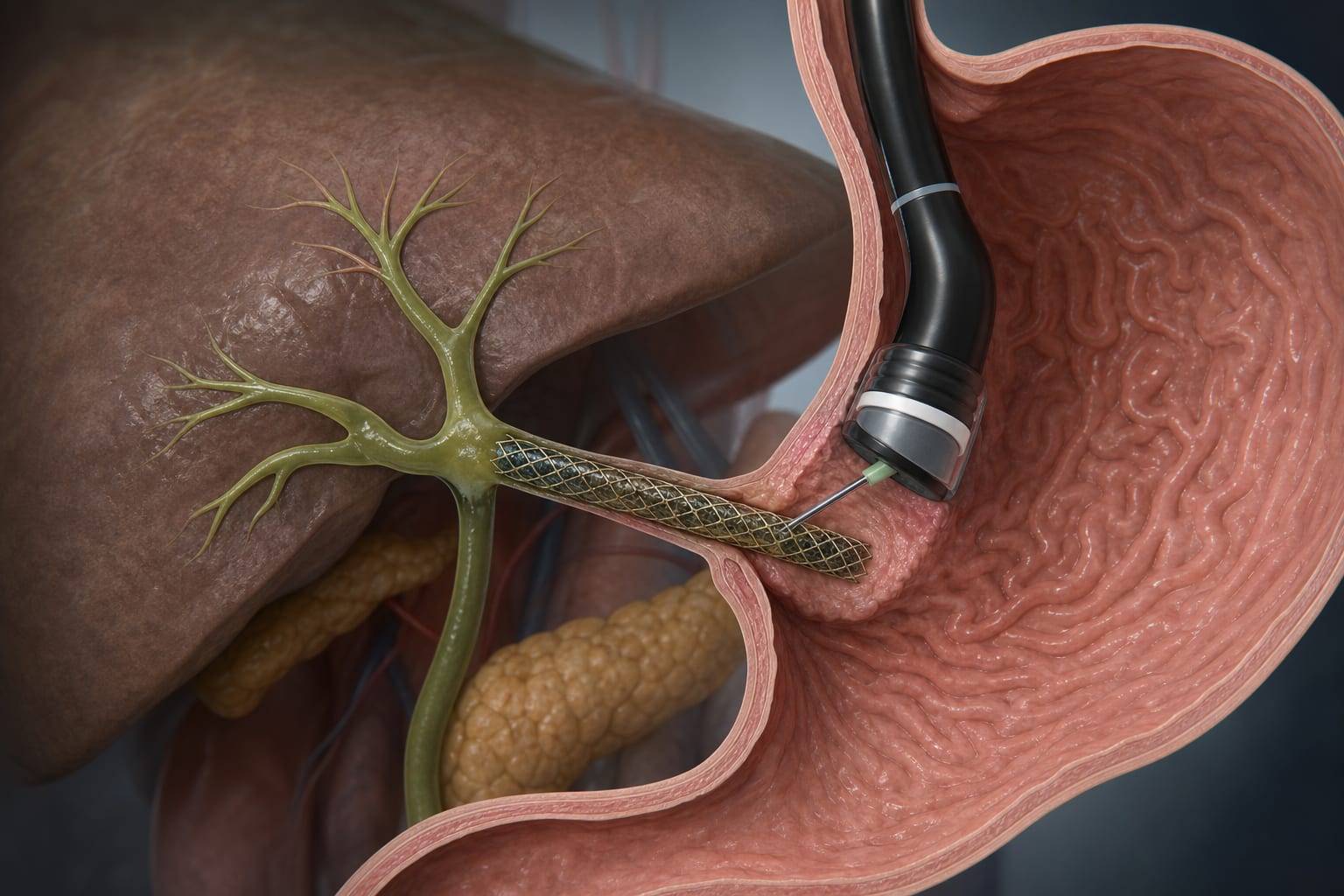
EUS-guided hepaticogastrostomy versus EUS-guided hepaticogastrostomy with antegrade stent placement in patients with unresectable malignant distal biliary obstruction: a meta-analysis of individual patient data

  • By

  • Mahmoud Shaaban Abdelgalil

  • Ahmad Abdelrazek

  • Mahmoud Samir Mohamed

  • Amro Hassan

  • Manar Alaa Mabrouk

  • Mohamed Nasser

  • Eyad Khalil Alhmeid

  • Abdullah Nizar

  • Abid Wazir

  • Noha Ali

  • Adam Hraybi

  • Ryad iqbal

  • Sadia Paracha

  • Shray Amin

  • July 11, 2026

  • 0 min

Share

  • 1

    Malignant biliary obstruction (MBO) is primarily caused by pancreatic cancer and poses significant diagnostic and therapeutic challenges.

  • 2

    Endoscopic ultrasound-guided biliary drainage (EUS-BD) is an alternative to ERCP when traditional methods fail due to anatomical difficulties.

  • 3

    Hepaticogastrostomy with antegrade stenting (HGAS) combines two drainage routes, potentially improving outcomes compared to EUS-guided hepaticogastrostomy (HGS) alone.

  • 4

    The study aims to compare the efficacy and safety of EUS-HGS versus EUS-HGAS in patients with unresectable malignant distal biliary obstruction.

  • 5

    Primary outcomes include time to recurrent biliary obstruction (RBO) and need for reintervention, with secondary outcomes assessing technical and clinical success.

Original Source(s)

Related Content