Variants in UGT1A1 and SLCO1B1 increase the risk of neonatal hyperbilirubinemia: a case-control study in subtropical China - Takeaways - MDSpire

Variants in UGT1A1 and SLCO1B1 increase the risk of neonatal hyperbilirubinemia: a case-control study in subtropical China

  • By

  • Wen-Fang Wang

  • Li-Sen Shi

  • Zeng-Wen Xing

  • Yan-Mei Han

  • Wei-Qiang Liu

  • June 24, 2026

  • 0 min

Share

  • 1

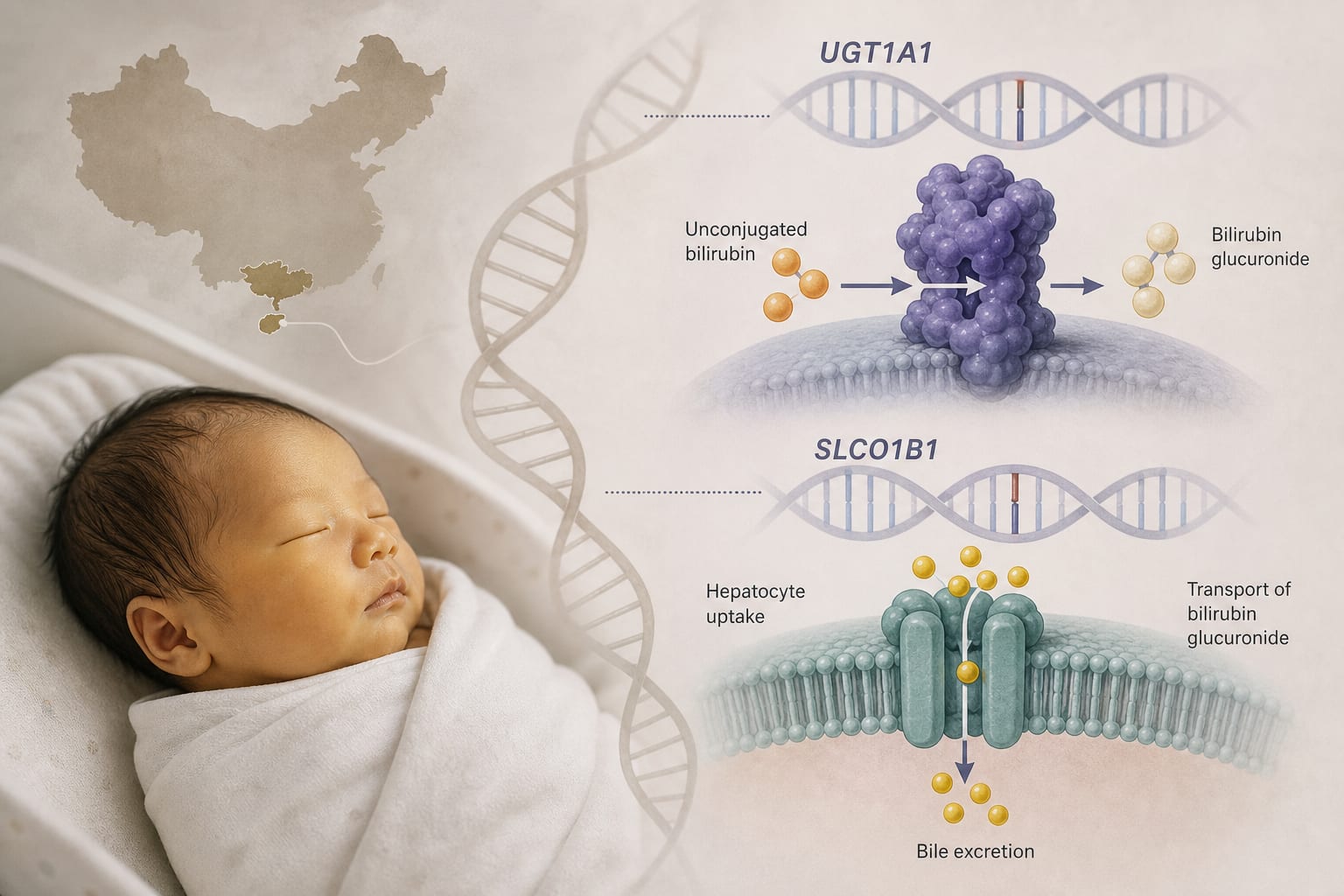
    The study evaluated genetic variants in UGT1A1 and SLCO1B1 genes associated with neonatal hyperbilirubinemia in the Haikou population.

  • 2

    A case-control analysis involved 210 neonates with hyperbilirubinemia and 195 healthy controls, assessing genetic polymorphisms and bilirubin levels.

  • 3

    Significant associations were found between specific UGT1A1 and SLCO1B1 genotypes and increased risk of hyperbilirubinemia, with adjusted odds ratios reported.

  • 4

    Cumulative risk analysis indicated that neonates with multiple risk alleles had a markedly elevated risk of hyperbilirubinemia.

  • 5

    The findings suggest that UGT1A1 and SLCO1B1 variants are important genetic biomarkers for predicting neonatal hyperbilirubinemia in subtropical China.

Original Source(s)

Related Content