Proton-Pump Inhibitor Use as a Modifiable Etiological Factor for Iron Deficiency in Heart Failure - Takeaways - MDSpire
Coming Soon: Introducing MDSpire News. Learn more
Conexiant’s news site is now MDSpire News. Learn more

The Role of Proton-Pump Inhibitors as a Modifiable Contributor to Iron Deficiency in Heart Failure Patients

  • By

  • MATS KUTSCHER

  • HAYE H. VAN DER WAL

  • ADRIAAN A. VOORS

  • PETER VAN DER MEER

  • NIELS GROTE BEVERBORG

  • May 13, 2026

Share

  • 1

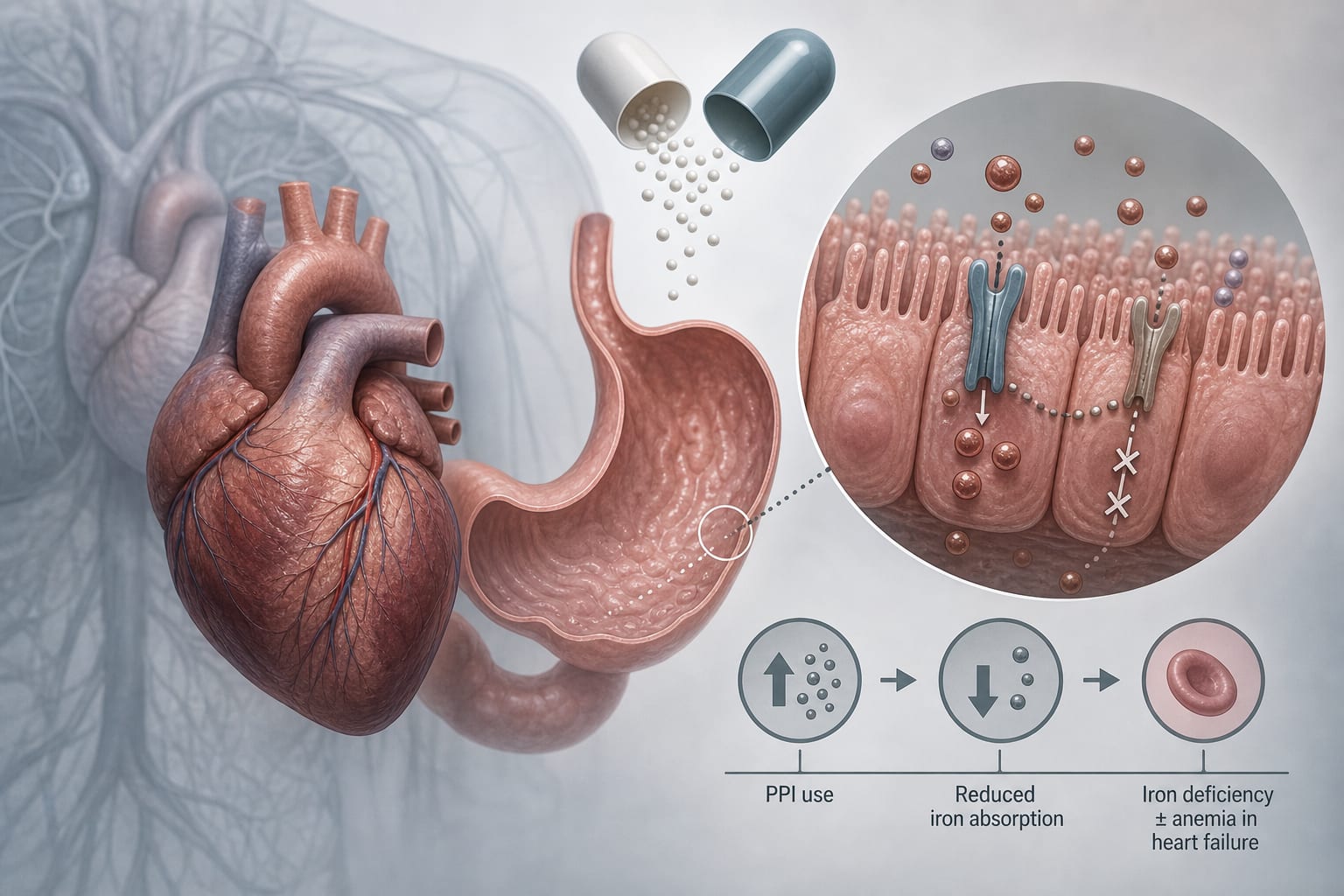
    Iron deficiency is highly prevalent in heart failure and is associated with morbidity and worse prognosis, even without anemia.

  • 2

    Proton-pump inhibitor (PPI) use was independently associated with iron deficiency, with greater omeprazole-equivalent doses linked to higher odds.

  • 3

    The analysis included 4056 patients with new-onset or worsening heart failure, of whom 1534 (38%) used a PPI.

  • 4

    PPI users had lower transferrin saturation, serum iron, hemoglobin, and albumin levels than nonusers.

  • 5

    The association remained significant after full adjustment for demographic, treatment, clinical, and laboratory factors (OR, 1.29; 95% CI, 1.08–1.54).

Original Source(s)

Related Content