Neuroinflammation in Alzheimer’s disease: glial crosstalk, pathological modulation, and therapeutic implications - Takeaways - MDSpire

Neuroinflammation in Alzheimer’s disease: glial crosstalk, pathological modulation, and therapeutic implications

  • By

  • Enhao Li

  • Peng Zhang

  • Wei Feng

  • May 29, 2026

  • 0 min

Share

  • 1

    Alzheimer's disease (AD) is a leading cause of dementia, characterized by cognitive decline and functional impairment.

  • 2

    Current therapies include amyloid-targeting monoclonal antibodies, which have shown modest benefits but face significant limitations.

  • 3

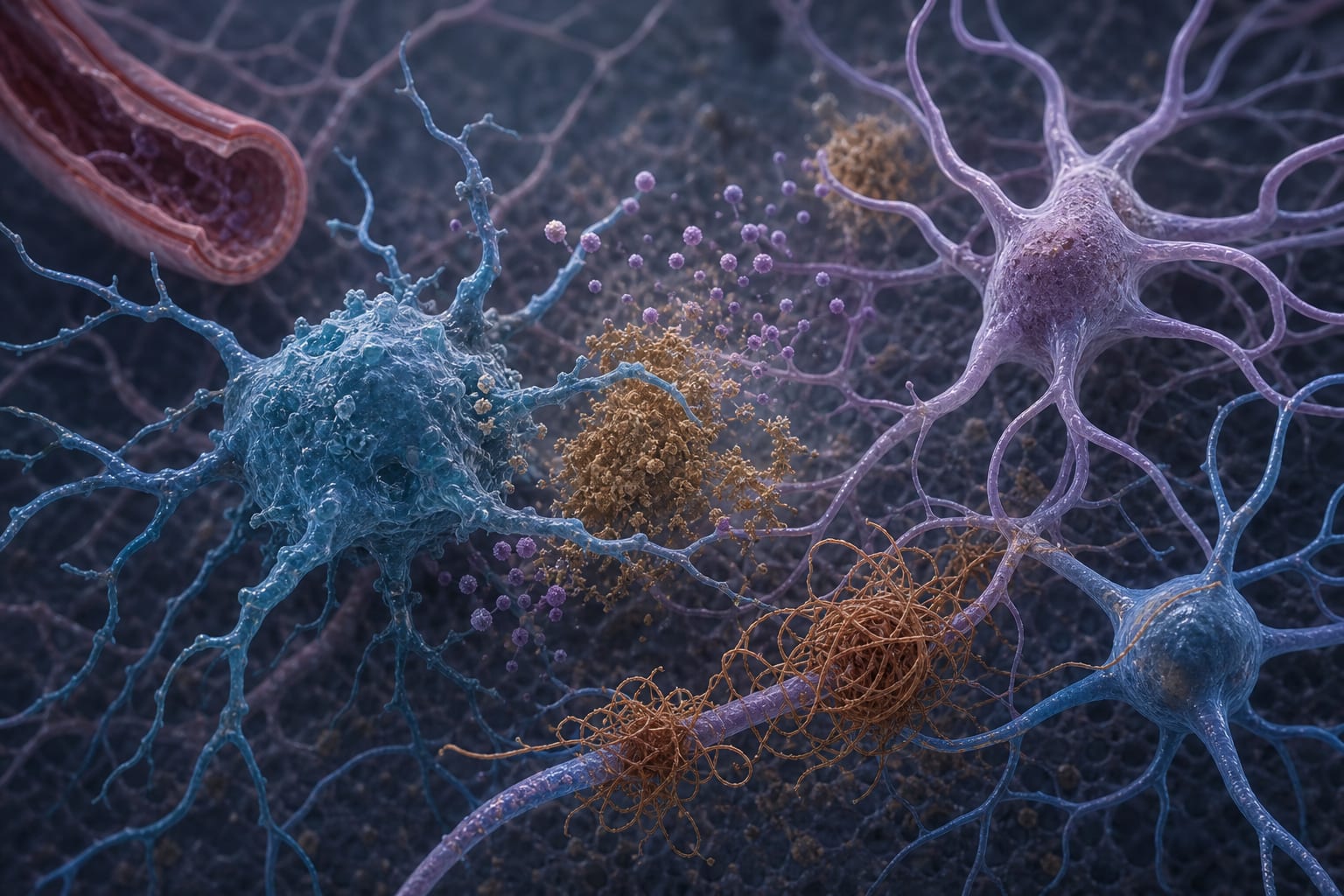
    Neuroinflammation in AD is a context-dependent process involving microglia and astrocytes, influencing disease progression.

  • 4

    Chronic glial activation can exacerbate neuronal vulnerability and metabolic stress, complicating AD pathology.

  • 5

    Therapeutic strategies should focus on modulating maladaptive glial states while preserving their protective functions.

Original Source(s)

Related Content