Harnessing AI-driven approaches for detecting metabolic dysfunction-associated steatotic liver disease, assessing fibrosis, and stratifying hepatocellular carcinoma risk: a scoping review - Takeaways - MDSpire

Harnessing AI-driven approaches for detecting metabolic dysfunction-associated steatotic liver disease, assessing fibrosis, and stratifying hepatocellular carcinoma risk: a scoping review

  • By

  • Anvitha Nagaraj Sharma

  • Hima Bhagavatula

  • Michael T. Mapundu

  • Emile R. Chimusa

  • July 1, 2026

  • 0 min

Share

  • 1

    Non-alcoholic fatty liver disease (NAFLD), now termed metabolic dysfunction-associated steatotic liver disease (MASLD), is the most common chronic liver disease globally.

  • 2

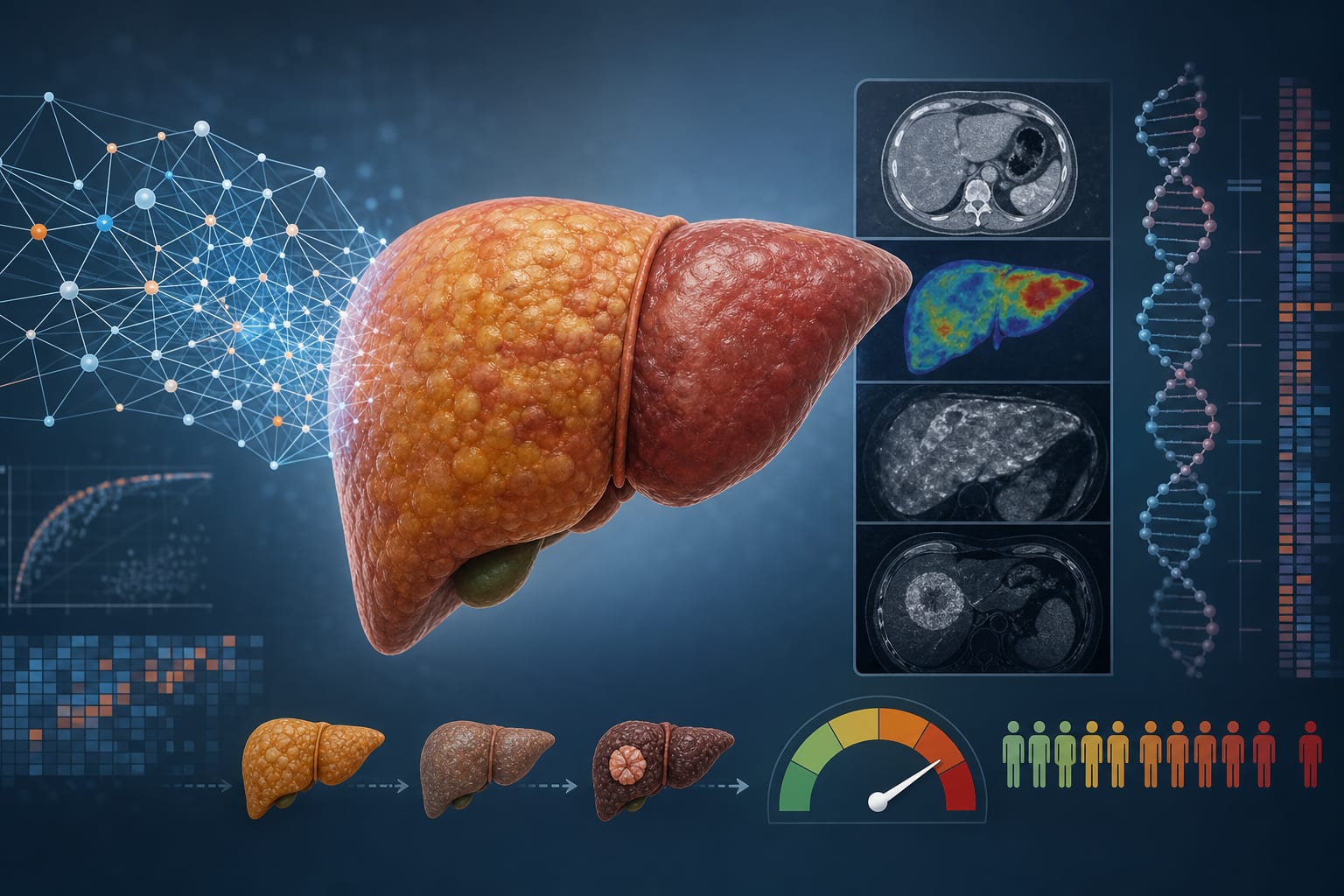
    AI and machine learning (ML) methodologies show promise in improving non-invasive diagnosis and risk stratification for MASLD and hepatocellular carcinoma (HCC).

  • 3

    The review highlights a shift towards integrated multimodal models that combine AI/ML with polygenic risk scores for better HCC risk prediction.

  • 4

    Challenges in translating AI-driven methods into clinical practice include poor genetic integration, lack of validation, and population bias.

  • 5

    Further validation and standardization of AI and PRS approaches are necessary for effective personalized surveillance and widespread clinical adoption.

Original Source(s)

Related Content