Smartphone-Based Monitoring of Quality of Life and Adverse Events After Neurosurgery: Prospective Cohort Study - Takeaways - MDSpire
Coming Soon: Introducing MDSpire News. Learn more
Conexiant’s news site is now MDSpire News. Learn more

Mobile Device Monitoring of Patient Well-Being and Complications Following Neurosurgical Procedures: A Prospective Cohort Investigation

  • By

  • Alexis Paul Romain Terrapon

  • Erik Schulz

  • Athina Firtinidou

  • Silvio Heinig

  • Lorenzo Bertulli

  • Felix Corr

  • Meltem Gönel

  • Maria Nikolaeva

  • Thomas Petutschnigg

  • Sivani Sivanrupan

  • Jakob Heimer

  • Menno R Germans

  • Christian Zweifel

  • Andreas Raabe

  • Philippe Schucht

  • Luca Regli

  • Marian Christoph Neidert

  • Oliver Bozinov

  • Linda Bättig

  • Martin Nikolaus Stienen

  • September 9, 2026

Share

  • 1

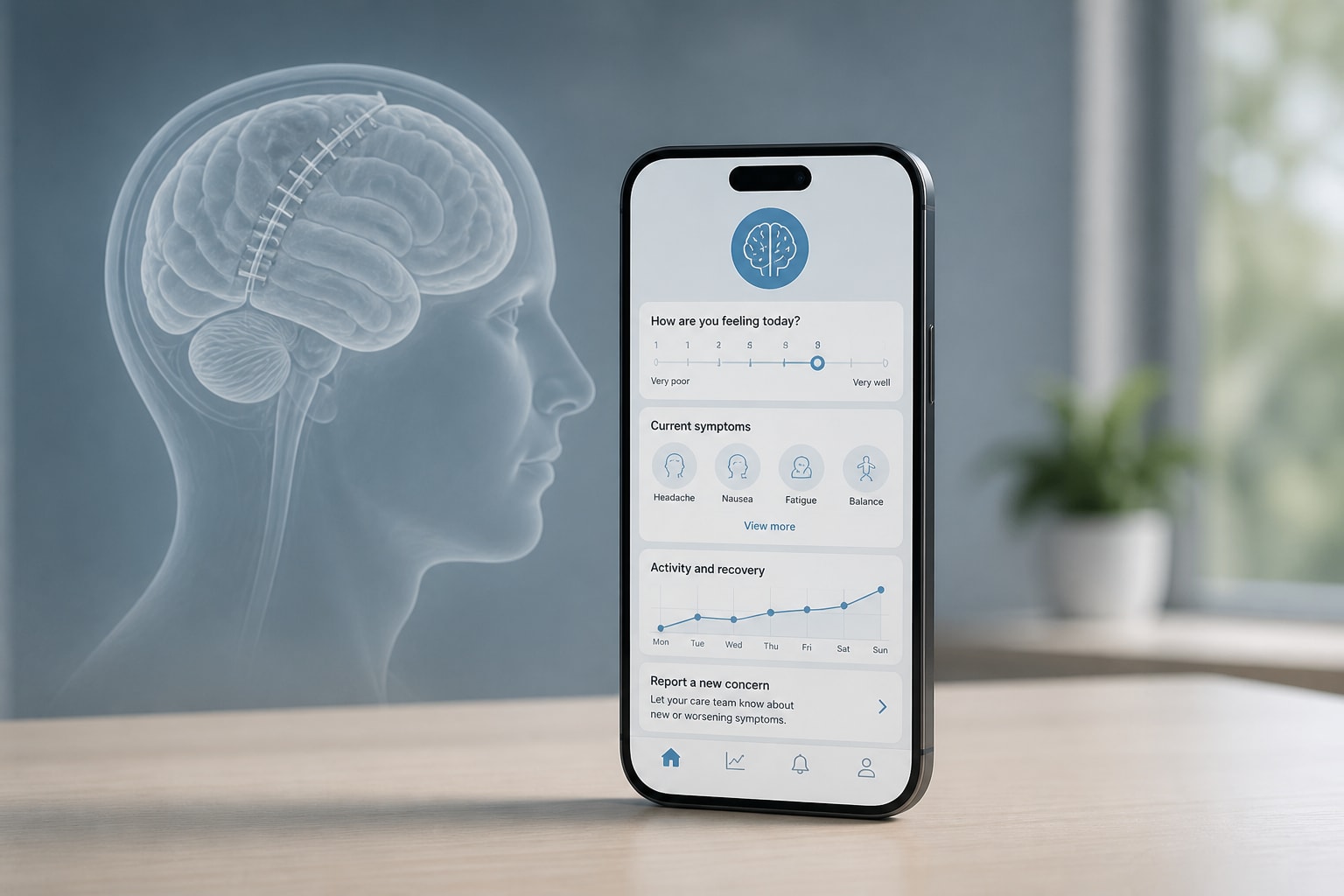
    The study investigates the use of a smartphone app, OP Tracker, for monitoring patient well-being and adverse events after neurosurgery.

  • 2

    Current adverse event grading systems, like the Clavien-Dindo scale, inadequately capture the severity of neurological deficits and their impact on quality of life.

  • 3

    The Therapy-Disability-Neurology (TDN) grade was introduced to better assess adverse events by incorporating neurological deficits and associated disabilities.

  • 4

    The OP Tracker app collects longitudinal self-reported data on well-being and adverse events, aiming to improve outcome assessment in neurosurgery.

  • 5

    The study's primary objective is to evaluate the feasibility of real-time data collection through smartphones in a multicenter neurosurgery context.

Original Source(s)

Related Content