Depressive symptoms in chronic kidney disease: the hidden role of uremic toxins - Takeaways - MDSpire

Depressive symptoms in chronic kidney disease: the hidden role of uremic toxins

  • By

  • Hélène Levassort

  • Sophie Liabeuf

  • Julie Boucquemont

  • Gaye Hafez

  • Solene M Laville

  • Celine Lange

  • Luc Frimat

  • Christian Combe

  • Denis Fouque

  • Maurice Laville

  • Christian Jacquelinet

  • Yves-Edouard Herpe

  • Lucile Montalescot

  • Islam Amine Larabi

  • Natalia Alencar de Pinho

  • Ziad A Massy

  • Jean-Claude Alvarez

  • Marion Pépin

  • on behalf of CKD-REIN

  • June 24, 2026

  • 0 min

Share

  • 1

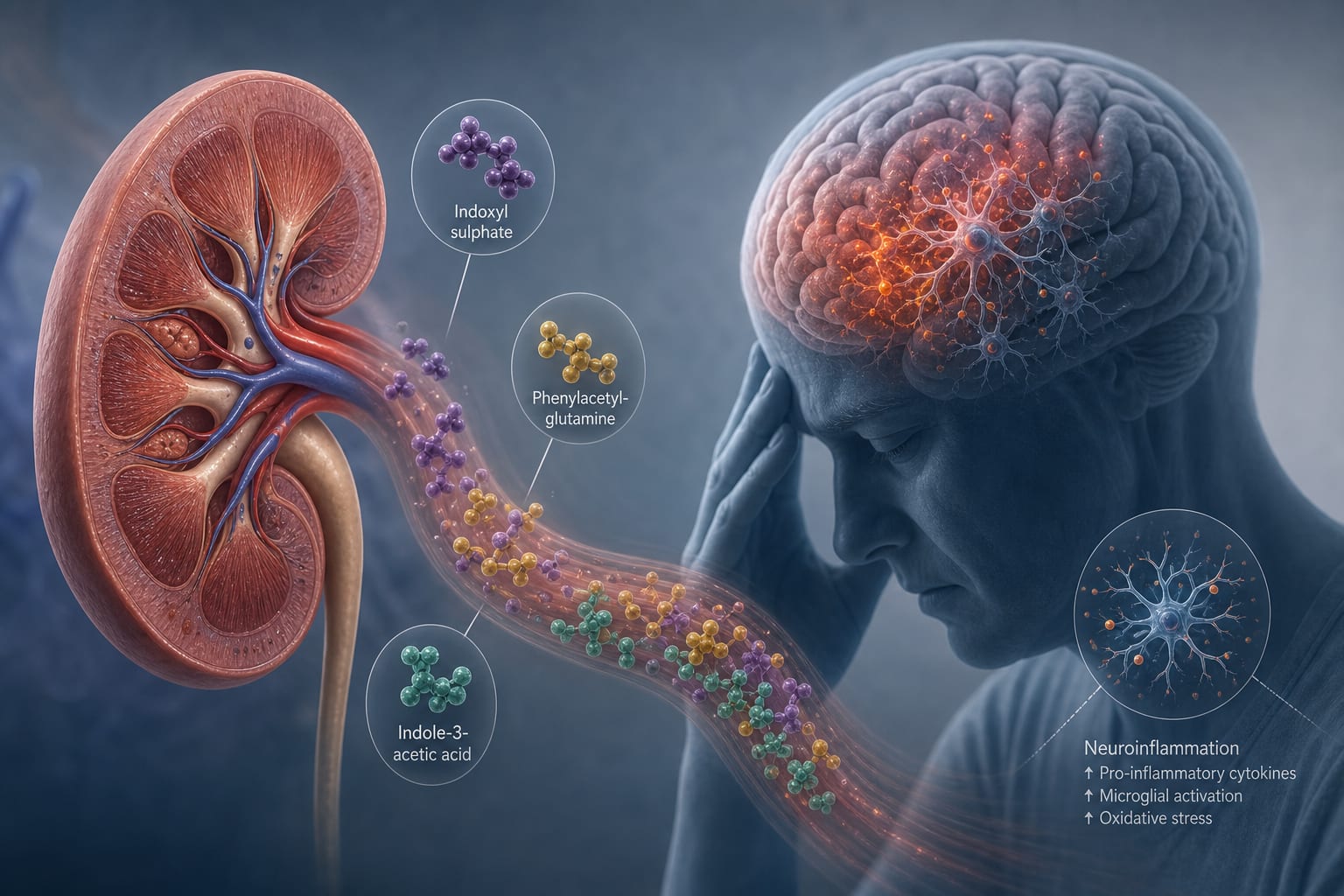
    The study evaluated the association between uremic toxins and depressive symptoms in non-dialysed adults with chronic kidney disease.

  • 2

    The cohort comprised 2165 patients with a median age of 68 years and a mean estimated glomerular filtration rate of 35 mL/min/1.73 m².

  • 3

    A doubling in phenylacetylglutamine levels was associated with an increase of 0.06 points per year in the CESD score.

  • 4

    Indoxyl sulfate and indole-3-acetic acid levels were linked to higher mean CESD scores but not to changes over time.

  • 5

    Further research is needed to clarify the role of uremic toxins in managing depressive symptoms in patients with chronic kidney disease.

Original Source(s)

Related Content