-
1
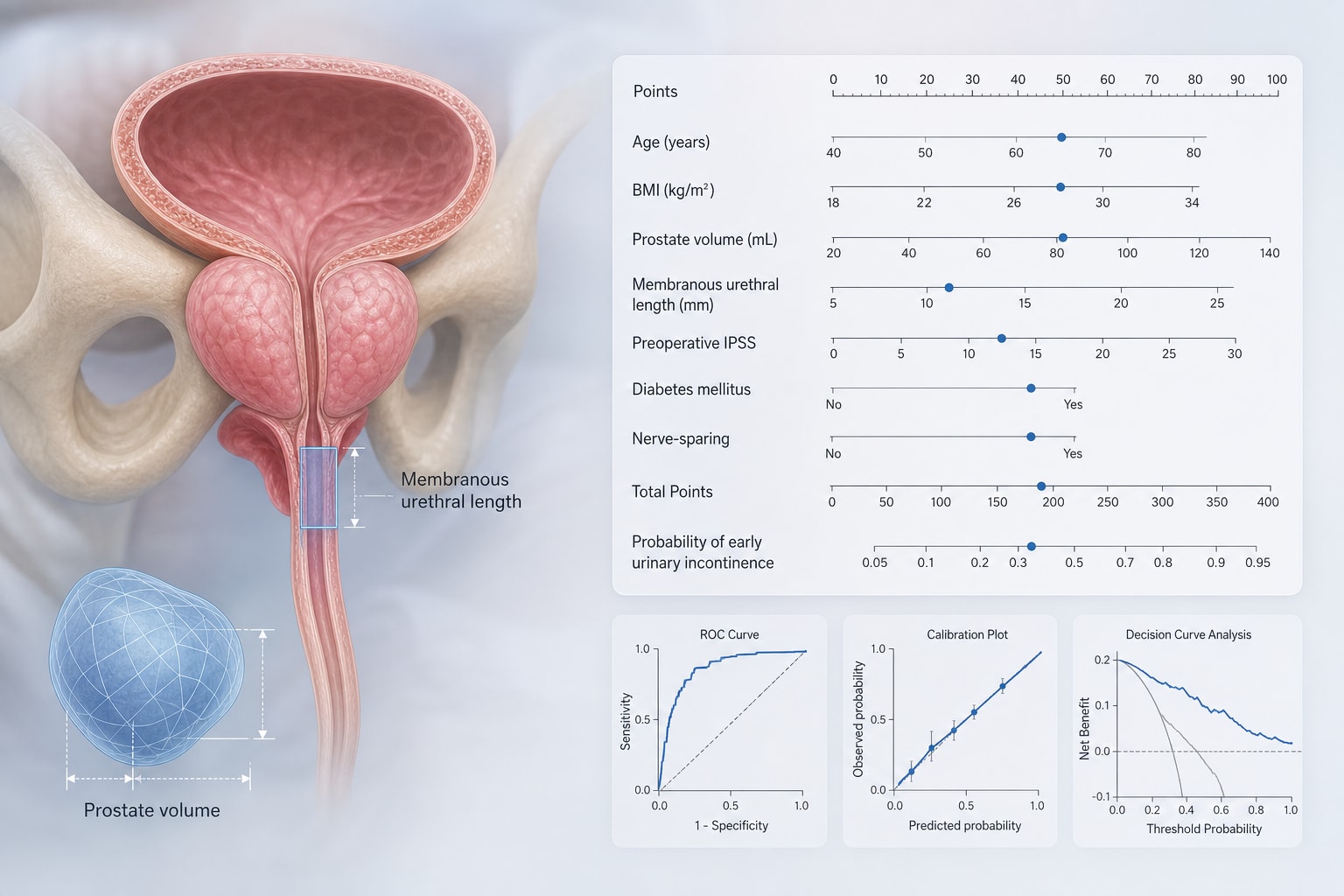
A predictive model for early urinary incontinence following laparoscopic radical prostatectomy was developed using data from 408 patients.
-
2
The study identified prostate volume, membranous urethral length, intravesical prostatic protrusion length, and neurovascular bundle preservation as independent predictors.
-
3
Among the 408 patients, 41.2% experienced urinary incontinence post-surgery, highlighting its prevalence as a complication.
-
4
The predictive model demonstrated good discriminatory power with an area under the curve of 0.910, indicating effective prediction capabilities.
-
5
The resulting nomogram from the study provides a visual tool for assessing the risk of early urinary incontinence after laparoscopic radical prostatectomy.