Shrinkage paradox in intraductal papillary mucinous neoplasms is associated with higher concomitant pancreatic cancer risk - Takeaways - MDSpire

Shrinkage paradox in intraductal papillary mucinous neoplasms is associated with higher concomitant pancreatic cancer risk

  • By

  • Hideyuki Fukui

  • Teppei Yoshioka

  • Katsuhiko Sato

  • Yuki Makino

  • Hiromitsu Onishi

  • Atsushi Nakamoto

  • Takashi Ota

  • Toru Honda

  • Feier Ding

  • Yukihiro Enchi

  • Daisaku Yamada

  • Yasunari Fukuda

  • Hidetoshi Eguchi

  • Takahiro Kodama

  • Noriyuki Tomiyama

  • July 10, 2026

Share

  • 1

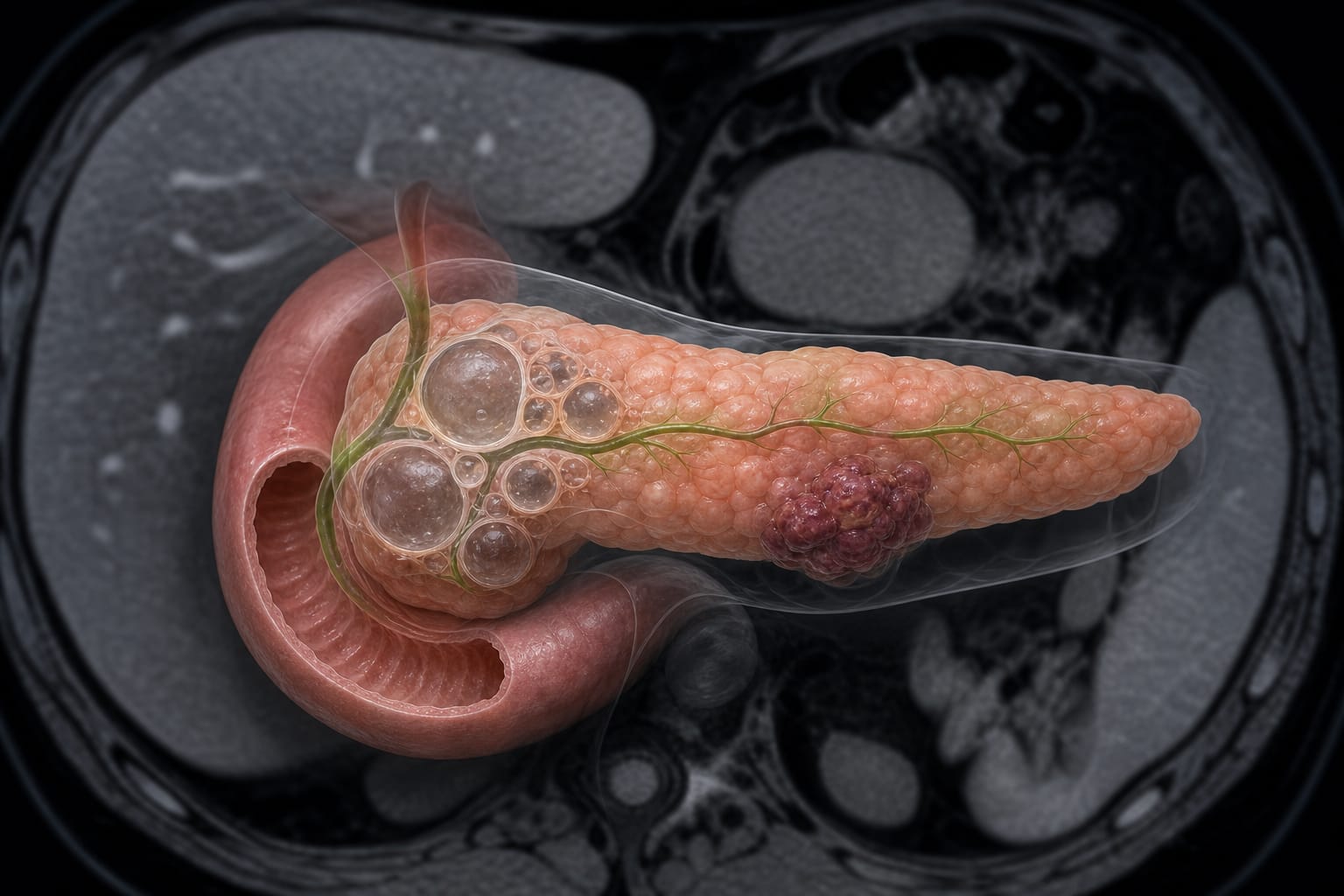
    Intraductal papillary mucinous neoplasms (IPMNs) are precursor lesions to pancreatic cancer, with cyst size changes central to risk stratification.

  • 2

    Cyst shrinkage has traditionally been viewed as reassuring, but may indicate an increased risk of concurrent pancreatic ductal adenocarcinoma (PDAC).

  • 3

    Previous studies reported low rates of cyst shrinkage without malignancy, but did not differentiate between IPMN-derived carcinoma and concomitant PDAC.

  • 4

    The study hypothesizes that cyst shrinkage in IPMN correlates with a higher risk of concomitant PDAC, challenging previous interpretations of cyst behavior.

  • 5

    The research involved a retrospective cohort of 1103 patients with branch-duct or mixed-type IPMN, focusing on cyst size change and cancer outcomes.

Original Source(s)

Related Content